
"Mining"
427 article(s) found

Introduction to Dominica Santo Domingo Coffee Manor with excellent acidity and pleasant fragrance
In December 1492, Christopher Columbus arrived on Hispaniola on his first voyage. On his second voyage there in 1493, Santo Domingo became the capital of the island. [3] thousands of Tainos were demoted to slavery and engaged in gold mining. Due to a series of oppression, hunger and disease, by 1535, the Tino had only 60,000 left. 1501, Spain

Description characteristics of Coffee Variety and Flavor in Crystal Mountain, Cuba
There are nickel, cobalt, manganese, chromium, iron and copper with mining value. Among them, nickel reserves are about 6.6 million tons, accounting for 40.27% of the world's total reserves. Manganese reserves are about 7 million tons; chromium reserves are also abundant; iron ore reserves are about 3.5 billion tons, mainly distributed in the Nippe Mountains and Balakoa Mountains, which is one of the largest reserves in the world; copper deposits are found in almost all the mountains of Cuba

Refreshing Perfume Bolivian Coffee Flavor Taste introduction to Fine Coffee in Manor area
In 1863, rich saltpetre deposits were discovered in Atacama province along the Pacific coast. In 1879, Chile sent troops to occupy the mining area, and Bolivia joined forces with Peru to wage the Pacific War with Chile. Bolivia was defeated in 1883 and ceded the saltpeter-rich Pacific coast to Chile in 1904. Bolivia lost its only coastal province, including the important port of Antofagasta, from

Coffee flavor and taste characteristics of Panamanian jadeite manor introduction of boutique coffee beans in producing area
Copper and gold deposits are relatively large, currently ranking the sixth largest copper country, with an output value of US $430 million in the ore mining industry in 2013. There are theoretical reserves of oil and gas in the eastern rock strata, which has also become the focus of the international energy industry. For ordinary people, if they want to get out of the countryside, they can only go to the city to engage in the service industry, with a service output value of US $25.1 billion. Transportation, warehousing and tourism are major job opportunities.

Taste smooth Peruvian Coffee Flavor Manor characteristics of Organic Coffee Fine Coffee
The country is divided into 24 provinces and one directly affiliated region (Kaya). The names of the provinces are as follows: Amazon

Jamaica Blue Mountain Sherwood Coffee Manor introduces how to drink Jamaican Blue Mountain Coffee?
Professional coffee knowledge exchange more coffee bean information please follow Coffee Workshop (Wechat official account cafe_style) Blue Mountain (Blue Mountain) Coffee is a coffee bean brand grown in a limited area in the Blue Mountains of Jamaica at an altitude of 800-1200 meters. It usually grows on steep slopes, sometimes as high as 60 degrees and requires manual mining. The characteristic is that it has a very high incense.

Introduction to the flavor and taste characteristics of Panamanian Cupid coffee with unique orange flavor and honey flavor
The current Constitution of Panama entered into force on 11 October 1972 and has been amended four times in 1978 and 1983, 1994 and 2004. The Constitution stipulates that the three powers of the state shall be separated, and the President shall be the head of state and shall be directly elected for a term of five years without re-election, but may be contested at other terms.

Introduction to boutique coffee from Dominica with winding aftertaste and smooth taste.
Thousands of Tylenos were demoted to slavery and engaged in gold mining. Due to a series of oppression, hunger and disease, by 1535, the Tino had only 60,000 left. In 1501, King Ferdinand I and Isabella of Spain were the first to allow Caribbean colonists to introduce slaves from Africa. They began to arrive on the island in 1503. [3] in the early days of the Spanish island, the Spaniards were in the new.

Introduction to Santo Domingo Coffee from boutique Dominica Coffee production area
Latin American island nation. Located in the eastern half of Hispaniola in the West Indies, it is bordered by Haiti to the west, the Atlantic Ocean to the north, the Caribbean Sea to the south, and Puerto Rico to the east through the Mona Strait. The total length of the coastline is 1350 kilometers. It covers an area of 48442 square kilometers, accounting for 64% of the area of Hispaniola. The population is 6.416 million (1985). The country is divided into 26 provinces, the capital Santo Domingo.

Introduction to the characteristics of coffee flavor and taste of Bolivian snow vein manor with rich sour taste
It formed a federation with Peru in 1836 and collapsed as a result of the Chilean invasion in 1839. In 1863, rich saltpetre deposits were discovered in Atacama province along the Pacific coast. In 1879, Chile sent troops to occupy the mining area, and Bolivia joined forces with Peru to wage the Pacific War with Chile. Bolivia was defeated in 1883 and ceded the saltpeter-rich Pacific coast to Chile, Bolivia in 1904.

A brief introduction to the taste and aroma of Dominica boutique coffee Santo Domingo coffee producing area
In 1982, agricultural output accounted for 17.8 percent of the GDP, and arable land accounted for 25.4 percent of the total land area. Agricultural production is dominated by cash crops such as sugar cane, coffee, cocoa and tobacco. Among them, the planting area and output value of sugarcane accounted for 1% of the cultivated land area and 30% of the total agricultural output value, respectively. 9.629 million tons of sugarcane were produced in 1981, mainly distributed in the Siwao lowlands and Siwao lowlands.

A brief introduction to the treatment method of grinding degree and baking degree of high-quality coffee beans in Xuemai Manor
In 1863, rich saltpetre deposits were discovered in Atacama province along the Pacific coast. In 1879, Chile sent troops to occupy the mining area, and Bolivia joined forces with Peru to wage the Pacific War with Chile. Bolivia was defeated in 1883 and ceded the saltpeter-rich Pacific coast to Chile in 1904. Bolivia lost its only coastal province, including the important port of Antofagasta, from

The taste of Peruvian coffee is smooth and smooth. Introduction to the characteristics of fine coffee beans in the manor area.
The Andes runs from north to south, and the mountains account for 1% of the total area of the country. The whole territory is divided into three regions from west to east: the western coastal area is a long and narrow arid zone, a tropical desert, the climate is dry and mild, there are intermittent plains, irrigated agriculture is developed, and the urban population is concentrated; the central mountain plateau is mainly the middle part of the Andes, with an average elevation of about 4300 meters, the birthplace of the Amazon River in the east.

Introduction to the characteristics of high-quality coffee beans in Bolivian coffee estates with obvious floral flavor
Rich in mineral resources, mainly tin, antimony, tungsten, silver, zinc, lead, copper, nickel, iron, gold and so on. Tin reserves are 1.15 million tons and iron reserves are about 45 billion tons, second only to Brazil in Latin America. Proven oil reserves are 929 million barrels and natural gas reserves are 52.3 trillion cubic feet. The forest covers an area of 500000 square kilometers, accounting for 48 per cent of the land area. [industry]
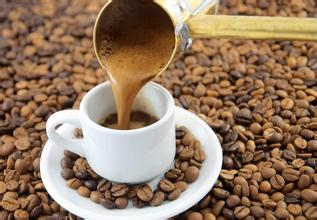
Fine coffee Honduran coffee features introduction to Honduran coffee
Honduras, the full name of the Republic of Honduras (Spanish: Repblica de Honduras), is a mountainous country in Central and North America, bordering Guatemala, El Salvador and Nicaragua, located between the Pacific Ocean and the Caribbean Sea, with a coastline. Most of its citizens are of mixed descent, so most of them believe in Catholicism. In Honduras, music is popular and contains
Boutique Coffee Honduras Coffee Manor Honduras Coffee producing area
Honduras, the full name of the Republic of Honduras (Spanish: Repblica de Honduras), is a mountainous country in Central and North America, bordering Guatemala, El Salvador and Nicaragua, located between the Pacific Ocean and the Caribbean Sea, with a coastline. Most of its citizens are of mixed descent, so most of them believe in Catholicism. In Honduras, music is popular and contains

Boutique coffee the Honduran coffee producing area San Juan Theodore
Honduras, the full name of the Republic of Honduras (Spanish: Repblica de Honduras), is a mountainous country in Central and North America, bordering Guatemala, El Salvador and Nicaragua, located between the Pacific Ocean and the Caribbean Sea, with a coastline. Most of its citizens are of mixed descent, so most of them believe in Catholicism. In Honduras, music is popular and contains

Knowledge of Jamaican coffee beans: why is Blue Mountain coffee filled in wooden buckets?
Professional coffee knowledge exchange more coffee bean information please follow Coffee Workshop (Wechat official account cafe_style) Blue Mountain (Blue Mountain) Coffee is a coffee bean brand grown in a limited area in the Blue Mountains of Jamaica at an altitude of 800-1200 meters. It usually grows on steep slopes, sometimes as high as 60 degrees and requires manual mining. It is characterized by its very high fragrance.

Rwandan coffee begins harvest season
According to media reports, some coffee producing areas in Rwanda ushered in the coffee harvest season half a month earlier than in previous years. Thanks to abundant rainfall at the end of last year, coffee is expected to increase production by 50% this season to 24000 tons. Currently affected by the international financial crisis, international coffee prices have fallen to $4.1 per kilogram. As a result, the purchase price of Rwandan coffee cherries has dropped from 200 loures per kilogram to 170
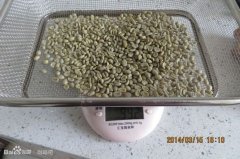
Diagram of hand net baking of coffee beans baked privately at home
The height picked out before weighing and weighing, the time of firepower, the time of color, the steps of peeling and cleaning silver skin (the purpose of the bean tumbling mark), the change of hue, time, color harvest year, random dance of silver skin in the net, at the end of an explosion. Cool the beans after placing the beans and weigh the cooked beans made up tomorrow after clearing the silver skins for the first time