
"Refined"
3621 article(s) found

Description of Coffee Bean Flavor in Diamond Mountain Manor in Costa Rica
Costa Rican coffee has full particles, ideal acidity and unique strong flavor. Costa Rica's coffee industry, originally controlled by the Costa Rican Coffee Industry Company (InstitutodelCafdeCostaRica, ICAFE), has been taken over by the official Coffee Committee (OficinadelCaf). In exported coffee, those products that are considered to be of substandard quality are used in blue.

Visit the place where coffee beans are grown in Columbia Coffee Manor
Coffee in Colombia is mostly small-scale farmers, each of which is processed to remove the pulp, collected and refined by farmers' associations, and then exported by exporters. The basic data area of the Republic of Colombia is 3 times the size of the capital of Japan, Bogota language, Spanish, per capita GDP48 ten thousand yen Japan is 4.2 million yen above sea level, the capital Bogota, Colombia.

About Green Coffee Beans Basic Knowledge Arabica and Robusta
A coffee tree can produce about 3-5 kilograms of coffee cherries and can be refined into one-fifth of the weight of green coffee beans. Among them, coffee cherries are transformed into green coffee beans by many hands and time. Arabica and Robusta Arabica accounts for about two-thirds of the world's coffee production and is not suitable for growing in areas with high temperature, low temperature, much rain and little rain. The beans are oval and flat

Introduction to Costa Rican Coffee Manor Costa Rican Coffee Flavor
The strategy includes four aspects: first, to win financial support from the government and to establish a coffee trust fund to help coffee growers with difficulties tide over their cash flow difficulties. Second, vigorously develop high-quality coffee, increase the added value of coffee exports, and make up for the losses caused by the fall in coffee prices. Its main approach is to focus on the development of high-quality coffee varieties ranging from 1000 to 1500 meters above sea level.

Kenya AA Kirinijaga Kenyan AA Flavor introduction
Professional coffee knowledge exchange more coffee bean information please follow the coffee workshop (Wechat official account cafe_style) Kenyan coffee is most famous for its adorable sour taste, here is a quick introduction to today's protagonist: Kenya AA! Coffee introduction the African region has always been one of the best coffee producers in the world, with charming acidity and aroma.

What is the coffee partner added to coffee? Can you replace it with milk and sugar?
Yes. The main ingredient of coffee mate (commonly known as creamer) is plant fat powder. Vegetable fat powder is a general term for vegetable fat powder. Vegetable fat powder has a wide variety of functions and applications. Its production history can be traced back to the 1950s. It has been widely used in baked food ingredients, cold food ingredients, confectionery ingredients and solid beverage ingredients. Use creamer (milk) in coffee

Yerga Shefi Kocher Estate Coffee Flavor Taste Variety Introduction
Yerga Sherphine uses the oldest sun treatment method, but in 1972, Ethiopia introduced the washing technology from Central and South America in order to improve its quality, which made the jasmine fragrance and citrus fragrance of Yerga Sherphine more clear and refined, and became the world's best quality beans. The exquisite washing technology contributed greatly. After the 1970s, it was basically washed with water. However, in the past two years, Yerga Sherphine was abnormal.

Flavor description of Costa Rican Coffee Variety characteristics Regional treatment method
Other coffees worth mentioning are JuanVinas,PR, H.Tournon, Windmill,SHB, Montebello and SsntaRosa. Fine coffee is generally grown in Geredia and the central canyon. Another eye-catching coffee is Sarchi coffee (sa).
Where is the difference between brown sugar and white granulated sugar in coffee
For the exchange of professional baristas, please follow the coffee workshop (Wechat official account cafe_style). Many people like to drink coffee but also like to add sugar. Let's introduce the types of sugar. In fact, the sugar bag is mainly divided into two kinds: crude sugar and fine sugar, which are mainly represented by yellow sugar (sucrose) and white sugar (granulated sugar). Most people have a consensus on the answer of drinking milk tea with white sugar, but it is better to drink coffee with white sugar.
How coffee is sown and harvested
Seeds, not beans. In fact, coffee beans are the seeds of red-skinned coffee fruits that look like ripe cherries. Each fruit usually contains two seeds, which must be taken out and dried to produce two raw coffee beans to be roasted later. The coffee wrapped in endocarp will be planted to the seedbed and will germinate in 40-60 days and grow to about 50 cm in about 6 months after germination. In
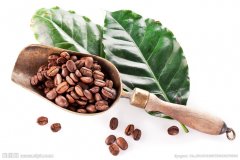
What kind of charcoal roasted coffee do you have?
South charcoal roasted coffee (three-in-one) China's well-known trademark Chinese food industry well-known time-honored enterprises mellow charcoal roasted coffee, inherited the flavor and chic of Hainan coffee, with a unique roasting and roasting technology to re-create the classic coffee, and deeply loved by urban people. And with its endless charm, it makes people in the aftertaste fragrant, not bitter, not hot, refreshing, mellow and sweet.
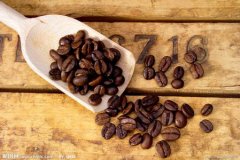
A coffee tree can produce about 3-5 kg of coffee cherries.
A coffee tree can produce about 3-5 kilograms of coffee cherries and can be refined into one-fifth of the weight of green coffee beans. Among them, coffee cherries are transformed into green coffee beans by many hands and time. Arabica and Robusta Arabica accounts for about two-thirds of the world's coffee production and is not suitable for growing in areas with high temperature, low temperature, much rain and little rain. The beans are oval and flat

Flavor description of Costa Rican yellow honey coffee beans introduction to the regional treatment method of manor production
Costa Rican yellow honey coffee beans flavor description taste manor production area treatment method to strengthen the export of high-quality coffee to Europe, the United States, Japan and other countries. European and American countries have high living standards, high consumption levels and high requirements for the quality of coffee. A cup of high-quality coffee can sell for $3.25 in Europe and the United States. My brother launched a strong publicity campaign for the European, American and Japanese markets. This offensive

Santa Rita coffee boutique coffee bean introduction-Santa Rita coffee producing area
First, we should seek financial support from the government and set up a coffee trust fund to help coffee growers with difficulties tide over their cash flow difficulties. Second, vigorously develop high-quality coffee, increase the added value of coffee exports, and make up for the losses caused by the fall in coffee prices. The main approach is to focus on the cultivation of high-quality coffee from 1000 meters to 1500 meters above sea level, and to prohibit the collection of immature coffee.

Yerga Sherfi Coffee Bean Flavor Flavor Description Grind Scale Production Area Variety Manor Introduction
Yejia Shefei Coffee Bean Flavor Description Grinding Scale Production Area Variety Manor Introduction Yejia Shefei uses the oldest sun treatment method, but in 1972, Ethiopia introduced Central and South American washing technology in order to improve the quality, making Yejia Shefei's jasmine fragrance and citrus fragrance more clear and refined, becoming the world's best quality beans. Excellent washing technology is indispensable.

Santa Rita Coffee Fine Coffee beans introduce the original producing area of Santa Rita coffee
First, we should seek financial support from the government and set up a coffee trust fund to help coffee growers with difficulties tide over their cash flow difficulties. Second, vigorously develop high-quality coffee, increase the added value of coffee exports, and make up for the losses caused by the fall in coffee prices. The main approach is to focus on the cultivation of high-quality coffee from 1000 meters to 1500 meters above sea level, and to prohibit the collection of immature coffee.

Costa Rican Coffee Flavor description Grinding characteristics Variety producing area Taste Manor
First, we should seek financial support from the government and set up a coffee trust fund to help coffee growers with difficulties tide over their cash flow difficulties. Second, vigorously develop high-quality coffee, increase the added value of coffee exports, and make up for the losses caused by the fall in coffee prices. The main approach is to focus on the cultivation of high-quality coffee from 1000 meters to 1500 meters above sea level, and to prohibit the collection of immature coffee.

Coffee excipients
water. Water can be divided into soft water and hard water. General mineral water is hard water containing sodium, manganese, calcium, magnesium and so on. The taste of coffee is greatly reduced because hard water releases caffeine and tannins. Ordinary tap water can be used as soft water, but the first tap water in the morning, the water taken the day before and the second boiled water should be avoided as far as possible. If you use a water purifier or install

Description of Mexican Coffee Flavor introduction to the taste characteristics of fine coffee beans
As early as 1796, coffee spread from Cuba to the Cordoba region of Veracruz, Mexico. After more than 200 years of development, today's Mexican coffee has many different styles of coffee. At present, there are three world-famous coffee producing areas, namely Chiapas, Veracruz and Oaxaca, where 70% of Mexican coffee comes from. Mexican fever