
"Rob"
646 article(s) found

How to fold all kinds of filter paper for hand-brewed coffee
How to fold all kinds of filter paper for hand-brewed coffee the opening remarks of Rob Kerhoff are wonderful: welcome to the mini version of the coffee table. Every aspect of coffee is full of innovation. Then innovation is bound to be reflected in his cooking process. The coffee beans used by Kerhoff are from El Diamante in Costa Rica and are treated by anaerobic fermentation.

The relationship between blending and roasting of coffee beans
Do you want to bake and then mix, or do you want to mix and bake first? Which way is better?
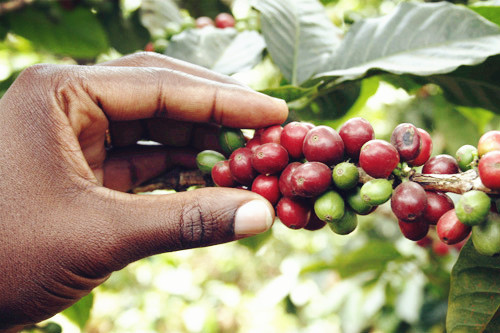
Bali Garden Bean, Karana Kintamani Volcano Ubrobast, Bali, Indonesia
Although Balinese coffee is a member of Indonesian coffee, coffee farmers in Bali feel that the quality of Indonesian coffee is uneven and does not match the high-quality coffee quality of Bali, so they set up their own doors and call themselves Balinese coffee to show the difference between Indonesian coffee and Indonesian coffee. There are not only Arabica coffee beans but also Robbins coffee in Bali. The protagonist of this article is

Introduction of Robusta Coffee Tree species
Following Cajun (Wechat official account vdailycom) found that the leaf rust-resistant variety found in the good Cafe opened its own shop in Congo, Africa, is more resistant to leaf rust than the Arabica variety. In the general coffee market, many people like to compare robusta and Arabica coffee beans, which is incorrect. In fact, the Robusta species was originally a Congolese species (scientific name: Co

Which kind of coffee is more suitable for blending fine coffee? can I mix it?
In fact, there is no answer to the question of which is better, individual beans or mixed coffee beans. We can only say which kind of coffee is more suitable for you, which should be determined by combining the coffee utensils and taste preferences used by individuals. Just like the blended coffee beans [vanishing Shangri-La] in our store, although we advocate that the performance will be more comprehensive under the Italian machine, there are also many friends who are not.

Introduction to the Flavor description treatment method of Robastian Coffee Bean Variety characteristics
Boutique coffee beans are originated in the Congo, which accounts for 20% 30% of the world's output. It is suitable for lowlands below 500 meters. It has strong adaptability to the outside world, can resist bad climate, resist diseases and insect pests, and can be allowed to grow in the wild. It is a kind of coffee tree that is easy to cultivate. It is generally used to make instant coffee Robasta coffee tree originating in the Congo of Africa.
The relationship between blending and roasting of coffee and raw beans
Do you want to bake and then mix, or do you want to mix and bake first? Which way is better?

Coffee classroom: the difference between Arabica and Robusta coffee beans
The world's coffee beans are mainly divided into two categories: small seed coffee bean Arabica Arabica and medium grain coffee bean Robusta Robsta. Small seed coffee beans grow in the temperate and tropical climate of Haiba 600-2000 meters, with rich and delicate taste, strong smell, high acidity and smooth texture, bringing strong aroma and smoothness to the coffee.
What's the difference between Arabica and Robusta?
The world's coffee beans are mainly divided into two categories: small seed coffee bean Arabica (Arabica) and medium seed coffee bean Robusta (Robusta). Small seed coffee beans grow in the temperate zone and climate of Haiba, with a rich and delicate taste, strong smell, high acidity and smooth texture, bringing strong aroma and smoothness to the coffee. Medium seed coffee bean is just like its English name Ro.

Comparison table between Arabica and Robusta
Follow the caffeine review (Wechat official account vdailycom) found that the beautiful cafe opened a small shop of its own. Arabica (Arabica) Arabica is also known as Gaoshan beans, its main features: ● fragrant smell is strong; ● is not easy to have a bitter taste; ● coffee oil content is moderate; ● acidity is high; ● caffeine content is 30% of Robusta 40%. Coffee beans all over the world

Introduction to the description of extraction time, roasting degree and flavor of hand-brewed coffee
Coffee bean blending formula, hand-brewed coffee extraction time, roasting degree flavor description introduction; blending coffee requires expert ability to understand the taste characteristics of each kind of coffee, know what the taste of the kind of coffee you want to mix is like, know how to achieve that taste, but in any case, you can not regard the coffee as an advanced form of coffee.

Coffee classroom: the difference between Arabica and Robusta coffee beans
The world's coffee beans are mainly divided into two categories: small seed coffee bean Arabica (Arabica) and medium seed coffee bean Robusta (Robusta). Small seed coffee beans grow in the temperate zone and climate of Haiba, with a rich and delicate taste, strong smell, high acidity and smooth texture, bringing strong aroma and smoothness to the coffee. Medium seed coffee bean is just like its English name Ro.

How to judge whether a latte is good or bad? How to make a cup of Italian fancy coffee?
The beauty of vision pays attention to the golden section, while the beauty of taste pays attention to balance. Looking at Hell's Kitchen, you will find that the word Balance appears frequently. This is the intention of leisurely coffee. After milk is heated, it will produce vanilla, almonds, cream and other aroma and sweetness. Fancy coffee can drink not only the aroma of coffee, but also the sweetness of milk. They blend with each other and do not rob each other. Latte (caffe la)
The relationship between coffee blending and roasting
Do you want to bake and then mix, or do you want to mix and bake first? Which way is better? If you have a definite recipe, of course the easiest way is to put different coffee beans together and then bake them together. But if you are trying and comparing different ingredients and proportions, you certainly want to roast all kinds of coffee beans before making various tastes.
The Life of two kinds of Coffee beans of Arabica Arabica and Robusta Robusta
Coffee beans in the world are mainly divided into two categories: small seed coffee bean Arabica (Arabica) and medium seed coffee bean Robusta (Robusta). Small seed coffee beans grow in a temperate climate of 600-2000 meters in Haiba, with rich and delicate taste, strong smell, high acidity and smooth texture, bringing strong aroma and smoothness to the coffee. Medium seed coffee bean is just like its English name Robusta.

Costa Rican Richiuzhuang map presents the flavor and characteristics of yellow honey-treated Vilasaki coffee
Finca Licho is an impressive coffee family. About 60 years ago, Edgar Aquilera Bonilla, the first owner of the house, came to Naranjo in the Western Valley and started coffee growing. He was succeeded by his son Felipe Aguilera Gonzle, who is currently Aguilera III.

The relationship between professional coffee roasting knowledge blending and roasting
Do you want to bake and then mix, or do you want to mix and bake first? Which way is better? If you have a definite recipe, of course the easiest way is to put different coffee beans together and then bake them together. But if you are trying and comparing different ingredients and proportions, you certainly want to roast all kinds of coffee beans before making various tastes.

Fine Coffee study the relationship between Coffee blending and Baking
Do you want to bake and then mix, or do you want to mix and bake first? Which way is better? If you have a definite recipe, of course the easiest way is to put different coffee beans together and then bake them together. But if you are trying and comparing different ingredients and proportions, you certainly want to roast all kinds of coffee beans before making various tastes.

Coffee common sense the relationship between coffee blending and roasting
Do you want to bake and then mix, or do you want to mix and bake first? Which way is better? If you have a definite recipe, of course the easiest way is to put different coffee beans together and then bake them together. But if you are trying and comparing different ingredients and proportions, you certainly want to roast all kinds of coffee beans before making various tastes.

Bake first and then mix, or mix first and bake?
Is the relationship between mixing and baking first baked and then mixed, or is it first mixed and then baked? Which way is better? If you have a definite recipe, of course the easiest way is to mix the different coffee beans first and then roast them together. But if you're trying and comparing different blends and ratios, you'd want to roast the beans first.