
"SC14/16"
500 article(s) found

The main supplier of Starbucks Coffee-introduction of Columbia Linglong Narino producing area
For professional baristas, please follow the Coffee Workshop (Wechat official account cafe_style) Colombia, currently the third largest coffee producer in the world, after Brazil and Vietnam, first grew commercial beans in the 1830s and accounted for the largest share of export crops in the 20th century. the mountainous terrain, coupled with a variety of tropical microclimates, provided an ideal planting environment with a total output of 75%.

Coffee from the KIAMBU region of Kenya has round beans, thick flesh and obvious fruit flavor.
Professional coffee knowledge exchange more coffee bean information please follow the coffee workshop (Wechat official account cafe_style) AA level "SL28" of Monteiro Manor in Kyakiambu District, Kenya AA Mtaro National Kenya production area Kiambu graded AA (SC18+) producer Monteiro Manor Water washing-Kenyan variety SL28,Ruiru11,Batian 1600 cm above sea level

Flavor characteristics of Columbia Linglong Coffee beans introduction to Samaniego Manor
Columbia Linglong production area is from Nario, Colombia, 2100 meters above sea level. You can smell rare flowers. The mouth is full-bodied with tropical fruit and cocoa, with a hint of citrus. Drinking coffee is like eating dessert. The Nalinglong producing area is the highest in Colombia, and coffee trees in some places can grow to 2200 meters.

Coffee common sense four principles to be followed in making a cup of Espresso
(1) the quantity of coffee beans must be standard, generally 14-16 grams per cup, using good quality deep-roasted coffee beans. (2) the grinding powder should be of appropriate particle size, not too coarse or too fine. Coffee beans are too coarse or too fine to make thick and delicious espresso. When the coffee powder is too coarse, the gap in the filter bowl is too big, the resistance to water is not enough, and the coffee flow rate is too fast, which is easy to cause extraction.

Basic knowledge of coffee four principles to be followed in making a cup of Espresso
(1) the quantity of coffee beans must be standard, generally 14-16 grams per cup, using good quality deep-roasted coffee beans. (2) the grinding powder should be of appropriate particle size, not too coarse or too fine. Coffee beans are too coarse or too fine to make thick and delicious espresso. When the coffee powder is too coarse, the gap in the filter bowl is too big, the resistance to water is not enough, and the coffee flow rate is too fast, which is easy to cause extraction.

Coffee beans are also divided into "aristocratic and poor classes". Evaluation of the quality of coffee
Coffee quality Evaluation Coffee producing countries have their own grading methods and quality evaluation standards in order to grade their harvested coffee, of course, there are also famous coffee mochas. Like Yemen in Matali, there are no countries with uniform export specifications and no coffee culture of the same style. If there are common evaluation criteria for coffee producers all over the world, it will be convenient for buyers.

What is the grinding scale of deep-baked espresso beans? how to drink deep-baked espresso beans
What is the grinding scale of deep-baked espresso beans? generally speaking, there is a median on the Italian grinder, which is a relative standard, which can be fine-tuned as needed, and it should be easier to find on the adjusting plate. To make espresso, we usually use 8-10 g powder for single bowl and 14-16 g for double bowl. Other brewing methods do not need to use Italian bean grinder, manual most do not have scale, electric in common use

Introduction to the adjustment of the thickness and thickness of the bean mill how to adjust the scale and return to the position
How to adjust the thickness and thickness of the bean grinder, double bowls generally use 14-16 g. Other brewing methods do not need to use Italian bean grinder, manual most do not have scale, electric to commonly used little eagle little flying horse is more common, siphon pot is generally 3 degrees, hand punch 4-5 degrees (depending on the powder thickness of some differences) method pressure 5 degrees, mocha pot 2 degrees, but the relative value should be based on
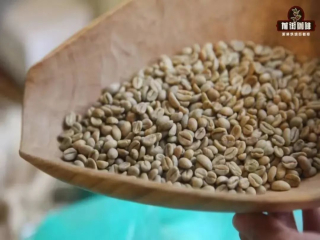
Introduction of coffee bean classification system in various countries in detail the coffee bean classification standards of Ethiopia and Kenya
A friend asked Qianjie, "Why are some coffee beans marked with AA, some with G1, and some with SHB? these letters seem irregular. How do I know which grade is high and which is low?" Why do you need grading? When we walk into the fruit store, we often see that the same fruit can be divided.

Flavor and taste characteristics of Yunnan washed coffee beans? How did the honey treatment come from?
The coffee we drink comes from the seeds of coffee beans. The coffee processing process involves removing layers on the coffee fruit, such as mucus and parchment, until we get the seeds. Different types of processing involve the removal of fruit layers in different ways and at different times. Natural coffee is a completely dry coffee, that is to say, it is naturally dry. The outer layer, from the epidermis to parchment, dries later.

Colombia coffee with soft Na Linglong_Na Linglong suitable for what appliances_Na Linglong coffee prices
Professional coffee knowledge exchange More coffee bean information Please pay attention to coffee workshop (Weixin Official Accounts cafe_style) Narino Province, located in the southwest of Colombia, bordering the Pacific Ocean in the west and neighboring Ecuador (Ecuador) in the south; the Andes Mountains traverse the province, alpine coffee planting area, coffee beans grow in the cloud belt of 1600 ~2300 meters, the soil is fertile volcanic terrain

A brief introduction to the grading system of Kenyan Coffee beans how to brew and share Kenyan coffee at a ratio of 1 to 15
Professional coffee knowledge exchange more coffee bean information please follow the coffee workshop (Wechat official account cafe_style) front street-Kenya raw bean grading, brewing parameters sharing according to the sieve grading method is the method of grading according to the size of coffee beans. Raw beans are graded by determining the size of the beans through a holed iron plate sieve. The size of the hole in the screen is 1 inch to 64 inches.

How to eat Columbia Linglong coffee beans? One of the brands of Colombian coffee [Nalinglong]
Professional coffee knowledge exchange more coffee bean information please follow the coffee workshop (Wechat official account cafe_style) Columbia Linglong coffee beans how to eat? The flavor and taste of Nalinglong, one of the brands of Colombian coffee? The Nalinglong region of Colombia is located in the Andes (the Andes, beginning in the south) in southeastern Colombia at the junction of Ecuador.

Geographical location of Nalingong coffee producing area in Colombia? What kind of treatment does Nalinglong coffee use?
Professional coffee knowledge exchange More coffee bean information Please pay attention to coffee workshop (Weixin Official Accounts cafe_style) Colombia Na Linglong coffee production area geographical location? What kind of treatment does Nalinglong coffee use? Colombia is currently the third largest coffee producer in the world, after Brazil and Vietnam. Commercial beans were first cultivated in the 1830s, and coffee accounted for export farmers in the 20th century.
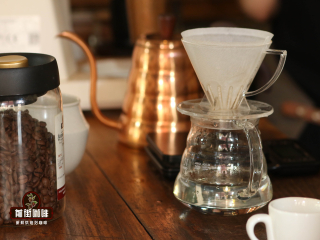
Flavor and taste characteristics of Brazilian boutique coffee beans Grade Arabica Coffee Santos Black Coffee Flavor
Professional coffee knowledge exchange more coffee bean information please follow Coffee Workshop (Wechat official account cafe_style) Brazil, the world's largest coffee producer, covers both commercial and boutique coffee, while Brazil accounts for 30 per cent of global coffee usage. In addition to the original conditions such as climate, geographical area, etc.

Grinding scale thickness of Rabasa Italian special coffee
The grinding scale of Rabasa Italian special coffee can be divided into commercial machine and household machine according to the classification of use. commercial machines without exception have huge boilers, most of which are 2-head or 3-head or even 4-head structure. Even single-end commercial machines mostly have more than 6L sub-mother boiler design. The household machine is either a low-end heating block or a 2L or so parent boiler. The boiler capacity is very high.

Grinding scale of Rabasa Italian special coffee-how to adjust the scale of Italian bean grinder
Rabasa special coffee grinding scale-how to adjust the Italian bean grinder different bean grinders have different adjustment dials, so you should check the model of the coffee grinder and read the instructions carefully to determine the direction and strength of the dial.

Italian concentrated three-stage extraction Italian concentrated aesthetic art
Espresso is a single espresso brewed with 20~30ml at 6.5g and 10g, or a double espresso with 40~60ml at 14g / 16g. Because of the extraction physics and efficiency of the espresso machine, the taste of coffee brewed in a double powder cup is generally better than that in a single powder cup. Different types of espresso can be made based on this single or double espresso, but today we will first discuss the Italian style.
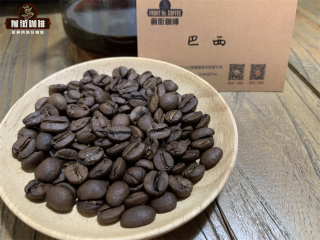
What are the characteristics of Brazilian coffee, the main producing area of Brazilian coffee?
Seven states in Brazil produce coffee. There are 14 coffee producing areas in Sao Paulo (Mogiana, Centro-Oeste), Parana (NortePioneriodoParan) and Bahia (PlanaltodaBahia, Cerra).
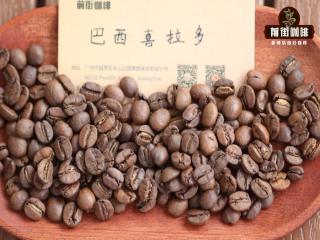
Brief introduction of Brazilian Coffee beans Flavor characteristics of Brazilian Coffee and Brazilian Queen Coffee
Following Cafe Review (Wechat official account vdailycom) found that Fairview Cafe opened a small shop of its own Brazilian coffee beans refers to all the coffee beans grown in Brazil, except for more than three companies, Brazilian beans are mostly cheap and high-quality coffee. Comprehensive coffee beans that can be used for mass production, most of them