
"Sh"
274 article(s) found

Graded high-quality coffee beans
There are two ways to classify raw coffee beans, one is the filter number, and the other is the elevation. It is divided by the number of the filter screen, and the size is in the unit of the screen (size). Round beans are generally smaller than flat beans, between 8-13 and 12-29. 8, 9, 10. 12, 13. 18. 29 = small, medium, ordinary. Quasi-big. Big, extra large. The bigger the size, the bigger the beans. Like SC.

The coffee beans from that coffee farm are better than those from Ladisha Manor.
Located in the tropics, there are many volcanoes in the territory, the northern and eastern coastal plains have a tropical rain forest climate, and the southern mountains have a subtropical climate. The year is divided into two dry and wet seasons, with the wet season from May to October and the dry season from November to April of the following year. The annual precipitation is 2000-3000 mm in the northeast and 500-1000 mm in the south. Forests account for half of the country's area and are the best latitude for coffee production.
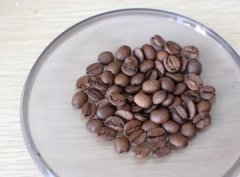
Standard for grading coffee beans
There are two ways to grade coffee beans, one is to filter the number of points, one is to elevation points. It is divided by the filter number and the size is determined by the mesh size. Round beans are generally smaller than flat beans, round beans between 8-13, flat beans between 12-29. 8,9,10... 12,13... 18... 29 = Small, Medium, Normal... It's a big... big, extra big. The bigger the number, the bigger the bean. Like SC
The sour Bolivian coffee bean grading system determines the quality of Bolivian coffee beans.
Professional coffee knowledge exchange more coffee bean information please follow the coffee workshop (Wechat official account cafe_style) front street-Bolivia coffee classification introduction is located in South America's largest coffee producer near Brazil, or a place that is not known by many coffee lovers. But the country is famous for producing quality coffee and has good coffee as well as Brazil
Guatemala coffee bean varieties is what kind of Guatemala coffee classification system Introduction
Professional coffee knowledge exchange More coffee bean information Please pay attention to coffee workshop (Weixin Official Accounts cafe_style) Front Street-Guatemala Coffee Today let us walk into the mysterious Mayan residence, one of the ancient Indian Mayan cultural centers, Guatemala, a place of wisdom that gave birth to Mayan civilization and delicious coffee. Guatemala coffee beans, grown in Guatemala

Guatemala Antigua Flower God Coffee with delicious taste and uniform acidity describes the grinding degree and price.
Antigua is a famous producer of coffee. Antigua coffee is produced in Hacienda Carmona, where the best quality coffee is EL Pulcal, which is not only of good quality, but also has a stronger flavor, richer taste and stronger tobacco flavor than other Guatemalan coffee. The area near Antigua is hit by a volcano every 30 years or so.

Introduction to the characteristics of grinding degree of coffee bean classification standard taste and flavor description method
Most Caribbean and Central American countries express quality in terms of altitude. For example, the eastern part of Costa Rica produces LGA (Low Grown Atlantic Atlantic low altitude), MGA (Medium Grown Atlantic Mid-Atlantic altitude), HGA (High Grown Atlantic Atlantic High altitude), West Bank slopes produce HB (Hard Bean hard beans), MHB (Medium H)
Grading standard of raw coffee beans
There are two ways to classify brown raw beans, one is to filter the number, and the other is to divide it by elevation. It is divided by the number of the filter screen, and the size is in the unit of the screen (size). Round beans are generally smaller than flat beans, between 8-13 and 12-29. 8, 9, 10. 12, 13. 18. 29 = small, medium, ordinary. Quasi-big. Big, extra large. The bigger the size, the bigger the beans. Like SC-1.

Costa Rican Coffee Mozart raisin double Honey treatment Etala Zucanette Manor
For professional baristas, please follow the Coffee Workshop (official Wechat account cafe_style) country: Costa Rica Grade: SHB producing area: Tara Pearl Baking degree: moderate Baking method: grape shift dried, double fermented Honey Variety: yellow Cardouai Manor: Carnett Manor Flavor: sweet and colorful all kinds of fruits, Honey and toffee Costa Rica passes through the honey place.
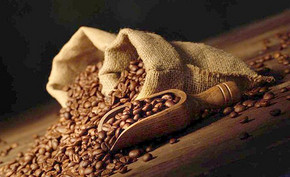
Introduction of Antigua coffee beans with smooth taste
Following Cafe (official Wechat account vdailycom) found that Cafe Beautiful opened a small shop of its own. Coffee was really introduced to Guatemala in 1750, introduced by Father Jesuit, and the coffee industry was developed by German colonists at the end of the 19th century. Today, most of the coffee industry's production takes place in the south of the country. There are seven major coffee producing areas in Guatemala
Costa Rica Sun Tank Manor Vera Saatchi boutique coffee beans, brand recommendation and manor
Professional baristas exchange please follow the coffee workshop (Wechat official account cafe_style) flavor: green

Seven Coffee producing areas in Costa Rica-the grading system of Tarazhu Coffee treatment in Costa Rica
Coffee workshop (Wechat official account cafe_style) Coffee was first cultivated in Costa Rica on the slopes of the Poas and Barva volcanoes, today known as the Central Valley (Central Valley). After years of development, there are now seven major coffee cultivation areas. 1.Tarrazu (

High-quality coffee beans are introduced in the coffee manor of Guatemala, which has the longest history.
Located in the tropics, there are many volcanoes in the territory, the northern and eastern coastal plains have a tropical rain forest climate, and the southern mountains have a subtropical climate. The year is divided into two dry and wet seasons, with the wet season from May to October and the dry season from November to April of the following year. The annual precipitation is 2000-3000 mm in the northeast and 500-1000 mm in the south. Forests account for half of the country's area and are the best latitude for coffee production.

Costa Rican coffee growing area Central Valley/Central Valley Coffee growing area
Professional coffee knowledge exchange More coffee bean information Please pay attention to Coffee Workshop (Weixin Official Accounts cafe_style) The earliest coffee growing country in Central America; government support promoted development In 1729, coffee began to appear in Costa Rica, when it was introduced from Cuba. This made Costa Rica the first country in Central America to grow coffee and the first to grow coffee for commercial value.

Introduction to Kenyan Coffee Bean varieties and characteristics of Brand Story Manor
Kenya Coffee Bean varieties and characteristics the full name of Kenya is the Republic of Kenya, located in eastern Africa, the equator runs across the central part, and the Great Rift Valley stretches north and south. It is bordered by Somalia to the east, Tanzania to the south, Uganda to the west, Ethiopia and Sudan to the north, and the Indian Ocean to the southeast. There are many plateaus in the territory, with an average elevation of 1500 meters. Kilinaga Peak in the middle (

Costa Rican Black Honey deals with the cultivation of Fine Coffee beans in Faramy Manor in Kaduetara production area
Its three most famous producing areas are Tarasu, south of the Costa Rican capital SanJose, as well as the producing areas of the Central Valley and the western valley. Among them, there are many excellent independent estates, all of which are carefully cultivating more fine washing and honey-treated coffee beans. let's hope that Costa Rica will bring us more honey-treated coffee surprises.

Costa Rican washing process coffee how to wash flavor characteristics is what hardness how
Professional coffee knowledge exchange More coffee bean information Please pay attention to coffee workshop (Weixin Official Accounts cafe_style) Costa Rica Tarraz Montanas Diamante Water content: 10.6% Density: 1.27g/cm3 Water activity: 0.60 Flavor description: roasted almonds, cream, toast, sucrose

Costa Rican black honey treats all kinds of fine coffee beans from Faramy Manor in Kaduetara production area.
We usually see the honey treatment methods are: yellow honey, red honey, black honey yellow honey: about 40% of the pectin is removed; the drying method requires the most direct heat absorption, receives the most light drying, and lasts for about 8 days to reach a stable water content. Red honey: about 25% of the pectin is removed; it takes longer to dry than yellow honey, and reduces the time spent in direct sunlight, even using

Coffee bean density high altitude which producing countries grow coffee at the highest altitude
According to the coffee-producing countries, the reason for the emergence of such a classification standard according to the altitude of the coffee producing area is mainly because the quality of coffee produced at high altitude is generally higher than that at low altitude, because the temperature is low at high altitude. Slow coffee production is conducive to the accumulation of beautiful substances. And the raw beans with high maturity have good expansibility when baking, which is beneficial to baking, and the quality is more stable.
Classification standard of coffee raw beans for fine coffee
There are two ways to classify raw coffee beans, one is the filter number, and the other is the elevation. It is divided by the number of the filter screen, and the size is in the unit of the screen (size). Round beans are generally smaller than flat beans, between 8-13 and 12-29. 8, 9, 10. 12, 13. 18. 29 = small, medium, ordinary. Quasi-big. Big, extra large. The bigger the size, the bigger the beans. Like SC.