
"arabic"
4613 article(s) found

The Arab sheikh found coffee
In 1258, Sheikh Omar, who was deported by his people for crime, was exhausted and hungry when he wandered to Vasaba (in Arabia).
The Origin of Fine Coffee
-the earliest Arab way to eat coffee was to chew the whole fruit (Coffee Cherry) to absorb its juice. They then mixed the ground coffee beans with animal fat as a physical supplement for long trips, and it was not until the year 1000 that the green coffee beans were boiled in boiling water to make an aromatic drink. -three more have passed.

Coffee history Arab sheikh discovers coffee
In 1258, Sheikh Omar, who was deported by his people for crime, was exhausted and hungry when he wandered to Vasaba (in Arabia). When he sat under the tree to rest, he saw a bird coming, pecking at the fruit on the branch, and then jumped up and down happily and tore his throat open to sing. The chief has never heard of such a wonderful bird.

Boutique Coffee Culture Arab Chiefs found Coffee
In 1258, Sheikh Omar, who was deported by his people for crime, was exhausted and hungry when he wandered to Vasaba (in Arabia). When he sat under the tree to rest, he saw a bird coming, pecking at the fruit on the branch, and then jumped up and down happily and tore his throat open to sing. The chief has never heard of such a wonderful bird.

Who found coffee? the Arab sheikh found coffee.
In 1258, Sheikh Omar, who was deported by his people for crime, was exhausted and hungry when he wandered to Vasaba (in Arabia). When he sat under the tree to rest, he saw a bird coming, pecking at the fruit on the branch, and then jumped up and down happily and tore his throat open to sing. The chief has never heard of such a wonderful bird.

He found coffee. The Arab sheikh found coffee.
In 1258, Sheikh Omar, who was deported by his people for crime, was exhausted and hungry when he wandered to Vasaba (in Arabia). When he sat under the tree to rest, he saw a bird coming, pecking at the fruit on the branch, and then jumped up and down happily and tore his throat open to sing. The chief has never heard of such a wonderful bird.

Arabica Coffee basic knowledge Coffee making method
Cafe Arabe (Arab countries) coffee 75cc granulated sugar 10g cinnamon powder a little cardamom powder in a little cup add sugar, cinnamon powder, cardamom powder, pour into the coffee. This is a kind of coffee with modern flavor made by dripping. The original method should be to put coffee powder, cinnamon fragments and cardamom in a special pot of copper or brass.

Indian Coffee Manor Arab Plantation Coffee
The best Indian coffee is also classified as Arabian plantation coffee, with the best grades A, B, C and T. Monsoon coffee is divided into high-quality Malabar (Monsooned MalabarAA grade coffee) and monsoon Bassanicoli (Monsooned Basanically) coffee. India also produces some bean-shaped berry coffee. At present, the problem facing the coffee industry is bureaucracy.
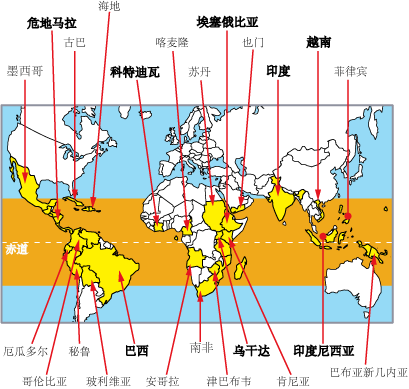
Coffee beans the story of coffee beans the origin of coffee beans the story of the shepherd
Coffee beans in a broad sense, there are two kinds of coffee beans in the world, Arabica beans and Robosta beans. The earliest Arab way to eat coffee was to chew the whole fruit (CoffeeCherry) to absorb its juice. Then they mixed the ground coffee beans with animal fat as a physical supplement for long trips, and it was not until about 1000 AD that the green coffee beans were used.
Ecuadorian coffee beans, probably the highest Arab coffee grower in the world.
Probably the highest Arabica coffee grower in the world. The Arabian Coffee Tree was first introduced to Ecuador (Ecuador) in 1952 and its coffee is of good quality, especially the coffee harvested in early June. Ecuadorian coffee beans can be divided into two varieties: Galapagos and Gigante, both of which have the characteristics of large granules and heavy weight. Ecuadorian coffee can be made according to quality.

Coffee is one of the most popular drinks in the world.
First, coffee (Coffee) is one of the most popular beverages. Coffee is consumed most by people all over the world. Besides tea, coffee is consumed the most. According to the statistics of the International Coffee Organization, the world consumes about 5.4 million tons of coffee every year. The countries that import the most coffee are the United States, Germany, Italy and Japan. However, per capita coffee consumption in Scandinavian countries is 10 kilograms per year.

Basic knowledge of fine coffee in coffee communication period chronology
Coffee spread to Arabia (eleventh century), Egypt, Syria. (13th century) Damascus (16th century) Europe (17th century) the first people to plan to grow and eat coffee were Arabs. At the beginning of the eleventh century, people in the Arab region boiled coffee into soup or dried it and then boiled it as stomach medicine. Because Muslim precepts are strict and alcohol is strictly forbidden, Muslims

How to make Arabica coffee siphon pot coffee powder proportion what do you need to make your own coffee
How to make Arabica Coffee siphon pot Coffee Powder ratio what do you need to make your own Coffee? as the first place in the world to drink and produce coffee, Arab coffee culture is as old and old as its coffee history. In the Arab region, people still retain antiquity in drinking coffee in terms of coffee quality, drinking mode, drinking environment and atmosphere.

Yemeni Coffee-the vanishing Arab Wild
Although Ethiopia is the birthplace of Arabica, the first coffee that Europeans drank from the end of the 17th century to the beginning of the 18th century came from Yemen. At that time, all African or Arabian coffee was exported from the port of Mocha, so that Mocha became synonymous with coffee, while Harald, the capital of the city walls, became a supporting role. However, three hundred years later, Yemeni coffee is no longer what it used to be.
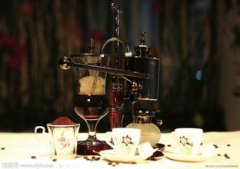
Coffee Culture Ancient Arabian Coffee Culture
When Europeans first came into contact with coffee, they called the seductive drink Arabian wine, and when conservative Catholics cursed coffee as the devil's drink, they never thought of what a precious thing they inherited from the pagans. As the first region in the world to drink and produce coffee, Arab coffee culture is like it.
The history of coffee culture and the discovery of coffee by Arab chiefs
In 1258, Sheikh Omar, who was deported by his people for crime, was exhausted and hungry when he wandered to Vasaba (in Arabia). When he sat under the tree to rest, he saw a bird coming, pecking at the fruit on the branch, and then jumped up and down happily and tore his throat open to sing. The chief has never heard of such a wonderful bird.

Coffee Culture the Ancient Arabian Coffee Culture
When Europeans first came into contact with coffee, they called the seductive drink Arabian wine, and when conservative Catholics cursed coffee as the devil's drink, they never thought of what a precious thing they inherited from the pagans. As the first region in the world to drink and produce coffee, Arab coffee culture is like it.

Ancient Arabian Coffee Culture Fine Coffee knowledge
When Europeans first came into contact with coffee, they called the seductive drink Arabian wine, and when conservative Catholics cursed coffee as the devil's drink, they never thought of what a precious thing they inherited from the pagans. As the first region in the world to drink and produce coffee, Arab coffee culture is like it.
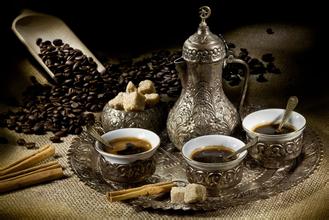
Arabica Coffee Fine Coffee latest introduction and Information
When Europeans first came into contact with coffee, they called the seductive drink Arabian wine, and when conservative Catholics cursed coffee as the devil's drink, they never thought of what a precious thing they inherited from the pagans. As the first region in the world to drink and produce coffee, Arab coffee culture is like it.

Greek Coffee Culture Ancient Arabian Coffee Culture
When Europeans first came into contact with coffee, they called the seductive drink Arabian wine, and when conservative Catholics cursed coffee as the devil's drink, they never thought of what a precious thing they inherited from the pagans. As the first region in the world to drink and produce coffee, Arab coffee culture is like it.