
"bolivia"
1092 article(s) found

A brief introduction to the Market Price of High-quality Fine Coffee Bean varieties in Xuemai Manor
The early Bolivian coffee was of low quality and the market was very poor. Usually the picked coffee fruit is bumped all the way to the processing plant after a simple peeling treatment. Due to the imperfect infrastructure, the traffic is underdeveloped. Coffee farmers have to overcome the rugged mountain road and transport the beans to the higher altitude area of La Paz for washing. If the coffee fruit can not be delivered to the processing in time

A brief introduction to the treatment method of grinding degree and baking degree of Bolivian boutique coffee beans with balanced taste
Bolivia has made a lot of efforts to improve the quality of coffee, stimulate the enthusiasm of coffee farmers and make coffee farmers have a deeper understanding of fine coffee. After the introduction of the COE competition, in the first COE competition held in 2004, there were 13 boutique bean cups with a total score of more than 84 points, and the champion bean score was as high as 90.44 points.

A brief introduction to the description of flavor, taste and aroma characteristics of boutique coffee beans in Xuemai Manor
The overall taste of Bolivian coffee is rich and balanced, the aroma is rich and unique, similar to the mixture of flower and fruit aroma, impressive. The perennial low temperature environment makes the coffee fruit grow slowly, compact enough, the aroma is also charming, the floral aroma is obviously medium and low acidity, but the feeling is not monotonous, on the contrary, it appears soft and fresh, with the sour taste of citrus fruit. Because of Bolivie

A brief introduction to the history and culture of the origin and development of Bolivian boutique coffee beans with balanced taste
Bolivia has made a lot of efforts to improve the quality of coffee, stimulate the enthusiasm of coffee farmers and make coffee farmers have a deeper understanding of fine coffee. After the introduction of the COE competition, in the first COE competition held in 2004, there were 13 boutique bean cups with a total score of more than 84 points, and the champion bean score was as high as 90.44 points.

Organic Coffee cultivation of Bolivian Fine Coffee Arabica Coffee
Located in the western heart of South America, Bolivia covers an area of 1098581 square kilometers-about three times the size of Montana. The two mountains of the Andes span western Bolivia, forming three major geographical regions of the country: the mountainous highlands in the west and Altiplano, and the east.

A brief introduction to the cultivation of fine coffee beans in Xuemai Manor with rich aroma, geographical location, climate and altitude
We know that Arabica coffee cannot be grown in cold places above 2000 meters above sea level. if the altitude is too high, coffee trees will frost because the temperature is too low. So Bolivian coffee is mainly grown in the Yungas region northeast of La Paz. It borders the Amazon basin and is about 1500-2500 meters above sea level with an average annual temperature of about 10-15 ℃. Therefore, guarantee

Introduction to the description of the Flavor of Fine Coffee beans in the Coffee Variety producing area of Xuemai Manor in Bolivia
The legal capital, the seat of the Supreme Court, with a population of 284000, 2790 meters above sea level. Founded in 1538, the city was formerly known as Chuquisaka. The city witnessed the first uprising in South America against Spanish rule in 1809. Bolivia declared its independence here in 1825 and became the capital in 1826. In 1839, it was renamed Sucre to commemorate the second president of Bolivia, General Antonio Jos é Sucre.

The overall rich taste of Bolivian coffee varieties taste manor boutique coffee bean flavor introduction
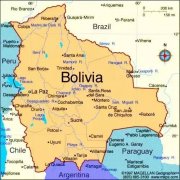
Bolivia is a landlocked country in central South America, bounded by Brazil in the northeast, Paraguay in the southeast, Argentina in the south, Chile in the southwest and Peru in the west. The main topography is the plateau. Bolivia is the highest plateau country in the world, with an average elevation of more than 3000 meters. La Paz, the capital, is as high as 3660 meters above sea level, which is known as the highest capital in the world. Three points in Bolivia

Bolivian coffee flavor and taste characteristics Bolivian coffee story how to drink Bolivian coffee
Professional coffee knowledge exchange more coffee bean information please follow coffee workshop (Wechat official account cafe_style) Bolivia is known as the ancient plateau, coffee is mainly produced in the plateau above 2,000 meters above sea level, coffee is mostly co-operative formed by small coffee farmers to deal with marketing, early coffee is mainly washed Arabica trees, in recent years almost to produce echelon

Introduction to boutique coffee with rich and unique aroma and taste characteristics of Bolivian snow vein manor
In 1932, the Chaco War broke out between Bolivia and Paraguay for oil resources in the North Chaco region. Bolivia was defeated and lost a large area of territory. The people's armed uprising broke out in April 1952, and Paisdensolo, leader of the nationalist revolutionary movement, became president. Since then, there have been frequent military coups and long-term political instability. Modern assets with South American characteristics were restored in October 1983

A brief introduction to the description of taste and aroma characteristics of Bolivian boutique coffee beans with rich sour taste
The aroma of Bolivian coffee is rich and unique, both the aroma of ground beans and the aroma of coffee produced are obviously strong, similar to the mixture of flower and fruit aroma. Impressive coffee in Bolivia really began to be commercially produced in the 1950s (at first coffee trees were only planted around the house as a fence), but the coffee industry developed in a very short time.

A brief introduction to the description of the flavor, taste and aroma characteristics of high-quality coffee beans in Xuemai Manor
The early Bolivian coffee was of low quality and the market was very poor. Usually the picked coffee fruit is bumped all the way to the processing plant after a simple peeling treatment. Due to the imperfect infrastructure, the traffic is underdeveloped. Coffee farmers have to overcome the rugged mountain road and transport the beans to the higher altitude area of La Paz for washing. If the coffee fruit can not be delivered to the processing in time

A brief introduction to the description of balanced taste and aroma characteristics of Bolivian coffee
Takesi Manor, drinking water and coffee after harvest treatment, using alpine melting cold snow landscape, so we give her a nickname: Takesi Snow vein Manor; in addition to low temperature, pollution-free environment, fertile and well-drained volcanic soil, is also an element of coffee flavor, although the owner of Agrotakesi SA is rich, but deep respect for nature and the way to get along, but

A brief introduction to the cultivation of high-quality high-quality coffee beans in Xuemai Manor, geographical location, climate and altitude
The early Bolivian coffee was of low quality and the market was very poor. Usually the picked coffee fruit is bumped all the way to the processing plant after a simple peeling treatment. Due to the imperfect infrastructure, the traffic is underdeveloped. Coffee farmers have to overcome the rugged mountain road and transport the beans to the higher altitude area of La Paz for washing. If the coffee fruit can not be delivered to the processing in time

What is the Bolivian Sun Plan for tomorrow? Introduction to the information of Karanabi producing area in Bolivia
For the exchange of professional baristas, please pay attention to the coffee workshop (Wechat official account cafe_style) the current situation of Bolivian coffee can be said to be a very poor production area, production is not even as good as Hawaii, the situation is so tragic that the COE Cup was suspended in 2009. In addition to the natural isolation of the terrain, the government's negative inaction and even hindrance is also a major factor.

A brief introduction to the planting Market Price of Fine Coffee Bean varieties in the full Flavor Snow vein Manor of Bolivia
In 1932, the Chaco War broke out between Bolivia and Paraguay for oil resources in the North Chaco region. Bolivia was defeated and lost a large area of territory. The people's armed uprising broke out in April 1952, and Paisdensolo, leader of the nationalist revolutionary movement, became president. Since then, there have been frequent military coups and long-term political instability. Modern assets with South American characteristics were restored in October 1983
Introduction to the flavor characteristics of Java coffee in the Varic Manor of the Rodegris family in Bolivia
For more information on coffee beans, please follow the Coffee Workshop (official Wechat account cafe_style) Bolivia is one of the poorest countries in Latin America, a landlocked country bordering Brazil and Colombia. Although it is a country with great potential for coffee export, its output has been quite rare, and the conditions for growing coffee are excellent, but the challenge is also extremely difficult.
Bolivia new Justa cooperative information introduction washing iron card species is very sweet!
For the exchange of professional baristas, please follow the coffee workshop (Wechat official account cafe_style) Bolivia Finca Nueva Llusta brief description 2017, Bolivia, the new Eusta cooperative tin card species! The new Justa Cooperative of Bolivia is located in San Lorenzo High altitude Valley (San Lorenzo). The achievement of the Excellence Cup in 2005 not only made the small farmers in the area famous, but also laid the foundation.

Bolivian coffee flavor, character, taste and estate introduction
Bolivia is a landlocked country in central South America, bordered by Brazil in the northeast, Paraguay in the southeast, Argentina in the south, Chile in the southwest and Peru in the west. The main terrain is plateau. Bolivia is the highest plateau country in the world, with an average altitude of more than 3000 meters. The capital La Paz is 3660 meters above sea level and is known as the highest capital in the world. Three points in Bolivia

Introduction to the characteristics of high-quality coffee beans with smooth texture in Bolivian coffee producing areas
The legal capital, the seat of the Supreme Court, with a population of 284000, 2790 meters above sea level. Founded in 1538, the city was formerly known as Chuquisaka. The city witnessed the first uprising in South America against Spanish rule in 1809. Bolivia declared its independence here in 1825 and became the capital in 1826. In 1839, it was renamed Sucre to commemorate the second president of Bolivia, General Antonio Jos é Sucre.