
"climate"
29418 article(s) found

Taste of Dominican boutique coffee beans A brief introduction to the characteristics of market development in manor producing areas
The temperate climate in Dominica is conducive to coffee cultivation, and the best places to grow coffee are the Barahona region in the southwest and the Cibao Valley north of Santiago, Dominica's second largest city. The northern region, represented by Hibao, and the southern region, including Okayabani Santo Domingo, produce good coffee. Among them, Santo

A brief introduction to the cultivation of exquisite boutique coffee in Columbia, geographical location, climate and altitude
And the annual rainfall in Nalinglong province shows a peak distribution, with a rainy season, which lasts from October of that year to May of the following year, and the dry season lasts for June, July and August. However, even in dry months, coffee farmers will not worry too much, because the warm current caused by trade winds from the southern continent will produce enough water vapor when they meet with a cool night, just to replenish the coffee trees with water.

A brief introduction to the cultivation of Fine Coffee beans in Tanzania, Climate and altitude
Japan has long been the main export market for Tanzania and Ethiopia

Dehong Coffee Map_Dehong Coffee Planting Elevation Climate Terrain_Where is Dehong Coffee Town
Professional coffee knowledge exchange More coffee bean information Please pay attention to coffee workshop (Weixin Official Accounts cafe_style) Mang City Dehong Prefecture capital seat Mang City is 630 kilometers away from Kunming, Mang City is the only two counties and cities named with one word in Yunnan Province, the other is Yun County in Lincang City. Topography Dehong Prefecture is high in the northeast and low in the southwest, and high in the northwest and southeast with other places in Yunnan.

Tropical climate features Rwandan coffee flavor, characteristics, taste and manor introduction
Since the 1920s, Arabica coffee grown in Rwanda has been famous for its unique fruit sweetness and rich grass aroma. In recent years, the Rwandan government has taken positive measures to vigorously promote coffee production, set up coffee production cooperatives in various places, and give technical guidance and financial support to farmers, so that coffee production has made considerable progress. University of Rwanda

Introduction to the characteristics of high-quality coffee beans in the producing area of Ecuadorian coffee with balanced acidity
Ecuador is divided into the western coast, the central mountains, the eastern Amazon River basin and the four central regions of the Galapagos Islands, with diverse climatic conditions. The western coastal plain belongs to the tropical rain forest climate, with an average temperature of 23-25 ℃. The central Andes. The intermountain basin in this area belongs to the savanna climate, and the mountain belongs to the subtropical forest climate, with perennial snow above 4000 meters above sea level. Annual average decline
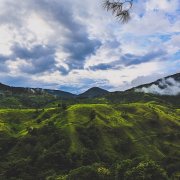
Coffee crisis, mankind's favorite drink is about to go into history.
Droughts, floods, infectious diseases and climate changes have posed a great threat to human coffee addiction. Do we really have to face the days when there is no coffee? When we read the newspaper and pick up the latte or espresso on the table, climate change seems far away, but thousands of kilometers away, the origin of coffee beans is experiencing waves. Mersey.

With reduced production and higher prices, climate change may lead to no coffee to drink in the future?
Communication of professional baristas Please pay attention to the coffee workshop (official Wechat account cafe_style) Central America is too humid and Brazil is too dry to teach coffee what to do. In Guatemala and throughout Central America, coffee production has been greatly reduced by infection with a fungus called coffee rust. Along the equator, which is most suitable for coffee growth, the problem of yield reduction is mostly due to extreme rainfall. PHOT

Tropical climate features Rwandan coffee flavor, characteristics, taste and manor
Since the 1920s, Arabica coffee grown in Rwanda has been famous for its unique fruit sweetness and rich grass aroma. In recent years, the Rwandan government has taken positive measures to vigorously promote coffee production, set up coffee production cooperatives in various places, and give technical guidance and financial support to farmers, so that coffee production has made considerable progress. University of Rwanda

Coffee Storm-will coffee disappear from the world in the future?
Professional coffee knowledge exchange more coffee bean information Please pay attention to the coffee workshop (Wechat official account cafe_style) Climate change has affected the growth of coffee, especially the more sensitive Arabica beans are more sensitive to temperature, the increase in temperature will easily cause insect pests and leaf rust

What conditions do coffee trees need for planting? do they have high requirements on local climate?
The origin of the coffee tree is Ethiopia in Africa. In botany, coffee trees belong to the evergreen trees of the subgenus Rubiaceae, and coffee beans, commonly known as coffee beans, are the seeds of the fruit of coffee trees, just because they are shaped like beans, so they are called coffee beans. Climate is the decisive factor for coffee cultivation. Coffee trees are only suitable for growing in the tropics or subtropics, so latitude 25 is south and north.

Lively and fragrant boutique coffee beans in Incht Manor, Guatemala, geographical location, climatic sea
Antigua coffee is popular with most coffee lovers only because of its distinctive aroma. Because it is planted in the hills of volcanoes, it can retain its own characteristics more than Costa Rica, the main reason is that it has more geographical and climatic advantages than Costa Rica. Guatemala is located in the tropics, but because of its high altitude, Qi

Brief introduction of planting Market Price of Incht Manor in Waiqiang Plateau, Guatemala Antigua Coffee
Because it is planted in the hills of volcanoes, it can retain its own characteristics more than Costa Rica, the main reason is that it has more geographical and climatic advantages than Costa Rica. Guatemala is located in the tropics, but due to the relatively high altitude, the climate is mild, it is a subtropical climate. Under the influence of this climate, coffee trees blossom and bear fruit more than any other place in the world.

Introduction of Puerto Rico Larez Coffee with mild climate and high quality clay
The aroma is comparable to that of any other kind of coffee in the world. In the Yauco area, the coffee is owned and operated by local planters. The mountain climate here is mild, the plants have a long mature period (from October to February), and the soil is of high quality clay. Some old varieties of Arabica coffee beans are grown here, although the yield is lower than other varieties, but generally of high quality. this

Rwanda washed bourbon coffee
Rwanda is known as the country of a thousand hills, with many mountains and plateaus, and most areas are tropical plateau climate and savanna climate, mild and cool. There are about 33000 hectares of coffee plantations and 500000 people are engaged in the coffee industry. With good natural conditions of high altitude and fertile volcanic soil, the country's fertile soil and suitable climate contribute to plant growth, and coffee trees seem to be driven.
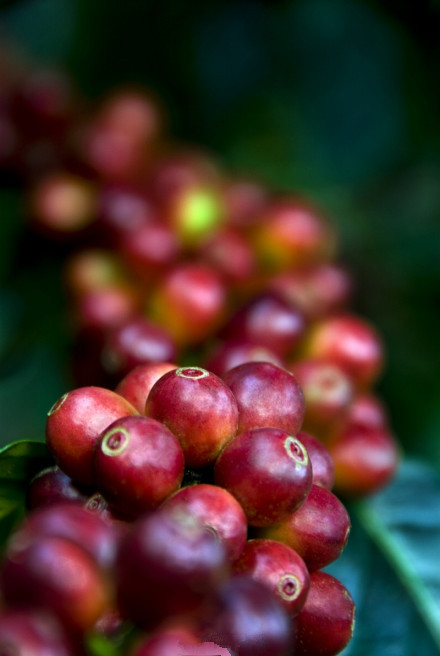
Coffee crisis with tricky tastes and fragile varieties
The price of coffee is forecast to rise by 25% by 2050. The livelihoods of 25 million people may depend on whether scientists can find a way to protect fragile coffee plants and berries. A whole year's coffee harvest may depend on the florescence of just a few days, when plants are particularly vulnerable to extreme weather. Last year, coffee leaf rust caused coffee farms in Nicaragua

Flavor Description of Colombia Coffee Bean Grind Scale Production Area Treatment Taste Introduction
Colombia Coffee Bean Flavor Description Grind Scale Production Area Treatment Taste Introduction Colombia's favorable climate provides a true natural pasture for coffee. Coffee trees in Colombia are cultivated mainly in the Andes, on steep slopes up to 1,300 meters above sea level, where the temperature is about 18 degrees Celsius all year round, the annual rainfall is 2000 to 3000 mm, and the latitude is 1 - 1

Introduction to the characteristics of Ecuador Fine Coffee Flavor Manor
Ecuador is divided into the western coast, the central mountains, the eastern Amazon River basin and the four central regions of the Galapagos Islands, with diverse climatic conditions. The western coastal plain belongs to the tropical rain forest climate, with an average temperature of 23-25 ℃. The central Andes. The intermountain basin in this area belongs to the savanna climate, and the mountain belongs to the subtropical forest climate, with perennial snow above 4000 meters above sea level. Annual average decline

The planting environment and natural climate of coffee trees
Coffee belt: coffee can not be grown in any environment, because it is originally a plant growing in a tropical rain forest, and in phylogeny, it forms the habit of requiring calm wind, cool, shaded or semi-shaded and humid environment. We call the strips on both sides of the equator between latitudes 25 degrees south and north suitable for the growth of coffee trees as coffee belts. Temperature: the requirement for temperature varies with the species of cultivation, small

Introduction to the flavor, characteristics, taste and manor of Rwandan coffee with tropical climate characteristics
Since the 1920s, Arabica coffee grown in Rwanda has been famous for its unique fruit sweetness and rich grass aroma. In recent years, the Rwandan government has taken positive measures to vigorously promote coffee production, set up coffee production cooperatives in various places, and give technical guidance and financial support to farmers, so that coffee production has made considerable progress. University of Rwanda