
"colonization"
1791 article(s) found

Classic Vietnamese Coffee recipe course which is the best brand of Vietnamese coffee beans
Professional coffee knowledge exchange more coffee bean information please follow the coffee workshop (Wechat official account cafe_style) Vietnamese coffee _ Vietnamese coffee prices _ Vietnamese coffee brand French colonization of Vietnam left traces, but not limited to Vietnamese sandwiches used in French bread and meat sauce (pt), Vietnamese coffee that many people flock to is also another classic. Serious

Vietnamese coffee, a classic I fell in love with as soon as I drank it.
Professional baristas Please pay attention to the traces of the French colonization of Vietnam left by the coffee workshop (official Wechat account cafe_style). It is not just the French bread and pt used in Vietnamese sandwiches. Vietnamese coffee, which many people are flocking to, is another classic. Serious Eats reports that the French planted a large number of coffee trees in Vietnam in the 19th century. Although it is planted at higher altitude

Pictures of common brands of Vietnamese coffee what brand of coffee in Vietnam tastes good? three classic Vietnamese coffee
Professional coffee knowledge exchange more coffee bean information Please follow the traces of the French colonization of Vietnam left by the coffee workshop (Wechat official account cafe_style). It is not limited to the French bread and pt used in Vietnamese sandwiches. Vietnamese coffee, which many people are flocking to, is also another classic. Serious Eats reported that the French planted in Vietnam in the 19th century.

Do you know how many cups of coffee a day is best?
1 cup: keep your blood vessels healthy, stabilize your blood pressure and increase your brainpower, but don't drink after 4: 00 p. M. to avoid insomnia. 2 cups: prevent memory loss and Alzheimer's disease, not suitable for pregnant women. 3 cups: reduce the risk of ovarian cancer and gallstones and increase the risk of heart disease. 4 cups: reduce the risk of oral cancer, throat cancer, colon cancer, breast cancer and diabetes, and increase the risk of rheumatoid arthritis. 5 cups
Arabica and Robusta hybrid coffee bean varieties
1. Timo: A hybrid of Arabica and Ba and Robasta found in East Timor. 2. Catimor: Major variety of commercial bean, East Timor, colonized by Portugal for 400 years. Brazilian bourbon variety Catimor was transplanted to East Timor by Portuguese in 1959. Mixed with Timo, coffee from 1970 to 1990

Coffee what enters Asia Coffee what enters Europe
Coffee into Asia the Arabs failed to spread coffee in Asia, but the Dutch did! In the process of colonization, they grew coffee in Malaba, India, and brought it to Batavia in what is now Java, Indonesia, in 1699. The Dutch colonies once became the main supplier of coffee in Europe. At present, Indonesia is the fourth largest coffee export in the world.

Indonesian Coffee beans Java Coffee introduction Java boutique coffee beans
Java: coffee bean species Robusta Sumatra (Sumatra): the history of coffee bean species Arabica Java coffee (java Java coffee) the Dutch first introduced coffee to Central and South America in the 1820s. Coffee spread from the Dutch colonies to French Guiana and Brazil. During the Dutch colonization, they were in Malaba, India.

Introduction to coffee producing areas in Arusha, Tanzania | introduction to Elewana Arusha Manor Coffee
Just outside the town of Arusha, at the foot of Mount Mount Meru, not far away, large coffee plantations offer a completely different view of the hustle and bustle of Arusha. Fresh air, vast land and the sound of nature. The Elewana Arusha Coffee Lodge Hotel, located in the beautiful middle, is the oldest plantation since German colonization.
Matagalpa Coffee producing area in Nicaragua introduces the flavor characteristics of Matagalpa coffee
Matagalpa (Matagalpa), the province of Matagalpa, is the second largest province in northern Nepal, with a cool climate and diverse ecology, creating natural conditions suitable for growing coffee, and because it is less influenced by Spanish colonization, it still preserves the indigenous way of life and many archaeological relics and rock paintings. This area is a boutique coffee bean producing area in Nepal. Altitude

Tanzanian coffee| Tanzania Coffee Bean Flavor Evaluation_Tanzania Coffee History Origin
Tanzania was colonized by Germany, and the colonial government required Tanzania to grow Arabica coffee in Bukoba. Later, after World War I, ownership passed to the British, who planted more than 10 million coffee seedlings in Bukoba, but clashed with the native Hayas.

Introduction to the characteristics of Santa Cruz Manor
Ecuador, formerly part of the Inca empire. It was colonized by Spain in 1532. Independence was declared on August 10, 1809, but it was still occupied by the Spanish colonial army. It was completely freed from Spanish colonial rule in 1822. Joined the Republic of Greater Columbia in 1825. After the disintegration of Great Colombia in 1830, the Republic of Ecuador was proclaimed. Since the founding of the people's Republic of China, the political situation of Ecuador has been in turmoil.
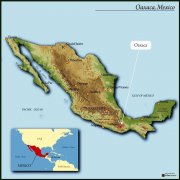
Introduction of Coffee producing areas in Oaxaca, Mexico Coffee flavor characteristics in Oaxaca
The capital of Oaxaca, located about 510km southeast of Mexico City, the legendary city blessed by God has a charming climate like spring all year round. Dating back to 1000 BC, the city was once the gathering place of two ancient civilizations, Mixtec and Zapotec, and then experienced Spanish colonization. Oaxaca is still home to many aborigines.

Colombian coffee is sour and astringent.
Colombia Coffee is famous all over the world. Colombia, which is located in the northwest of South America, is a beautiful country with a long history. Indians have lived on this land since ancient times. It was colonized by Spain in 1531 and gained independence in 1819. It was renamed in 1886 to commemorate Columbus, the discoverer of the American continent. In 1808, a priest came from French Ann.

A brief introduction to the planting situation, geographical location, climate and altitude of fine coffee beans in Huilan, Colombia
Indians have lived on this land since ancient times. It was colonized by Spain in 1531 and gained independence in 1819. It was renamed in 1886 to commemorate Columbus, the discoverer of the American continent. Colombia has beautiful mountains and rivers, beautiful scenery, pleasant climate, spring all year round, fresh air and refreshing air. Walking in the streets of Bogota, the capital, feeling light

The priest introduced the coffee tree to Guatemala
In 750, Father Jesuit introduced coffee trees to Guatemala, where the coffee industry was developed by German colonization at the end of the 19th century. Today, most of the coffee industry's production takes place in the south of the country. Here, the slopes of the Sierra Madre volcano provide ideal conditions for growing high-quality coffee beans and the vitality of coffee growing at high elevations.
Coffee visit in Southeast Asia-- Vietnamese Coffee
In Vietnam, drinking coffee between friends is as natural as shaking hands. A cafe in three or five steps is not only a street view of a Vietnamese city, but also seems to be a ritual and an important way of socializing, while Vietnamese only drink tea at home. Vietnam, which has been colonized by France for many years, is deeply affected not only by the language, but also by the way it drinks coffee, often served with baguettes and milk sugar. Vietnam is prolific.

How to use the coffee drip pot-siphon pot coffee brewing steps
How to use coffee drip pot-siphon pot coffee step Vietnam was colonized by France, when missionaries introduced coffee cultivation, Vietnam is now the world's second largest coffee producer (in terms of yield), but because it grows almost low-quality robusta coffee, it is mostly used for commercial beans and instant production, because Vietnamese robusta coffee has a bad smell of burning plastic and rubber.

Introduction to the characteristics, taste and handling of Guatemalan coffee
The coffee industry was developed by German colonization at the end of the 19th century. Today, most of the coffee industry's production takes place in the south of the country. Here, the slopes of the Sierra Madre volcano provide ideal conditions for growing high-quality coffee beans, and coffee growing at high altitudes is full of vitality. Compared with other kinds of coffee, tasters prefer this kind of spicy flavor.

Introduction to the appearance characteristics of Guatemalan coffee beans
In 1750, Father Jesuit introduced coffee trees to Guatemala, where the coffee industry was developed by German colonization at the end of the 19th century. Today, most of the coffee industry's production takes place in the south of the country. Here, the slopes of the Sierra Madre volcano provide ideal conditions for growing high-quality coffee beans, coffee plants growing at high altitudes.

A brief introduction to the Source and Development of Mantening Coffee
Professional coffee knowledge exchange more information on coffee beans Please follow the coffee workshop (Wechat official account cafe_style) where coffee beans in Indonesia first came from, and coffee was first introduced to Central and South America by the Dutch in the 1820s. Coffee spread from the Dutch colonies to French Guiana and Brazil, the Dutch in the process of foreign colonization, they in India