
"diamond"
1380 article(s) found

Costa Rica Gamboa Manor Coffee introduction American Coffee Manor what kind of Latin American Coffee
Professional coffee knowledge exchange more coffee bean information please follow Coffee Workshop (Wechat official account cafe_style) Farm: Finca Gamboa varieties: Katola and Katoi processing: semi-washed, dry altitude: 1750-1800 m above sea level Boss: Martin Gutieresmonge City: Dota, Santa Maria area: Tarrazu cupping notes generally speaking: sweet, milk
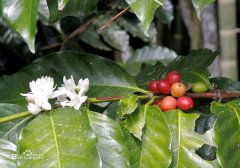
Washed coffee and ripe beans at Diamond Hill Manor in Costa Rica
Costa Rican coffee cultivation was introduced by Cuba in 1779 and exported for the first time in 1820. There are about 32000 coffee farmers, with an average planting area of less than one hectare (10000 hectares) per farmer. Costa Rica has a population of 41 billion (2006), with a coffee planting area of 82500 hectares and an annual production of 1.7 million bags (60kgs per bag). The annual domestic consumption is 380000 bags.

Costa Rican Diamond Hill Manor washed SHB Kaddura Fine Coffee American Coffee
Costa Rican coffee cultivation was introduced by Cuba in 1779 and exported for the first time in 1820. There are about 32000 coffee farmers, with an average planting area of less than one hectare (10000 hectares) per farmer. Costa Rica has a population of 41 billion (2006), with a coffee planting area of 82500 hectares and an annual production of 1.7 million bags (60kgs per bag). The annual domestic consumption is 380000 bags.

Introduction of extraction time by Red Honey method Costa Rican Diamond Mountain Coffee Flavor description Grinding degree treatment method
The flavor of Costa Rican Diamond Mountain Coffee describes the completely different climatic conditions in Costa Rica, completely subverting the classification of the four seasons of the year, where there are only two seasons, with a rainy season from April to December and a dry season from the end of December to April of the following year, also known as summer. The annual average temperature in the capital San Jose ranges from 15 ℃ to 26 ℃, while the temperature in coastal areas is relatively high.
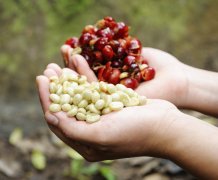
Costa Rica Diamond Hill Estate washed coffee ripe beans boutique coffee beans
Costa Rican coffee cultivation was introduced from Cuba in 1779 and exported for the first time in 1820. There are about 32,000 coffee farmers in Costa Rica, with an average cultivation area of less than one hectare (10,000 m2) per farmer. Costa Rica has a population of 4.1 million (2006), coffee cultivation area of 82,500 hectares, annual production of 1.7 million bags (60kgs per bag), annual domestic consumption of 380,000 bags, flat

Flavor description of Costa Rican Diamond Hill boutique coffee beans with light and pure flavor
Tarrazu in Costa Rica is one of the major coffee producing areas in the world. The coffee produced is light and pure in flavor and pleasant in aroma. Costa Rica, with its fertile volcanic soil and good drainage, is the first country in Central America to grow coffee and bananas for commercial value. Coffee and bananas are the country's main exports. In 1729, coffee was introduced from Cuba to Goth.

Costa Rica Diamond Hill Manor in Costa Rica washed SHB Kaddura boutique coffee beans
Costa Rican coffee cultivation was introduced by Cuba in 1779 and exported for the first time in 1820. There are about 32000 coffee farmers, with an average planting area of less than one hectare (10000 hectares) per farmer. Costa Rica has a population of 41 billion (2006), with a coffee planting area of 82500 hectares and an annual production of 1.7 million bags (60kgs per bag). The annual domestic consumption is 380000 bags.

Introduction to the quality characteristics of Coffee Flavor description treatment in Diamond Mountain Manor, Costa Rica
Las Lajas Estate Yellow Honey country: Costa Rica; producing area: central Valley Grade: SHB; treatment: yellow honey treatment altitude: 1300-1500m; Variety: Caturra, Catuai flavor description CUPPING NOTES: honey, tropical fruit, maple syrup, cantaloupe Honey,Tropical Fruit,Mapl

Semi-sunny Brazilian hand-made coffee beans at the San Antonio Manor in the Diamond Plateau of Brazil's Basiya province.
Professional coffee knowledge exchange more coffee bean information Please pay attention to coffee workshop (Wechat official account cafe_style) Coffee was first introduced to Brazil in the early 18th century. In 1727 the Brazilian government sent a personable army officer to secretly bring coffee seeds from French Gaiana to Brazil on the ground of mediating border disputes. It is said that the wife of French Gaiana was deeply concerned about this.

Introduction of siphon brewing method for washing treatment of Costa Rican coffee Tarazhu Diamond Villa Garden
For the exchange of professional baristas, please pay attention to the coffee workshop (Wechat official account cafe_style) siphon pot (Syphon), commonly known as "plug wind pot" or "siphon", is a simple and easy-to-use method of coffee brewing, and it is also one of the most popular coffee brewing methods in cafes. Although the siphon kettle has the nickname of "plug wind type", it has nothing to do with the siphon principle, but produces water vapor when heated by water.

Costa Rican Coffee Development History Costa Rican Coffee Origin Costa Rican Tarazu Diamond
Coffee is an important economic source of Costa Rica. It was introduced in 1808 and has been cultivated for 200 years. Costa Rica has 1x3 population invested in coffee-related industries. Colombians say that coffee has changed the country and enjoyed a rich environment, and coffee has indeed made an outstanding contribution. Although Costa Rica ranks third from the bottom in terms of land area in Central America, its economic environment is better than that of Central America.

Where can I buy coffee beans online? Where to buy coffee beans? Huilan plateau diamond in Huilan producing area of Colombia
1. When buying beans online, pay attention to the production date, shelf life, packaging seal, roasting degree of coffee beans, type of coffee beans, and your utensils to determine what beans you want. If you use blue mountain beans to make ESP, it is indeed a more unconventional way, but it is also too unprofessional and expensive, and the taste is not very good. Date of manufacture must be at least

Costa Rican Diamond Villa washed Coffee cooked beans Kaddura Coffee varieties High quality Coffee
Boutique coffee (specialty coffee) is also called specialty coffee selection coffee. It refers to coffee made from a small number of raw beans with excellent taste grown in an ideal geographical environment. Depending on the special soil and climatic conditions in which they grow, they have outstanding flavor. After strict selection and classification, this kind of coffee is hard in texture, rich in taste and stylish.

Planting history of single bean flavor description in Diamond Mountain, Costa Rica
For professional baristas, please follow the coffee workshop (Wechat official account cafe_style) ORIGIN: Costa Rica REGION: Tarrazu SUBREGION: Dota Valley PRODUCER: Montanas Del Diamante Estate/Gutierrez Family PLANT SPECIES: Arabica PROCESSING METHOD: Washed PROCESSING DESCRIPTION:

Introduction to the Flavor description and Grinding degree of Diamond Hill Pocket Coffee in Bogut Jade Manor, Panama
Panamanian Coffee in 1823, the Central American Federal Republic, composed of Guatemala, El Salvador, Honduras, Nicaragua and Costa Rica, formally submitted a request to the United States for assistance in the construction of the canal. In June of the following year, Simon Bolivar, the father of Latin American freedom, formally put on the agenda at the international conference held by Simon Bolivar, the father of Latin American freedom. In the proposed four

Introduction to the characteristics of Tanzania Fine Coffee Bean Flavor Manor with excellent Taste
Tanzania is rich in mineral resources. By 2014, the major minerals identified include gold, diamond, iron, nickel, phosphate, coal and various gemstones, ranking fifth in Africa in total. Tanzania also has huge natural gas reserves. According to official data released by Tanzania, Tanzania has proven natural gas reserves of 44 trillion cubic feet, and the total reserves are expected to be at least

Costa Rica Diamond Mountain Coffee Bean Origin History and Culture Introduction
Costa Rica has a total of eight producing areas, of which it is recognized that the three best producing areas, Tarazhu, Central Valley, Western Valley, Las Lajas (Sabanilla de Alajuela) is located in the Central Valley producing area, Pos Volcano (Pos Volcano) foothills. "Lahas" is technically the name of the Chacon family processing plant, and the name of the estate is Finca.

Aroma Unique Costa Rican Diamond Mountain Coffee Flavor Description Grindness Features Variety Taste Boutique
Costa Rican coffee is full of particles, with ideal acidity and unique aroma. Costa Rica's coffee industry, formerly controlled by the Instituto del Café de Costa Rica (ICAFE), has been taken over by the Official Coffee Council (Oficina del Caf). Among coffee exports, those deemed substandard are colored blue.

A brief introduction to the historical development of coffee background in Diamond Hill Manor in Costa Rica
Tarrazu in Costa Rica is one of the major coffee producing areas in the world. The coffee produced is light and pure in flavor and pleasant in aroma. Costa Rica, with its fertile volcanic soil and good drainage, is the first country in Central America to grow coffee and bananas for commercial value. Coffee and bananas are the country's main exports. In 1729, coffee was introduced from Cuba to Goth.

Costa Rica Diamond Hill Manor Soft Orange Orange Toast Caramel Cocoa Sweet
Fine coffee is fresh coffee. Whether it's food or drink, the fresher the better, and so is specialty coffee. Coffee beans should be kept fresh before making fine coffee, including the preservation of roasted beans, and the coffee beans should be ground before making, which is also to retain its most original and best flavor. And hand brewed coffee making is such a way to make fine coffee