
"dura"
356 article(s) found

Introduction of full-grained and nutritious Colombian coffee beans
The main varieties of Colombian coffee are small grains of coffee. Plants are small trees or large shrubs, 5-8 m tall, usually much branched at base; old branches gray-white, nodes dilated, young branches glabrous, compressed. Leaves thinly leathery, ovate-lanceolate or lanceolate, 6-14 cm long and 3.5-5 cm wide, tip long acuminate, acuminate part 10-15 mm long, base cuneate or slightly obtuse, rarely rounded, entire or

Colombia's two main coffee bean varieties Kadura and Colombia coffee bean production regional flavor
Colombia Coffee Producers Association (Federación Nacional de Cafeteos de Clolambia), or industry abbreviation [FNC] staff introduced the two main varieties of Colombian coffee, Cadura and Colombia. Kadura was introduced from Brazil in the 1960s and now accounts for 45-50% of Colombia's production, replacing the earliest Tibica. A new breed of the same name as Colombia [Colombi

Introduction to the flavor and taste of Colombian boutique coffee varieties
The main varieties of Colombian coffee are small grains of coffee. Plants are small trees or large shrubs, 5-8 m tall, usually much branched at base; old branches gray-white, nodes dilated, young branches glabrous, compressed. Leaves thinly leathery, ovate-lanceolate or lanceolate, 6-14 cm long and 3.5-5 cm wide, tip long acuminate, acuminate part 10-15 mm long, base cuneate or slightly obtuse, rarely rounded, entire or
Introduction to the Grinding scale of the Flavor of Honduran Coffee beans by the method of Variety treatment
The Flavor of Honduran Coffee beans Flavor Variety treatment Grinding scale introduces that the granules of Honduran coffee beans are large in shape, uniform in size, uniform in color and glossy. In order to facilitate harvesting, farmers will prune the coffee trees to no more than 150 centimeters, because if they grow too high, they have to set up ladders to pick, which is not only time-consuming, but also may damage the trees by bending branches.

Introduction to the production areas of sweet Santa Rita Manor Coffee Grinding scale treatment
The suitable climate in Colombia provides a real natural pasture for coffee. Coffee trees in Colombia are mainly cultivated in the Andes, on steep slopes about 1300 meters above sea level, where the annual temperature is about 18 degrees Celsius, annual rainfall is 2000 to 3000 millimeters, latitude 1-11 15 north, longitude 72-78 west, and the specific range of elevation can exceed 2.000 meters. By

Introduction of Coffee Flavor description and processing methods in Hope Manor in Colombia
The main varieties of Colombian coffee are small grains of coffee. Plants are small trees or large shrubs, 5-8 m tall, usually much branched at base; old branches gray-white, nodes dilated, young branches glabrous, compressed. Leaves thinly leathery, ovate-lanceolate or lanceolate, 6-14 cm long and 3.5-5 cm wide, tip long acuminate, acuminate part 10-15 mm long, base cuneate or slightly obtuse, rarely rounded, entire or

Nicaragua Maracadura Coffee Bean Flavor Description Processing Variety Characteristics Introduction to the region of origin
In many countries coffee production is severely affected for political reasons. The coffee industry in Nicaragua is no exception. The revolution of 1979 forced coffee growers to flee to Miami. A period of uncertainty ensued as the government considered whether to reallocate land (including many plantations), resulting in a shortage of coffee supplies and a decline in production from the early 1970s.

How many degrees of water is suitable for Colombian coffee beans? introduction to the area of the manor.
The main varieties of Colombian coffee are small grains of coffee. Plants are small trees or large shrubs, 5-8 m tall, usually much branched at base; old branches gray-white, nodes dilated, young branches glabrous, compressed. Leaves thinly leathery, ovate-lanceolate or lanceolate, 6-14 cm long and 3.5-5 cm wide, tip long acuminate, acuminate part 10-15 mm long, base cuneate or slightly obtuse, rarely rounded, entire or

Colombia Hui Lan coffee beans grinding graduation processing method taste variety origin introduction
Colombia coffee varieties are mainly small coffee. Plants are small trees or large shrubs, 5-8 meters high, usually multi-branched at the base; old branches are gray, nodes expand, young branches glabrous, compressed. Leaves thinly leathery, ovate-lanceolate or lanceolate, 6-14 cm long, 3. 5 -5 cm wide, apex long acuminate, acuminate part 10-15 mm long, base cuneate or slightly obtuse, rarely rounded, entire or rounded

Introduction to the description of Manor Flavor by Columbia Coffee Bean Grinding scale
After maturity, Colombian coffee beans have a reputation for flawlessness and elegance like jade in the jade world, with heavy particles, rich nutrition, rich flavor, soft taste, smooth taste and excellent balance; the color is as clear and transparent as emerald emerald; when it comes to the mouth, it makes people uncontrollably play with the emerald.

Colombia coffee history trace species morphology
The history of coffee cultivation in Colombia can be traced back to the Spanish colonial era in the 16th century. There are also many sayings about the history of coffee in Colombia: First, it is said that it came from the Caribbean island of Haiti via Salvador in Central America. Second, coffee beans were first introduced into Colombia in 1808 by a priest from the French Antilles via Venezuela. one of
Description of taste and flavor of coffee beans produced in Colombian Hope Manor by variety treatment
Colombia hopes to describe the taste and flavor of the vineyard coffee beans produced by the variety treatment method. Colombia's suitable climate provides a real natural pasture for coffee. Coffee trees in Colombia are mainly cultivated in the Andes, on steep slopes about 1300 meters above sea level, where the annual temperature is about 18 degrees Celsius, annual rainfall is 2000 to 3000 millimeters, and latitude 1-1.

Long aftertaste of Yunnan small Coffee Huaguoshan boutique Coffee Bean cultivation Geographic location Climate Sea
Berries broadly elliptic, red, 12-16 mm long, 10-12 mm in diameter, exocarp dura, mesocarp fleshy, sweet at maturity; seeds raised abaxially, ventral flat, longitudinally grooved, 8-10 mm long and 5-7 mm in diam. Direct branches are used for cutting materials during the flowering period from March to April, but not a branch, because the new plants grown after cutting with one branch can only grow creeping, not straight.

Introduction to Hope Manor, the main variety of Colombian coffee
One: it is said to come from the sea island of the Caribbean and from El Salvador in Central America. Second: in 1808, a priest introduced coffee beans to Colombia for the first time from the French Antilles via Venezuela. One of them is that Colombia's first coffee seeds were imported from Venezuela through the province of Santander. [1] third: the earliest coffee cultivation in Colombia
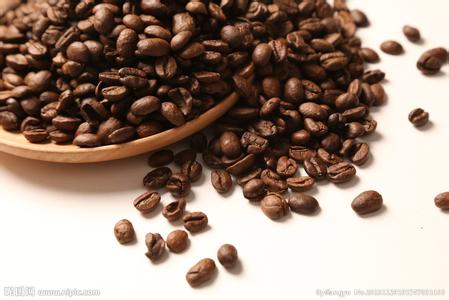
Introduction to the taste of the method of variety treatment in the grinding scale of Colombian coffee beans
Each caffeine variety has a different origin and has its own strong character, such as the masculine Mantenin, which resembles the character of an iron and steel man, and the mellow, fragrant Blue Mountain Coffee, which is called the gentle woman's yearning addiction. Columbia Super Coffee, which has always been light-scented, is the most suitable for those who like light sex. Such people do not want to drink coffee as a serious thing, from sour

Introduction to the flavor description of Colombian Yi coffee and the characteristics of varieties
The main varieties of Colombian coffee are small grains of coffee. Plants are small trees or large shrubs, 5-8 m tall, usually much branched at base; old branches gray-white, nodes dilated, young branches glabrous, compressed. Leaves thinly leathery, ovate-lanceolate or lanceolate, 6-14 cm long and 3.5-5 cm wide, tip long acuminate, acuminate part 10-15 mm long, base cuneate or slightly obtuse, rarely rounded, entire or

Colombian coffee storage method unique flavor
The history of coffee cultivation in Colombia can be traced back to the Spanish colonial era in the 16th century, and there are many theories about the history of coffee in Colombia: one: it is said to come from the island of Haiti in the Caribbean and from El Salvador in Central America. Second: in 1808, a priest introduced coffee beans to Colombia for the first time from the French Antilles via Venezuela. One of them

Fine coffee Guatemala coffee varieties Kadura, Kaduai, Bourbon
The extra hard coffee beans here are full, delicious and balanced, and the coffee brewed with them is pure and rich. Guatemala coffee once enjoyed a reputation as the best coffee in the world, but quality declined for a while. Happily, however, its popularity is gradually being restored. Father Jesuit introduced coffee trees to Guatemala in 1750, late 19th century
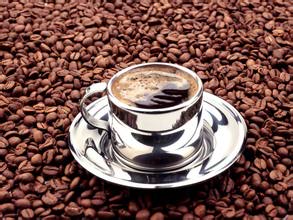
Fine coffee Guatemala coffee varieties Kadura, Kaduai, Bourbon
The extra hard coffee beans here are full, delicious and balanced, and the coffee brewed with them is pure and rich. Guatemala coffee once enjoyed a reputation as the best coffee in the world, but quality declined for a while. Happily, however, its popularity is gradually being restored. Father Jesuit introduced coffee trees to Guatemala in 1750, late 19th century
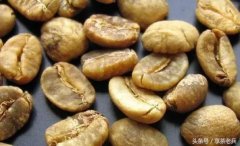
The Story of Sumatran Coffee beans with the characteristics of aged Mantenin for more than ten years
Professional coffee knowledge exchange more coffee bean information please follow the coffee workshop (Wechat official account cafe_style) Starbucks Sumatra coffee beans introduce Starbucks Sumatra coffee beans how long should the shelf life of coffee beans be? Brand coffee beans generally set a shelf life, which is usually 1-2 years. Coffee beans usually have a shelf life of 1-2 years, but