
"dura"
356 article(s) found

Introduction to the Variety characteristics of Coffee Flavor description in Colombia
Colombian coffee flavor description planting environment regional treatment variety characteristics Colombia is rich in products, especially coffee, flowers, gold and emeralds are known as the four treasures. In 1808, a priest introduced coffee to Colombia for the first time from the French Antilles via Venezuela. Today, the country is the second largest coffee producer after Brazil and the largest Arabica coffee in the world

Costa Rica Diamond Hill Estate washed coffee ripe beans Kadura coffee varieties high quality coffee
Specialty coffee is also known as specialty coffee. It refers to coffee made from green beans with excellent taste characteristics grown in a few extremely ideal geographical environments. Depending on the particular soil and climatic conditions in which they are grown, they have outstanding flavors. This type of coffee is carefully selected and graded for its hard texture, rich taste and wind.

Costa Rica Don Pearl Microprocessing Field Peak Manor Kadura Red Honey Processing Fine Coffee Bean Shell
Professional barista communication, please pay attention to coffee workshop (Weixin Official Accounts cafe_style) Costa Rica Don Joel La Cumbre Caturra Red Honey Flavor Description: The front part is the sour and sweet feeling of citrus, grapefruit and lemon, while the middle and rear part has the taste of caramel and nut. overall

Introduction to Coca Cauca Lazmus Manor, Columbia Coffee with mild Climate
The main varieties of Colombian coffee are small grains of coffee. Plants are small trees or large shrubs, 5-8 m tall, usually much branched at base; old branches gray-white, nodes dilated, young branches glabrous, compressed. Leaves thinly leathery, ovate-lanceolate or lanceolate, 6-14 cm long and 3.5-5 cm wide, tip long acuminate, acuminate part 10-15 mm long, base cuneate or slightly obtuse, rarely rounded, entire or

Introduction of Fine Coffee beans in Coffee Flavor and Taste area of Lazimus Manor, Colombia
The main varieties of Colombian coffee are small grains of coffee. Plants are small trees or large shrubs, 5-8 m tall, usually much branched at base; old branches gray-white, nodes dilated, young branches glabrous, compressed. Leaves thinly leathery, ovate-lanceolate or lanceolate, 6-14 cm long and 3.5-5 cm wide, tip long acuminate, acuminate part 10-15 mm long, base cuneate or slightly obtuse, rarely rounded, entire or

What is a hybrid variety of maracadura coffee? Malakadura Flavor Introduction
Maracaturra is called elephant bean because it is large and much larger than ordinary coffee beans. Maracaturra is a hybrid of Maragogype and Caturra, one of the three elephant bean varieties with Pacamara and Maragogype. The yield of elephant beans at high altitude is not much, but the taste is rich and sweet. Malakadura is a variant of bourbon and tibika.
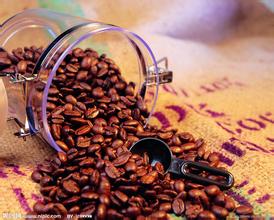
Fine coffee Colombian coffee species morphology
The main varieties of Colombian coffee are small grains of coffee. Plants are small trees or large shrubs, 5-8 m tall, usually much branched at base; old branches gray-white, nodes dilated, young branches glabrous, compressed. Leaves thinly leathery, ovate-lanceolate or lanceolate, 6-14 cm long and 3.5-5 cm wide, tip long acuminate, acuminate part 10-15 mm long, base cuneate or slightly obtuse, rarely rounded, entire or

Colombia coffee-producing country Lazmus farm with the most favorable natural conditions for coffee growth
Colombia, located in the northwest of South America, is a beautiful country with a long history. Indians have lived on this land since ancient times. It became a Spanish colony in 1531 AD and gained independence in 1819. It was renamed in 1886 to commemorate Columbus, the discoverer of the American continent. Colombia, beautiful mountains, beautiful scenery, pleasant climate, four seasons

Characteristics of Colombian Coffee Flavor Manor
The main varieties of Colombian coffee are small grains of coffee. Plants are small trees or large shrubs, 5-8 m tall, usually much branched at base; old branches gray-white, nodes dilated, young branches glabrous, compressed. Leaves thinly leathery, ovate-lanceolate or lanceolate, 6-14 cm long and 3.5-5 cm wide, tip long acuminate, acuminate part 10-15 mm long, base cuneate or slightly obtuse, rarely rounded, entire or

Please recommend coffee beans that don't taste sour. Niagara Dipilto coffee beans have different enjoyment.
Professional coffee knowledge exchange more coffee bean information please follow the coffee workshop (Wechat official account cafe_style) front street-Niagara Dipilto Coffee introduction Dipilto is one of the smallest cities in Nicaragua, covering an area of 106square kilometers. 90 per cent of its 5000 people live in rural areas. Di Pilto with his pine forest, warmth, religious enthusiasm and people's loyalty and high

Costa Rica Three Sisters Manor Kadura seed washing treatment fine coffee beans flavor taste fragrant
Weixin Official Accounts cafe_style Tres Hermanas Estate Caturra Washed Costa Rica Three Sisters Estate Single Kadura Washing Method Flavor Description: Soft acidity like freshly squeezed orange juice, yellow lemon with fragrance of fragrant cheese, accompanied by cocoa and toffee sweet ending, sour

Columbia Coffee Coca Cauca producing area with unique sour and mellow taste
The earliest record of coffee cultivation in Colombia appears in a book called The Illustrated Orinoca by Spanish missionary Jose Gumilla. He describes what he saw when he preached on both sides of the Meta River in 1730, in which he mentioned the local coffee plantation. By 1787, other missionaries had spread coffee to other parts of Colombia.

Colombia Emerald Roast Deep Coffee Flavor Description Treatment Taste Grind Scale Introduction
Colombia Emerald Roast Deep Coffee Flavor Description Processing Method Taste Grinding Scale Introduction Colombia is rich in products, especially coffee, flowers, gold and emeralds known as the four treasures. Coffee was first introduced to Colombia in 1808 by a priest from the French Antilles via Venezuela. Today the country is the second largest coffee producer after Brazil and the largest Arabica in the world.

Columbia Coffee Lazimus Manor introduces Starbucks Colombian Coffee
The main varieties of Colombian coffee are small grains of coffee. Plants are small trees or large shrubs, 5-8 m tall, usually much branched at base; old branches gray-white, nodes dilated, young branches glabrous, compressed. Leaves thinly leathery, ovate-lanceolate or lanceolate, 6-14 cm long and 3.5-5 cm wide, tip long acuminate, acuminate part 10-15 mm long, base cuneate or slightly obtuse, rarely rounded, entire or

Colombian Hope Manor Coffee Bean production area Taste treatment Grinding scale
Colombia hopes that the taste treatment of manor coffee beans in the region of grinding scale Colombian coffee is mainly small-grain coffee. Plants are small trees or large shrubs, 5-8 m tall, usually much branched at base; old branches gray-white, nodes dilated, young branches glabrous, compressed. Leaves thinly leathery, ovate-lanceolate or lanceolate, 6-14 cm long and 3.5-5 cm wide, tip long acuminate, acuminate

Costa Rica Red Kadura Washed Coffee Bean Grind Scale Taste Variety Introduction
Coffee was introduced to Costa Rica from Cuba in 1729, and today its coffee industry is one of the most well-organized in the world, producing up to 1700 kilograms per hectare. Costa Rica has a population of 3.5 million, but coffee trees number 400 million, and coffee exports account for 25% of the country's total exports.

Introduction to the Grinding degree of the characteristic varieties of Rosa Coffee from Hope Manor in Colombia
Columbia Hope Manor has pedicels 0.5-1 mm long; bracts basally somewhat connate, dimorphic, of which 2 are broadly triangular, nearly equal in length and width, and the other 2 lanceolate, 2 times as long as wide, leaf-shaped; calyx tube tube, 2.5-3 mm long, calyx eaves truncated or 5-denticulate; Corolla white, length varies from variety to breed, generally 10-18 mm long, apically often 5-lobed, rarely 4-or 6-lobed, lobes often 5-lobed.

Columbia Coffee Manor introduces Lazmus Manor Colombian small Coffee
The main varieties of Colombian coffee are small grains of coffee. Plants are small trees or large shrubs, 5-8 m tall, usually much branched at base; old branches gray-white, nodes dilated, young branches glabrous, compressed. Leaves thinly leathery, ovate-lanceolate or lanceolate, 6-14 cm long and 3.5-5 cm wide, tip long acuminate, acuminate part 10-15 mm long, base cuneate or slightly obtuse, rarely rounded, entire or

Costa Rican coffee varieties Kadura, Kaduai
Full-bodied particles, ideal acidity, unique and intense aroma. Tarrazu, Costa Rica, is one of the world's leading coffee producers, producing coffee with a light, pure flavor and pleasant aroma. Costa Rica's volcanic soils are fertile and well drained, making it the first country in Central America to grow coffee and bananas for commercial value. Coffee and bananas are the country's staple foods.

Introduction to the Variety characteristics of Colombian Coffee Flavor description treatment
Colombian Coffee Flavor description treatment method Variety characteristics Colombian Pavilion official Meriscio Prada told Xinhua that the venue held a two-week coffee exhibition for visitors to taste Colombian coffee and introduce and promote Colombian coffee and coffee culture to tourists from China and all over the world. Participated in the preparatory work of the Columbia Pavilion