
"dura"
356 article(s) found

Does Colombian coffee practice pay attention to skill?
Colombia, located in the northwest of South America, is a beautiful country with a long history. Indians have lived on this land since ancient times. It was colonized by Spain in 1531 and gained independence in 1819. It was renamed in 1886 to commemorate Columbus, the discoverer of the American continent. Colombia has beautiful mountains and rivers, beautiful scenery, pleasant climate and four seasons.

Hand-punched Nicaraguan coffee beans Nicaragua COE 3rd place Miyet Ruishuo-Laguna Manor Elephant beans
For the exchange of professional baristas, please follow the coffee workshop (Wechat official account cafe_style) Product name: Nicaragua Mierishuo Laguna Manor washed Elephant Bean (Nicaragua Mierisch Finca Laguna Verde Maragogype Washed) production area: Jinotega region, Laguna Verde Urban production: Mierishou Family (Mierisch Family)

Description of Flavor of Yunnan small Coffee Bean Huaguoshan; introduction to the regional treatment of manor production
The Flavor description of Yunnan small Coffee Bean Huaguoshan Flavor production area treatment method introduced in Pu'er, Xishuangbanna, Wenshan, Baoshan, Dehong, Lincang and other places in the south and west of Yunnan are the distribution areas of small seed coffee in Yunnan. As of January 1, 2012, according to the comprehensive survey of Yunnan Province, the area of coffee planting in Yunnan has exceeded 800000 mu, and the coffee bean production is expected to be in this period.
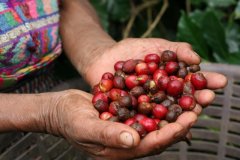
The third place in Nicaragua COE, Mierishuo Family Miracle Manor Honey treats javanica coffee flavor.
For the exchange of professional baristas, please follow the coffee workshop (Wechat official account cafe_style) Product name: Nicaragua (COE) No. 3 Mieri Ruixue Miracle Manor Java Nika Honey treatment (Nicaragua Mierisch Milagros Javanica Pulped Natural) Flavor description: lemon, plum, star anise, drupe, creamy taste, smooth sweetness and sweetness

Description of Colombian Coffee Flavor introduction to the treatment methods of Grinding degree in producing areas of Colombian Coffee
In 1864, Jubal A. Early led Confederate troops to occupy parts of Montgomery County for a short time and attack the District of Columbia. On July 11, Confederate troops attacked Rockville Pike (MD-355), New Cut Road (now Viers Mill Road MD-586) via Rockville and Wheaton to Fo, which is only five miles from the White House in the District of Columbia.

Introduction to the description of the flavor of high-quality coffee beans in the coffee producing area of Hope Manor in Colombia
No matter in terms of yield or texture, Colombian coffee is first produced by Medellin, which is characterized by full granules, rich nutrition, moderate acidity, good balance, rich aroma and soft taste. In addition to Medellin, the provincial capitals of two neighboring provinces in the south, Armenia and Manizales, are also famous coffee producers

Are Colombian coffee beans grown in the Andes? Introduction to the description of brand taste and flavor
Are Colombian coffee beans grown in the Andes? Introduce coffee is the pride of Colombians, Colombians like to talk about a few things, in addition to their football, which was once among the best in the world, is the coffee they are proud of. Drinking coffee in Colombia is a kind of enjoyment, not only essential three times a day, but also full of streets and alleys.

Colombian Santa Rita Manor Coffee with Gump in Acid: grindability, Price, Taste, introduction to the producing areas
The main varieties of Colombian coffee are small grains of coffee. Plants are small trees or large shrubs, 5-8 m tall, usually much branched at base; old branches gray-white, nodes dilated, young branches glabrous, compressed. Leaves thinly leathery, ovate-lanceolate or lanceolate, 6-14 cm long and 3.5-5 cm wide, tip long acuminate, acuminate part 10-15 mm long, base cuneate or slightly obtuse, rarely rounded, entire or

The planting Environment of Coffee Bean in Colombia
The pure taste of Colombian coffee comes from Colombia's natural environment with the most favorable conditions for coffee growth. But beyond that, it is inseparable from the hard work of local growers. In Colombia, coffee cultivation has reached 1.07 million hectares, there are about 302000 coffee plantations in the country, and 30 to 40 per cent of the rural population depends directly on coffee production. Columby

Planting Environment of Coffee species in Colombia
Species Morphology Editing Colombian Coffee Plant Morphology Colombian Coffee Plant Morphology (10 pieces) Colombian coffee is mainly small grain coffee. Plants are small trees or large shrubs, 5-8 m tall, usually much branched at base; old branches gray-white, nodes dilated, young branches glabrous, compressed. Leaves thinly leathery, ovate-lanceolate or lanceolate, 6-14 cm long, 3.5-5 cm wide, apex

Nicaragua Maracadura Coffee Flavor Description Grind Treatment Features Variety Introduction
Coffee was introduced to Guatemala in 1750 by Father Jesuit, and German colonists developed the coffee industry in the late 19th century. Today, most of the coffee industry is produced in the south of the country. Guatemala has seven major coffee producing areas, each producing area produced by the coffee flavor is different, but in summary, Guatemala coffee are

Colombia Coffee Region Flavor Taste Introduction Lazmus Manor
Colombia coffee varieties are mainly small coffee. Plants are small trees or large shrubs, 5-8 meters high, usually multi-branched at the base; old branches are gray, nodes expand, young branches glabrous, compressed. Leaves thinly leathery, ovate-lanceolate or lanceolate, 6-14 cm long, 3. 5 -5 cm wide, apex long acuminate, acuminate part 10-15 mm long, base cuneate or slightly obtuse, rarely rounded, entire or rounded

Planting Environment and species Morphology of Colombian Coffee
The pure taste of Colombian coffee comes from Colombia's natural environment with the most favorable conditions for coffee growth. But beyond that, it is inseparable from the hard work of local growers. In Colombia, coffee cultivation has reached 1.07 million hectares, there are about 302000 coffee plantations in the country, and 30 to 40 per cent of the rural population depends directly on coffee production. Columby

Colombian Coffee Flavor Manor introduction to Lazmus Manor
The main varieties of Colombian coffee are small grains of coffee. Plants are small trees or large shrubs, 5-8 m tall, usually much branched at base; old branches gray-white, nodes dilated, young branches glabrous, compressed. Leaves thinly leathery, ovate-lanceolate or lanceolate, 6-14 cm long and 3.5-5 cm wide, tip long acuminate, acuminate part 10-15 mm long, base cuneate or slightly obtuse, rarely rounded, entire or

Grinding scale of Colombian Huilan Coffee Bean introduction to the description of taste and flavor in the producing area
The pure taste of Colombian coffee comes from Colombia's natural environment with the most favorable conditions for coffee growth. But beyond that, it is inseparable from the hard work of local growers. In Colombia, coffee cultivation has reached 1.07 million hectares, there are about 302000 coffee plantations in the country, and 30 to 40 per cent of the rural population depends directly on coffee production. Columby

mesocarp fleshy, sweet Colombia Hope Manor Coffee Flavor Taste
The pure flavor of Colombia coffee comes from the natural environment of Colombia, which has the most favorable conditions for coffee growth. But beyond that, it is inseparable from the hard work of local growers. In Colombia, coffee is cultivated on 1.07 million hectares, there are about 302,000 coffee plantations in the country, and 30 to 40 per cent of the rural population depends directly on coffee production. Colombia

In the only country in the world that uses leaking coffee cups, it's hard not to be leisurely.
When it comes to the taste of Vietnam, coffee must be essential. As the only country in the world that uses leaky coffee cups, Vietnam's coffee culture is difficult not to be leisurely. Boiling water slowly seeped through the coffee powder and fell into condensed milk, the thick aroma lingered around you, five or six minutes of waiting dripped out the patience of the Vietnamese, but also dripped out the slow pace of life here.

Nicaragua (COE) No. 3 Mieri boasts the characteristic story of washed elephant bean coffee in the manor.
Nicaragua (COE) No. 3 Mieri boasts the flavor of washed elephant beans: sweet lemon and peach elegant flower aroma, nut aroma with soft acidity, smooth sweetness and excellent balance, showing elegant and fragrant temperament. Award record: 2017 Nicaragua Cup of Excellence (COE) 20th (San Jose) 2015 Nicaragua Cup of Excellence (COE) 3rd

Colombian Coffee Flavor description Taste quality characteristics introduction of Brand Manor name
Colombian coffee beans: in 1808, a priest introduced coffee beans to Colombia for the first time from the French Antilles via Venezuela. One of them is that Colombia's first coffee seeds were imported from Venezuela through the province of Santander. Third: the earliest record of coffee cultivation in Colombia appeared in The Illustrated, a Spanish missionary named The Illustrated.

Introduction to the Flavor and Taste characteristics of Columbia Coffee Manor Lazimus Manor
Colombia, located in the northwest of South America, is a beautiful country with a long history. Indians have lived on this land since ancient times. It was colonized by Spain in 1531 and gained independence in 1819. It was renamed in 1886 to commemorate Columbus, the discoverer of the American continent. Colombia has beautiful mountains and rivers, beautiful scenery, pleasant climate and four seasons.