
"missionaries"
2959 article(s) found

Evaluation | comparison of flavor characteristics of 3 Kenyan coffees | how to make Kenyan coffee by hand?
Professional coffee knowledge exchange more coffee bean information please pay attention to the coffee workshop (Wechat official account cafe_style) African coffee producing characteristics, and mostly for its charming sour, aroma world-famous, of course, Kenya is not absent. Kenya is a tropical region, with two rainy seasons a year and two harvests, with 60% concentrated from October to December and 40% from June to August. Main kinds of coffee

coffee producing areas| Kenya coffee production characteristics and classification system introduction
Kenya is also a well-known coffee-producing country in Africa. Kenya is the full name of Kenya Republic. It is located in eastern Africa, with the equator traversing the central part and the Great Rift Valley running from north to south. It borders Somalia to the east, Tanzania to the south, Uganda to the west, Ethiopia and Sudan to the north, and the Indian Ocean to the southeast. There are many plateaus in the territory, with an average altitude of 1500 meters. Kilinaga Peak (Kenny) in the middle

Kenyan coffee introduced from Brazil introduces the flavor of Kenyan coffee.
Professional coffee knowledge exchange more coffee bean information please follow the coffee workshop (Wechat official account cafe_style) Kenya is next to Ethiopia, but Kenya coffee beans are imported from Brazil! Ethiopia is the birthplace of Arabica coffee trees, while Kenya is next to Ethiopia, but coffee has not been introduced for a long time. It was not until the British colonial period in the 19th century that missionaries were introduced from Yemen.

Coffee in Zhukula Village, Yunnan Coffee Culture in China
When it comes to the history of Chinese coffee, we have to mention Yunnan Dali Zhukula Coffee, which plays a vital role in the history of Chinese coffee. The ancient coffee forest in Zhukula Village is a unique variety of small-grain coffee in Yunnan. It is very rare and of excellent quality. It can be called a living fossil of Chinese coffee. We went to explore the century-old coffee legend of Zhukula village. Zhu Kula, located in Yunnan Province

Is Yunnan small grain coffee delicious _ Yunnan small grain coffee origin _ Jippin coffee is this brand good?
Professional coffee knowledge exchange more coffee bean information please follow the coffee workshop (Wechat official account cafe_style) Yunnan Jiepin Coffee Company was established in January 2004. Is a coffee monopoly, with decades of coffee business history, long-term engaged in coffee border trade and domestic trade; has a greater advantage in coffee raw materials, operating a series of coffee products-raw materials are: Yunnan small grain coffee

Introduction to the Flavor Grinding scale of the name of the Manor in the Coffee Bean planting area of Yunnan Province
According to Yunnan Coffee, in 1892, French missionary Father Tian used coffee fruit to breed the first coffee tree outside the church, and then cultivated more coffee trees and planted them around the church. Since then, the village of Zhukula began to grow coffee, and the village has been surrounded by coffee trees ever since. The two oldest elders in the village

Stories and allusions of TOP pearl round beans and PB boutique coffee beans in Kaili, Kenya
Professional barista exchanges please follow the coffee workshop (Wechat official account cafe_style) French and British missionaries and researchers sifted in Kenya at the beginning of the 20th century

The History of Chinese Coffee Coffee in Zhukula Village, Yunnan Province
When it comes to the history of Chinese coffee, we have to mention Yunnan Dali Zhukula Coffee, which plays a vital role in the history of Chinese coffee. The ancient coffee forest in Zhukula Village is a unique variety of small-grain coffee in Yunnan. It is very rare and of excellent quality. It can be called a living fossil of Chinese coffee. We went to explore the century-old coffee legend of Zhukula village. Zhu Kula, located in Yunnan Province
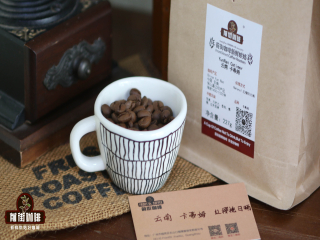
Is Yunnan small grain coffee delicious? Yunnan small grains of coffee beans flavor taste characteristics how to rush to taste good?
Professional coffee knowledge exchange more coffee bean information Please pay attention to the coffee workshop (Wechat official account cafe_style) the first time I came to Yunnan, I only knew that there was coffee production in Yunnan. It was the year 2000. I found several cafes in the ancient city of Lijiang to taste this fresh coffee, but unfortunately, it was all light.

Description of Yunnan Tieka Coffee Bean Flavor introduction to Grinding Calibration treatment in Manor area
Yunnan Tieka coffee bean flavor description manor area grinding scale treatment method after drinking the original, simple coffee, we approached this area known as the oldest coffee forest in China, and the ancient coffee trees had already produced clusters of coffee beans. although it is not until next month when it matures, there will be coffee beans showing bright red. Qi Fenghua said that this forest is considered to be the oldest ancient in China.

Kenyan Coffee how about Kenyan Coffee Fine Coffee
Professional coffee knowledge exchange more coffee bean information please follow coffee workshop (Wechat official account cafe_style) Kenya KENYA located in East Africa "Kenya" is one of the major coffee producing countries, the country's population of more than 6 million people are engaged in the coffee industry, mostly in the form of a combination of small farmers, wet processing plants and cooperatives. Kenyan coffee is mainly treated by washing, and coffee trees are mostly planted in
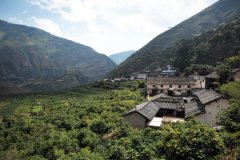
The oldest coffee in China, Zhu Kula Coffee.
After CCTV broadcast the news that Starbucks Coffee is making high profits in China, drinking coffee as a kind of living consumption soon aroused heated discussion. Starbucks, which has always been famous for its high-end coffee brand, has been crowned with the halo of taste, petty bourgeoisie and high-end consumption. Behind the controversy about consumption habits and high prices, it actually reflects the competitive disadvantages of domestic coffee brands, even if the quality is good and the price is high.

Yunnan small Coffee introduces the characteristics of Yunnan Coffee the taste and flavor of Yunnan boutique coffee
Yunnan small-grain coffee: Yunnan small-grain coffee, Rubiaceae, coffee genus, the planting area is mainly distributed in Lincang, Baoshan, Simao, Xishuangbanna, Dehong and other states. [1] small grains of coffee are native to Ethiopia or Arabian Peninsula. It is cultivated in Fujian, Guangdong, Hainan, Guangxi, Sichuan, Guizhou and Yunnan. The Origin of Yunnan small Coffee: in 1892, French missionary Father Tian

Do you know Yunnan small grains of coffee? Let's get to know some of its development knowledge.
Yunnan small-grain coffee: Yunnan small-grain coffee, Rubiaceae, coffee genus, the planting area is mainly distributed in Lincang, Baoshan, Simao, Xishuangbanna, Dehong and other states. [1] small grains of coffee are native to Ethiopia or Arabian Peninsula. It is cultivated in Fujian, Guangdong, Hainan, Guangxi, Sichuan, Guizhou and Yunnan. The Origin of Yunnan small Coffee: in 1892, French missionary Father Tian

How is the quality of Yunnan coffee? can Yunnan learn from coffee? why is Yunnan coffee so sour?
Professional coffee knowledge exchange more coffee bean information Please follow the coffee workshop (Wechat official account cafe_style) in 1892, French missionary Father Tian Deneng preached in Binchuan, Dali. In order to drink coffee, he planted coffee trees in Zhukula Village, near the church in Binchuan County, and taught local villagers to grow and drink coffee. Up to now, trees still grow in Zhukula Township for more than 90 years.

Qianjie Yunnan boutique small grain coffee iron pickup coffee variety coffee flavor performance depends on what
Professional coffee knowledge exchange more coffee bean information Please follow the coffee workshop (Wechat official account cafe_style) many friends know Yunnan small grain coffee, in fact, I do not know very well. Today, I would like to introduce the origin, variety and growth cycle of Yunnan small grain coffee beans to let you understand it. First: the origin of Yunnan small grain coffee is 1892, spread in France.

Colombian Coffee Flavor description Taste quality characteristics introduction of Brand Manor name
Colombian coffee beans: in 1808, a priest introduced coffee beans to Colombia for the first time from the French Antilles via Venezuela. One of them is that Colombia's first coffee seeds were imported from Venezuela through the province of Santander. Third: the earliest record of coffee cultivation in Colombia appeared in The Illustrated, a Spanish missionary named The Illustrated.

Myanmar, a coffee producer that almost disappeared from the world coffee map.
For information, please follow the Coffee Workshop (Wechat official account cafe_style). On July 13, 1813, Protestant missionaries known as the Apostles of Burma, Adoniram Judson and Ann Judson of the American Baptist Church came to Myanmar with Catholicism and coffee as indispensable drinks in daily life. In 1885, Burma became a British colony.

The Origin and Development of Fine Coffee beans of Cabaret Coffee processing Plant in Kenya AA Klinaga production area
According to botanists in SL laboratory, SL28 and SL34 are genetic variants. Among them, SL28 has a mixed pedigree of French missionaries, mocha and Yemeni Tibica. The goal of cultivating SL28 was to mass produce coffee beans with high quality and resistance to diseases and insect pests. Although the later production of SL28 was not as large as expected, copper leaves and broad bean-shaped beans were very popular.

A brief introduction to the treatment method of grinding degree and baking degree of fine coffee beans in Berman Manor, Kenya.
There are many producing areas in Kenya that strive to preserve the native forest ecosystem, protect the natural gene pool, support the reproduction of wild coffee varieties and breed a variety of coffee trees. French and British missionaries and researchers sifted in Kenya at the beginning of the 20th century