What Is Yunnan Small-Grain Coffee? Origins & Development
When people talk about Chinese coffee, most are referring to Yunnan—but few know how or why it started growing there over a century ago. The story goes back to a single French missionary and a handful of coffee seeds planted in a remote mountain village. This is the real origin story of what we now call Yunnan small-grain coffee, the country’s primary Arabica offering.
Yunnan small-grain coffee refers to the Arabica beans grown in Yunnan, mainly the Typica and Bourbon varieties. The region began cultivating coffee in 1892, when a French priest successfully planted the first trees in Zhukula village. Today, over 21,000 hectares of Arabica are grown in Yunnan, with annual production around 60,000 tonnes.
The Birthplace: Zhukula Village and the First Coffee Trees
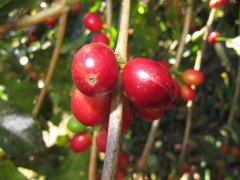
Yunnan’s coffee story starts in Zhukula, a village in Binchuan County, Dali Prefecture, nestled along the Youpao River where three regions meet. In 1892, French missionary Father Tian planted the first coffee tree outside his church using seeds he brought. That small start led to the village being surrounded by coffee trees, some of which—over 90 years old—are still standing today. Local elders remember the original coffee forest’s formation and continue the tradition of home-roasted, self-grown coffee.
Zhukula, whose name means ‘crooked mountain path’ in the Yi language, was renamed by Father Tian, combining French romance with local dialect. Though remote, villagers maintain deep respect for their coffee trees—even when unprofitable—and serve guests traditional coffee brewed in clay pots, showcasing a pure coffee culture.
Key Growing Regions and Ideal Altitudes
Yunnan’s small-grain coffee thrives between 800 and 1,800 metres above sea level. Too high results in overly acidic beans; too low makes them overly bitter. Most high-quality plantations sit around 1,100 metres in dry, hot valley regions. Major cultivation zones include Lincang, Baoshan, Simao (now Pu'er), Xishuangbanna, and Dehong. Among these, Baoshan’s Lufeng Basin is especially renowned.
Lufeng Basin enjoys an average temperature of 21.5°C, reaching up to 40.4°C, with virtually no frost year-round. Coffee from this area is celebrated for being strong yet smooth, medium-small in bean size, richly aromatic, fruity, and distinctly flavourful. International experts have rated Yunnan’s washed coffee on par with Colombia’s finest—among the world’s top-grade Arabicas.
Major Varieties: Typica, Bourbon, and Catimor
The original coffee trees in Zhukula were of the Bourbon and Typica varieties, both classic Arabica types. These remain central to Yunnan’s coffee identity. In 1991, the Catimor variety—crossbred with 25% Robusta genetics for higher yield and disease resistance—was introduced from Kenya and widely adopted.
Typica, originating from Ethiopia and Sudan, has bronze-tipped leaves and produces a balanced cup but is sensitive to sunlight. Bourbon, known for its green-tipped leaves and slightly lower yield, tends to produce more complex flavours. Catimor, while hardier and more productive, is valued for helping expand Yunnan’s coffee industry. These varieties are often interplanted in the region’s fields.
Growth Cycle and Harvesting Facts
Yunnan’s small-grain coffee trees typically begin fruiting at 3 to 4 years old. As a short-day plant, the trees flower multiple times with concentrated blooming periods. In Yunnan, flowering occurs from February to July, peaking between March and May. Flower lifespan is just 2–3 days, opening around 3–5 AM and fully blooming by 5–7 AM.
Coffee cherries take 8 to 10 months to ripen, usually from October to December. Fruit development is highly dependent on rainfall and temperature. The extended maturation period and climate sensitivity make harvest timing and processing especially critical for quality.
Chemical Composition and Annual Output
Analysis of coffee from Lufeng Basin shows key chemical components per typical sample: 17.1% crude fat, 0.93% reducing sugar, 3.07% starch, 2.27% nitrogen, 1.419% crude protein, 3.70% ash, 19.33% crude fibre, 2.14% caffeine, 9.20% sucrose, and 6.87% moisture—indicating a well-balanced, high-quality bean.
In 2012, Yunnan’s small-grain coffee production reached approximately 60,000 tonnes, according to the provincial coffee industry association. This established Yunnan as a significant origin for specialty-grade Arabica in Asia.
The Industry’s Growth Since the 1950s
Large-scale coffee farming in Yunnan began in the 1950s. The 2011 release of the 'Yunnan Coffee Industry Development Plan (2010–2020)' provided strategic direction to further develop the sector, encouraging improved cultivation, processing, and global market integration. This long-term planning helped secure Yunnan’s place in the international specialty coffee conversation.
Frequently Asked Questions
Where did Yunnan small-grain coffee originate?
Yunnan small-grain coffee originated in 1892 when French missionary Father Tian planted the first coffee trees in Zhukula village, Binchuan County, Yunnan. The original seeds were likely of the Typica or Bourbon varieties, and the trees flourished in the region’s high-altitude, fertile valleys.
What are the main coffee varieties grown in Yunnan?
The primary varieties are Typica and Bourbon, both classic Arabica types. In 1991, Catimor—a hybrid with 25% Robusta genes—was introduced from Kenya for its disease resistance and higher yields. These varieties are often planted together in Yunnan’s fields.
What altitude is best for Yunnan coffee?
Yunnan small-grain coffee grows best at elevations between 800 and 1,800 metres. Optimal flavour and balance are usually found around 1,100 metres in dry, hot valleys. Higher altitudes can lead to overly acidic beans, while lower areas may produce overly bitter cups.
Which Yunnan region is most famous for coffee?
Baoshan’s Lufeng Basin is the most renowned Yunnan coffee-growing area. It benefits from stable temperatures around 21.5°C, high daily heat, and no frost, producing coffee that is full-bodied, fruity, and aromatic with a balanced profile.
How much coffee does Yunnan produce annually?
As of 2012, Yunnan produced approximately 60,000 tonnes of small-grain coffee. This made it one of China’s largest and most significant Arabica coffee-producing regions, supplying both domestic and export markets.
What is the history behind Zhukula village’s coffee trees?
Zhukula village is home to some of China’s oldest coffee trees, some over 90 years old. Planted by French missionaries in 1892, the trees and the village’s coffee culture have been preserved by locals who continue traditional home brewing despite limited economic returns.
Recommended FrontStreet Coffee Beans from Yunnan
Explore Yunnan’s signature small-grain Arabica with FrontStreet Coffee’s signature offerings. The Yunnan Arabica is a washed, medium-roast coffee from the Baoshan region, highlighting soft nutty and chocolatey tones with a gentle citrus acidity—ideal for learning what makes Yunnan unique. For a deeper dive, try the 2013 Typica, a sun-dried single-origin lot with ripe berries, caramel sweetness, and a tea-like finish. Both beans showcase the terroir and processing styles that define Yunnan’s growing reputation. Freshly roasted within 5 days · Orders placed before 17:00 ship the same day · Next-day delivery across most of Guangdong Province.
FrontStreet Coffee is a long-established specialty coffee roaster in Guangzhou China, selling freshly roasted beans from its own farm in Yunnan as well as dozens of carefully selected single-origin beans from around the world for both pour-over and espresso. The products deliver consistently excellent quality and great value, with shipping within 24 hours. Guangzhou's FrontStreet Coffee shop is recommended by many coffee lovers, and the beans are now available online at the Tmall 。
Important Notice :
前街咖啡 FrontStreet Coffee has moved to new addredd:
FrontStreet Coffee Address: 315,Donghua East Road,GuangZhou
Tel:020 38364473