
"perla"
176 article(s) found

Costa Rican black honey treatment water content coffee bean flavor description grinding scale variety treatment method simple
Costa Rican Black Honey treats Water content Coffee Bean Flavor description Grinding scale Variety treatment method Anchor Costa Rican Coffee has always been considered to be the perfect type of classical flavor, balanced, clean and mild is its keynote. San Juan Youzhuang, a processing plant in Herba é in the western valley, comes from a famous orange county (Naranjo) producing area with excellent natural geographical conditions and excellent regional species.

A brief introduction to the History and Culture of the Origin and Development of Fine Coffee beans in Sijas Manor, Costa Rica
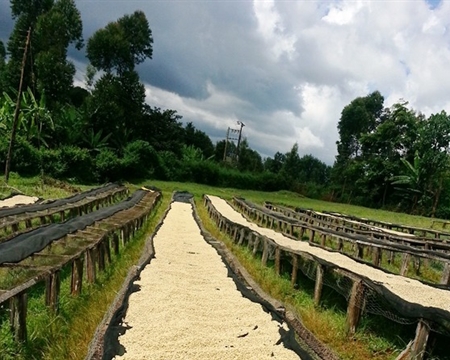
The natural treatment process of French Sika is quite laborious. Hand-harvested high-sugar cherries are first placed in an African viaduct in the sun for about 10 days, and then placed in a plastic cloth-covered greenhouse to create more direct heat and continue to dry. until the water content reaches 11.5%. The slow drying process allows raw beans to develop more natural sweetness from within, but it also needs to be taken care of more carefully.

North Sumatra coffee beans origin characteristics of coffee grounds how to shape
The top Yunnan coffee variety, growing at 1500~2000 meters, is BM coffee (bm, the most customary explanation should be Blue Mountain coffee introduced from Jamaica), planted in Simao and Baoshan areas of Yunnan Province. After excellent processing, bean shape neat and uniform, washed silver skin treatment is very clean, defective bean content is very small, texture is relatively hard. Baked Yunnan Blue Mountain, bite up

Planting patterns in flavor producing areas of Costa Rican coffee beans
Following Cafe (official Wechat account vdailycom) found that the beautiful cafe opened a small shop of its own. Above the national emblem of Costa Rica, a blue ribbon with Central America fluttered to express Costa Ricans' nostalgia for the former federation, and below was a white ribbon with green leaves and the name of the Republic. The corn kernels on both sides of the national emblem are round and golden, indicating that the plateau country

Introduction to the characteristics and Price of Grinding degree by describing the Flavor of Las Haas Manor in Costa Rica
Costa Rican coffee is grown in Costa Rica with Arabica coffee trees. Through improvement, the quality of coffee beans is better and more stable. In order to facilitate picking, coffee trees are kept at a height of about 2 meters through continuous pruning. The coffee that people eat is the flavor released by the seeds in the fruit being brewed in water. After picking raw coffee beans, the peel, pulp and seed must be removed.

A brief introduction to the characteristic Price of Grinding degree by describing the Flavor of Las Haas Manor in Costa Rica
Lajas is also the first manor in Central America to start honey treatment and natural sun treatment. Tanning is a very traditional practice, which uses the least resources, but because there are too many uncontrollable factors, it is very difficult to do well. Francesca added many innovations, such as using the sugar meter (Brix meter), which is often equipped in the wine industry, to measure the sugar content of fruits and roots.

Understanding the flavor characteristics of sun-dried beans in Las Lajas manor treated with Costa Rican honey
Professional coffee knowledge exchange more coffee bean information please follow the coffee workshop (Wechat official account cafe_style) Costa Rican coffee is usually very pure and sweet, but the mellow thickness tends to be elegant. In recent years, many processing plants have begun to produce coffee with a variety of tastes and styles. Coffee has been grown in Costa Rica since the early 19th century, after Costa Rica gained its independence from Spain in 1821

An introduction to the characteristics of the sour and sweet Costa Rican goddess manor coffee flavor and taste of a variety of fruits
Costa Rica is located in the Central American isthmus, belonging to North America, 10 north latitude, 84 west longitude. It is bordered by the Caribbean Sea to the east and the North Pacific Ocean to the west, with a coastline of 1290 km (212km on the east coast and 1016 km on the west coast). Costa Rica borders Nicaragua in the north (309 km long border) and Panama (639 km long border) south-southeast. Total

How to drink AAA Katim Coffee in Gaosheng Manor in Yunnan Province
Professional coffee knowledge exchange more coffee bean information please follow the coffee workshop (Wechat official account cafe_style) Yunnan small grain coffee is famous all over the world. It was rated as the first class at the International Coffee Taste in London in 1958 and won the reputation of Lujiang No.1. It was recognized as the top coffee in the country at the National Coffee Conference in 1980 and was listed as one of the national coffee production bases by the State Council. "

Costa Rican black soul coffee how to make _ Lajas Manor Black Soul treatment characteristics introduction
Professional coffee knowledge exchange more coffee bean information please follow the coffee workshop (Wechat official account cafe_style) very representative boutique coffee: Costa Rican coffee black soul! Guys, come and watch! There's only one chance. Hurry up, GO GO GO. The coffee beans produced in the high latitudes of Costa Rica are famous in the world.
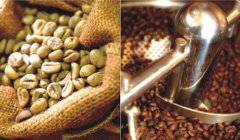
Basic screening of Coffee beans: a National system for screening and grading of Coffee beans
For the exchange of professional baristas, please follow the coffee workshop (Wechat official account cafe_style) Coffee bean screening and grading national system National Systems for Sorting and Grading Coffee clearly marked for different quality of coffee, such as Brazil, classified by coffee variety, or by shipping port name (such as Santos Santos, Parana Parana).

The flavor of honey-treated beans in Alajuela, Althacia, Costa Rica. Brother
Professional coffee knowledge exchange more coffee bean information please follow the coffee workshop (Wechat official account cafe_style) [adobe farmers] in Alajuela, Althacia, Costa Rica.
Single Central and South American coffee beans recommend Colombia Brazil Panama coffee which tastes good?
Central America generally refers to the strip of central America south of Mexico and north of the Panama Canal, also known as the Central American Isthmus, including Guatemala, Belize, El Salvador, Honduras, Nicaragua, Costa Rica and Panama, all of which produce coffee. There is also a way to divide the Caribbean and the island states of the West Indies

Costa Rica Black Pearl Rose Summer hand Chong suggestion Black Pearl Rose Summer Coffee Bean characteristic Flavor Story
Professional coffee knowledge exchange more coffee bean information please follow the coffee workshop (Wechat official account cafe_style) manor story introduction: Dona Francisca and Don Oscar Chacon are the third generation operators of the Lajas microprocessing plant. They inherited the coffee farm from their grandparents and were the first coffee in Central America to produce high-quality honey-treated and sun-treated coffee.

A brief introduction to the History and Culture of the Origin and Development of Costa Rican Fine Coffee beans
Among the many excellent producing areas in Costa Rica, there is a famous producing area Tarrazu, also known as Tarasu. Tarazhu is very famous in the world of boutique coffee and is one of the major coffee producing areas in the world. In the 2014 COE competition, of the 23 beans on the list, 17 came from Tarasu. Tarasu is located in the fertile volcanic region of Central America.

Introduction of coffee beans around the world there are many kinds of coffee beans all over the world
There are many kinds of coffee beans all over the world. What is the difference between these beans and what does they look like? Cuba Marago Rippi Cuba maragogype elephant bean green bean elephant beans, giant coffee beans (Elephant bean), which are 3 times or more larger than other coffee beans. The taxonomic name is Marago Rippi (Maragogype), derived from Brazil's Bahia (Bahia).