
"pyrolysis"
438 article(s) found

Coffee bean roasting theory the flavor characteristics of coffee beans produced by the degree of roasting of coffee beans
(reprint) grab a handful of coffee and smell raw beans, there is always a pungent smell, which is very different from the charming smell of coffee in your impression. However, after roasting "fragrance" correctly, raw beans will emit the strongest aroma in the world. The small high-altitude Arabica coffee raw beans are like a warehouse full of chemicals. At present, scientists have identified more than 2,000 known ingredients.

Coffee roasting specific analysis of coffee roasting techniques and degree of selection of French coffee roasting
Coffee roasting is a process of high temperature decomposition (Pyrolysis), which completely changes the substance inside the raw bean, produces new compounds, and recombines to form aroma and mellow flavor. This effect only occurs at high temperatures, and decomposition cannot be caused if only low temperatures are used. In fact, in the coffee processing process, roasting is the most rare step, it is a kind of family

External changes of coffee beans during roasting
A few minutes before the coffee beans are heated in the baking room, we don't see much change in appearance, when the coffee beans are still grayish green and there is no sound.
Coffee powder medium baking deep baking hand-punching steps
Coffee powder moderate baking depth hand-baking step next, the temperature rises from 205 degrees to about 220 degrees, the color of coffee changes from light brown to medium brown, and there is about 15% weightlessness. This chemical process is called high-temperature decomposition, in which the chemical composition of coffee beans changes and releases carbon dioxide. After the first burst, there was a pause.

Introduction to the production characteristics of Yega Xuefei siphon kettle
Introduction to caramelization: the sugar in coffee beans undergoes caramelization at about 170-200 ℃, which is exactly the melting point of sucrose (185 ℃) and the temperature of the explosion stage when coffee beans are roasted. The product of caramelization is divided into two parts: 1. The dehydration product of sugar is caramel or sauce 2. The pyrolysis products are mainly volatiles.

What is the chemical reaction in the roasting process of coffee beans? What is the thermal decomposition reaction of coffee beans during roasting
Professional coffee knowledge exchange more coffee bean information please follow the coffee workshop (Wechat official account cafe_style) what are the chemical reactions in the roasting process of coffee beans? What is the thermal decomposition reaction of coffee beans during roasting? After roasting at high temperature, coffee beans will produce a variety of charming aromas and flavors, mainly because of the chemical reactions that take place inside the beans during roasting.

Roasting of coffee beans Latin American Martinique coffee
Roasting tips: secret one: to achieve the highest caramelization-caramelization is an important factor affecting coffee flavor, because the raw beans will absorb a lot of heat when roasting, then there will be the first cracking sound (1st cracking), at this time, sugar begins to convert into carbon dioxide, water continues to evaporate, coffee aroma will gradually be emitted, and the formation of coffee fat. This pyrolysis reaction can continue until

Coffee bean roasting common sense coffee roasting tips
Roasting secret: tip 1: to achieve the highest caramelization-caramelization is an important factor affecting coffee flavor, as raw beans will absorb a lot of heat when roasting, then there is the first explosive sound (1st cracking), at this time, the sugar begins to be converted into carbon dioxide, water continues to evaporate, and the aroma of coffee will gradually come out and form coffee oil. This pyrolysis reaction can last until

Coffee roasting process roasting degree introduction which roasting machine is better
Tip 1: Get the highest caramelization-caramelization is an important factor affecting coffee flavor, because raw beans will absorb a lot of heat when roasting, then there will be the first cracking sound (1st cracking), at this time, sugar begins to convert into carbon dioxide, water continues to evaporate, coffee aroma will gradually be emitted, and the formation of coffee fat. This pyrolysis reaction can last until the second explosion

Introduction to the roasting method, degree, price and flavor description of Mantenin coffee beans
First of all, after roasting at more than 200 degrees Celsius, the moisture of raw beans begins to evaporate, the volume expands by 60%, and the weight is reduced by 10% to 25, depending on the degree of roasting. The deeper the baking, the more weight loss. No wonder many operators do not like re-baking to save costs. Another important phenomenon

Coffee roasting CoffeeRoasting
Coffee is loved mainly because of the fragrance formed after roasting and the taste of drinking. The coffee raw bean itself does not have any special taste, it is roasted to completely change and reorganize the substances inside the raw bean to form a new structure, bringing out the mellow flavor of the coffee.
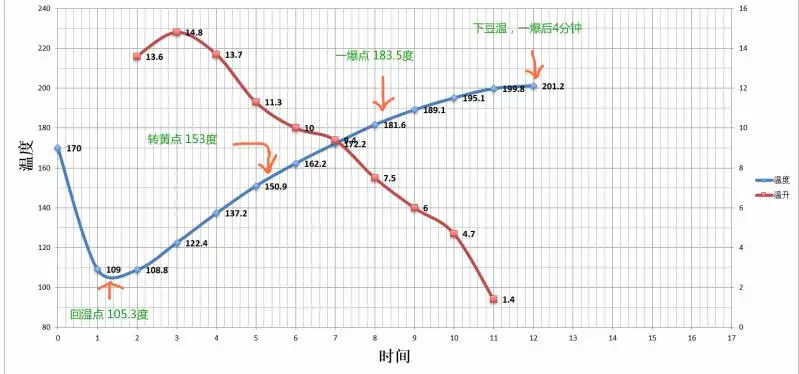
Look at the baking curve-how to determine the temperature point, a burst point?
Professional coffee knowledge exchange More coffee bean information Please pay attention to coffee workshop (Weixin Official Accounts cafe_style) Every time we roast a bean, we will record the roasting curve, record the temperature return point, firepower, temperature, explosion time of the bean, etc. Why record? It is hoped that according to the previous numerical reference, the flavor of the same coffee will be replicated to maintain the consistency of taste.

Why is the coffee bean flavor of Arabica better than that of Robusta?
For information, please follow the coffee workshop (official Wechat account cafe_style) and the two important reactions are caramelization (caramelization, oxidation and browning of sugars) and Mena (Maillard reaction, reaction of amino acids with sugars). Both reactions require the participation of sugars, and the rich sucrose in raw beans provides these two reactions.

What is the secret of coffee baking? what materials can be used as supercapacitors?
Secret 1: to achieve the highest caramelization-caramelization is an important factor affecting the flavor of coffee, as raw beans absorb a lot of heat when roasting, then there is the first 1st cracking, at this time, the sugar begins to be converted into carbon dioxide, water continues to evaporate, the aroma of coffee will gradually come out and form coffee oil. This pyrolysis reaction can last until the second explosion (2nd)

Coffee flavor is affected by coffee grinding degree introduction to different coffee brewing methods
Professional coffee knowledge exchange more coffee bean information please pay attention to coffee workshop (Wechat official account cafe_style) how to judge and set the grinding degree of espresso after roasting, the cells are destroyed and arranged loosely, but the cell wall is full of carbon dioxide, oil and aromatic flavors produced by pyrolysis, and the bean itself expands.

The curve of Yega Xuefei | how to bake Yega Xuefei to share the curve.
Professional coffee knowledge exchange more coffee bean information please follow the coffee workshop (Wechat official account cafe_style) in front of the street washing Yega Xuefei baking curve sharing is Ethiopia Yega Xuefei red cherry, after an explosion, the temperature is about 10-12 degrees under the beans, the development time is controlled between 70 and 90 seconds, specifically look at the actual situation of beans, but different from washing is an explosive heating curve
Coffee flavor smell training olfactory test is to test the ability to distinguish the aroma of coffee
Professional coffee knowledge exchange more coffee bean information please follow the coffee workshop (Wechat official account cafe_style) smell test is a test of the ability to identify the aroma of coffee, coffee nose (Le Nez du Cafe) as a test tool to identify coffee-related odors. In fact, the testing process is to identify and identify different aromas. If you understand before the test

[difference in coffee grinding thickness] what is the change in the taste of coffee with different coffee powder thickness?
Professional coffee knowledge exchange more coffee bean information please pay attention to coffee workshop (Wechat official account cafe_style) how to judge and set the grinding degree of espresso after roasting, the cells are destroyed and arranged loosely, but the cell wall is full of carbon dioxide, oil and aromatic flavors produced by pyrolysis, and the bean itself expands.

Unveil the mystery of coffee roasting
You may find it hard to imagine that there are 700 to 850 aromatic substances in a small coffee bean locked in the raw bean in the form of a password. But raw coffee beans can't be detected without roasting these fragrant pits, it's just a code. It can be seen that coffee roasting is of great significance to coffee.

Coffee roasting degree explanation
1. When studying the roasting degree of coffee beans, the degree of roasting can be judged by sound, color and aroma. The color changes from light gray to dark brown, and the aroma changes from elegant to rich; the sound is two times of explosion, taking the high temperature resistant raw beans as an example, the first explosion starts at about 7 minutes and lasts for about 2 minutes. The sound is low, indicating the beginning of pyrolysis, starch conversion to caramel, and water evaporation.