
"ran"
965 article(s) found
Introduction to the quality characteristics of Columbia Huilan Coffee Flavor description treatment
Columbia Huilan Coffee Technology the history of Colombian coffee dates back to 1808. A priest brought coffee to Colombia for the first time from the French Antilles via Venezuela. The suitable climate in Colombia provides a real natural pasture for coffee. Since then, coffee trees have taken root in this country. The country has also become the second largest coffee producer after Brazil, and the world

Coffee Culture Story French Navy and Coffee
It was about 1720-1723 that French naval officer Gabriel. Mathieu. De. Klee was ordered to be stationed in Martinique. Before leaving Paris to take office, he managed to get some coffee saplings and decided to take it back to Martinique. It took him two attempts to bring the coffee saplings to Martinique. The saplings are kept in a glass with holes on the deck.
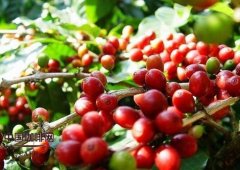
Rose summer Geisha Colombian Cauca Cauca Valley Hope Manor boutique coffee
The opportunity I hope the manor will see is Geisha (also known as a geisha). After Panamanian Emerald Manor became famous because of the rediscovery of rose summer in the garden, coffee farms around the world are studying the possibility of planting rose summer, but there is no rose summer variety in Colombia. It is hoped that the manor owner Rigoberto Herrera sent chief botanist Hernan.

Geisha Colombia Cauca Valley Hope Estate Boutique Coffee
The opportunity that Hope Manor saw at that time was Geisha (also known as Geisha). Panama Emerald Manor became famous because it rediscovered rose summer in the garden. After becoming the world's top manor, coffee farms all over the world are studying the possibility of planting rose summer, but Colombia does not have rose summer varieties. Rigoberto Herrera, owner of Hope Manor, sent chief botany.

Brief introduction of Santa Cruz Island in Galapagos Islands, Ecuador
The best Ecuadorian coffee is grown on St. Cristobal Island in the Galapagos Islands, which has the unique natural geographical conditions for giving birth to the best quality coffee in the world. A cup of Galapagos coffee, like the beautiful scenery of the Galapagos Islands, is sure to impress you. In the mid-15th century, fishermen fishing in the western Pacific Ocean of South America were in the middle stream.

Coffee in Van Gogh's paintings
People are no stranger to "the Cafe at Night". It is the most famous image in the cafe image and one of the most copied and quoted images in the world.

21 Asian wild elephants enter Zhongtian Manor in Simaoman, Yunnan
The reporter learned yesterday that 21 Asian elephants entered the Manzhong Tian Manor of Yunnan Aiyi Group, located in Simao area. Some bananas and corn grown by farmers were eaten by Asian elephants, and some coffee was destroyed by Asian elephants.
Top 10 cups for baristas
As A barista's top ten cups: (1) always receive a person's salary, but also do the work of waiters, cooks, repairmen, roasters, in short, can find a barista, equivalent to finding a Doraemon;(2) pull a love to the favorite sister paper, the result is a sugar addition, a spoon stir, sister paper! It's not the cappuccino foam you're crushing, it's the barista's fragile soul.

Introduction of Ecuadorian coffee which can be made into high-quality mixed coffee and suitable for various uses
As coffee is consumed by people all over the world, the world coffee industry is also moving towards mass production, while St. Cristobal, a small and unreliable coffee industry, is in trouble and is likely to be forced to give up without profit. It wasn't until the early 1990s that the Gonzalez family bought Hasunda Coffee Park. Humboldt current (HumboldtCu

Ecuadorian coffee producing area Galapagos Coffee San Cristobal Hasunda Coffee Garden
The best Ecuadorian coffee from the hometown of the giant tortoise is grown on St. Cristobal Island in the Galapagos Islands, which has the natural geographical conditions unique to giving birth to the best quality coffee in the world. A cup of Galapagos coffee, like the beautiful scenery of the Galapagos Islands, is sure to impress you. In the mid-15th century, in western South America

Fragrant Ecuadorian Coffee Manor Flavor and Taste characteristics of Hassanda Coffee Garden
In the mid-15th century, there were legends about enchanted mysterious islands among fishermen fishing in the western Pacific Ocean of South America. It is said that the islands can sometimes be seen clearly from a distance, but when the ship approaches, it disappears again; sometimes it looks like a galleon, sometimes it shows the shape of a witch. The fishermen called these islands Magic Island and thought it was there.

Introduction to Coffee Tree characteristics Coffee beans Origin Coffee Tree
There are many legends about the discovery of coffee. There is a legend that in the 13th century, there was a prince in Ethiopia who found that his camel loved to eat small oars on a bush, and he was very excited and energetic after eating it. So he also picked some small berry coffee trees (11) to taste, and finally discovered this refreshing coffee drink. Another kind of transmission

Description of fragrant Ecuadorian Coffee Flavor introduction of Fine Coffee in Variety producing area
Ecuador is one of the few countries in South America that produces both Arabica and Robbins. However, as the land suitable for Arabica coffee trees is decreasing, the production of Robbins coffee is gradually increasing. The best Arabica coffee comes from the Andes, especially the Chanchagu Valley (Chanchamgo Valley), which is divided into two mountains from the south.

A brief introduction to the development of Ecuador boutique coffee bean flavor and taste manor with balanced acidity
The best Ecuadorian coffee is grown on St. Cristobal Island in the Galapagos Islands, which has the unique natural geographical conditions for giving birth to the best quality coffee in the world. A cup of Galapagos coffee, like the beautiful scenery of the Galapagos Islands, is sure to impress you. In the mid-15th century, fishermen fishing in the western Pacific Ocean of South America were in the middle stream.

Ecuadorian coffee producing regions that can be made into premium blends Coffee Introduction Fine Coffee
Ecuador is one of the few countries in South America that produces both Arabica coffee and Robaik coffee. But as the land available for arabica coffee trees dwindles, robert coffee production is increasing. The best Arabica coffee is grown in the Andes, especially in the Chanchamgo Valley, which divides the Andes into two mountain ranges.

Introduction to the flavor description characteristics of the fragrant Santa Cruz Manor in Ecuador
Ecuador is one of the few countries in South America that produces both Arabica and Robbins. However, as the land suitable for Arabica coffee trees is decreasing, the production of Robbins coffee is gradually increasing. The best Arabica coffee comes from the Andes, especially the Chanchagu Valley (Chanchamgo Valley), which is divided into two mountains from the south.

Introduction to the characteristics of Ecuadorian Coffee Grinding degree treatment in Variety producing areas
Ecuador is one of the few countries in South America that produces both Arabica and Robbins. However, as the land suitable for Arabica coffee trees is decreasing, the production of Robbins coffee is gradually increasing. The best Arabica coffee comes from the Andes, especially the Chanchagu Valley (Chanchamgo Valley), which is divided into two mountains from the south.

Flavor and taste of Ecuadorian boutique coffee beans introduction to the characteristics of Ecuadorian coffee beans in manor production area
Flavor: balanced acidity, aromatic fragrance recommended roasting methods: medium to deep roasting, can be made into high-quality mixed coffee, suitable for multi-use evaluation: general Ecuadorian giant turtle island coffee beans from the hometown of giant turtles coffee treasures the best Ecuadorian coffee is grown on St. Cristobal Island in the Galapagos Islands, where it has the best quality coffee in the world.

Boutique Coffee Culture French Naval officers and Coffee History
It was about 1720-1723 that French naval officer Gabriel. Mathieu. De. Klee was ordered to be stationed in Martinique. Before leaving Paris to take office, he managed to get some coffee saplings and decided to take it back to Martinique. It took him two attempts to bring the coffee saplings to Martinique. The saplings are kept in a glass with holes on the deck.
Where does the bitterness and acid of coffee come from?
To solve this mystery, Thomas Hofmann, a scientist at the Technical University of Munich in Germany, decided to investigate the bitter taste of coffee. He filtered the brewed coffee and found that some of the smallest molecules tasted the most bitter. So he ran a series of experiments using mass spectrometry, and identified one of them as chlorogenic acid lactone.