21 Wild Asian Elephants Enter Yunnan Coffee Farm
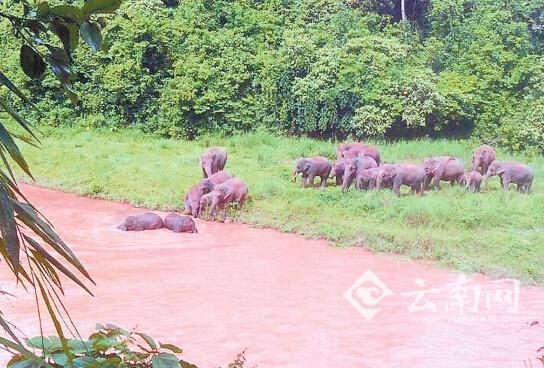
Last week, a herd of 21 wild Asian elephants wandered into a major coffee-growing estate in Yunnan’s Simao district, causing significant disruption. The elephants fed on banana and corn crops planted by local coffee farmers and damaged some coffee trees as they moved through the plantation. This unexpected visit has raised both ecological interest and serious safety concerns among the farm workers and farmers in the area.
In short: 21 wild Asian elephants entered the 6,000-acre coffee estate at Manzhongtian in Yunnan’s Simao district, damaging coffee trees and eating banana and corn crops. Farmers have been forced to avoid the fields due to safety risks.
Where Did the Elephants Come From?
The elephants originally entered Yunnan from Myanmar’s border regions, and have been moving steadily into China over more than a decade. According to the International Fund for Animal Welfare, this particular herd of 21 elephants first crossed into Jiangcheng County in October 2011. They later moved to Naji Village, which is just 3 km away from Manzhongtian in Simao District. Food shortages in their original habitat reportedly pushed the elephants to migrate again, entering the coffee estate last week.
The Location: Manzhongtian Estate
The Manzhongtian Estate is located in Yizhi Town, Simao District, roughly 80 km from downtown Pu’er City. Operated by the Yunnan-based Erni (Ai Ni) Group, the estate spans 30,000 acres of pasture and 6,000 acres dedicated to coffee cultivation. Workers first noticed increased elephant activity near Naji Village days prior, and by the evening of October 10, reports confirmed that over 20 elephants had entered the coffee farm. The following morning, staff spotted the herd near the Manla River, counting 21 individuals of varying ages.
Impact on Coffee and Crops
While the elephants primarily consumed banana and corn crops planted by local farmers, they also knocked down some coffee trees as they moved through the estate. The damage to coffee is currently limited but raises concerns about potential future losses. Many farmers have stopped working in the fields due to fear of elephant encounters, prioritizing human safety over crop maintenance.
"This is the first time we’ve seen elephants here," said Bai Yingfu, a staffer with the Erni Group at Manzhongtian. "But our biggest worry is safety—and whether they might cause larger-scale coffee damage in the future."
Wildlife Movement in Pu’er Region
The Pu’er region, particularly Simao, Jiangcheng, and Lancang counties, is now home to a significant population of wild Asian elephants. Numbers have grown in recent years, with over 100 elephants recorded across the area at peak times. Another smaller group of seven elephants has been intermittently present in the Xiaobazi area of Boluo Village in Yizhi Town, although their status remains unstable. Wildlife experts note that this herd tends to roam widely, sometimes approaching villages, which requires ongoing vigilance.
The movement of such large herbivores highlights the ecological richness of the region—but also the challenges of coexistence between wildlife and agricultural operations.
Frequently Asked Questions
How many elephants entered the coffee farm in Yunnan?
A total of 21 wild Asian elephants entered the Manzhongtian coffee estate in Simao District, Yunnan. The herd was observed near the Manla River and included individuals of various ages.
What crops were affected by the elephants?
The elephants primarily ate banana and corn crops planted by local farmers. They also knocked down some coffee trees while moving through the plantation, causing localized damage to the coffee plants.
Where is the Manzhongtian coffee estate located?
The Manzhongtian Estate is in Yizhi Town, Simao District, Yunnan, about 80 km from downtown Pu’er City. It is operated by the Erni (Ai Ni) Group and includes 6,000 acres of coffee cultivation alongside 30,000 acres of pasture.
Why did the elephants move to the coffee farm?
The elephants migrated from Jiangcheng County and nearby areas due to food scarcity in their original habitats. Their gradual movement into Simao has brought them into contact with agricultural zones, including coffee farms.
Are the elephants dangerous to humans?
Yes, wild Asian elephants can be dangerous, and their presence has led to safety concerns among local farmers and workers, who have avoided the fields to prevent potential conflicts.
How many wild elephants are there in Pu’er?
There are over 100 wild Asian elephants in the Pu’er region, particularly across Simao, Jiangcheng, and Lancang counties, though numbers fluctuate seasonally.
Recommended FrontStreet Beans for Coffee Growers
FrontStreet Coffee’s Yunnan Arabica offers a reliable introduction to the region’s terroir with its washed processing and medium roast, highlighting notes of soft nuts, chocolate, and subtle plum acidity. For a deeper exploration, the 2013 Typica is a sun-dried single origin with balanced acidity, deep berry tones, and a sweet caramel finish reminiscent of traditional Yunnan flavours. Both beans are well-suited for those interested in the coffee cultivation context of regions like Simao. Freshly roasted within 5 days · Orders placed before 17:00 ship the same day · Next-day delivery across most of Guangdong Province.
FrontStreet Coffee is a long-established specialty coffee roaster in Guangzhou China, selling freshly roasted beans from its own farm in Yunnan as well as dozens of carefully selected single-origin beans from around the world for both pour-over and espresso. The products deliver consistently excellent quality and great value, with shipping within 24 hours. Guangzhou's FrontStreet Coffee shop is recommended by many coffee lovers, and the beans are now available online at the Tmall 。
Important Notice :
前街咖啡 FrontStreet Coffee has moved to new addredd:
FrontStreet Coffee Address: 315,Donghua East Road,GuangZhou
Tel:020 38364473