
"rica"
14672 article(s) found

Light and pure sweet Costa Rican Tara beads boutique coffee beans origin development history and culture brief introduction
Coffee was introduced to Costa Rica from Cuba in 1729, and today its coffee industry is one of the most well-organized in the world, producing up to 1700 kilograms per hectare. Costa Rica has a population of 3.5 million, but coffee trees number 400 million, and coffee exports account for 25% of the country's total exports. The volcanic soils of Costa Rica are very fertile and well drained, especially in the central part.
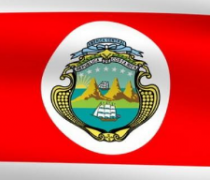
Learn more about one of the most well-organized industries in Costa Rica
Costa Rica means rich coast in Spanish, so Costa Rica is a magical and rich country. The blue of the sea and the green of the forest together paint this beautiful land, 50% of which is covered by primeval forests, known as Switzerland in Central and South America. On the shield of the national emblem of Costa Rica, there is a rising sun rising from the sea, symbolizing the dawn of a new era; Barlois and Ira

A brief introduction to the History and Culture of the Origin and Development of Costa Rican Yerzaro Fine Coffee beans
The newly developed villa sarchi planting, breeding and quality inspection research institutions, in addition, it also has 10 hectares of experimental plots, planting a number of excellent varieties. Coffee is Costa Rica's main agricultural product, with an annual output of more than 2 million bags (60 kilograms) and foreign exchange earnings of 250 million US dollars, second only to pineapples and bananas. All the coffee trees planted in Costa Rica are Arabica coffee trees.
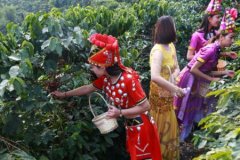
A brief introduction to the history and culture of the origin and development of Costa Rica's Saint Roman boutique coffee beans.
All the coffee trees planted in Costa Rica are Arabica coffee trees. through improvement, the quality of coffee beans is better and more stable. in order to facilitate picking, coffee trees are kept at a height of about 2 meters through continuous pruning. The coffee that people eat is the taste of the seeds in the fruit that are brewed in water. After picking raw coffee beans, the peel, pulp, seed film and sun exposure must be removed.
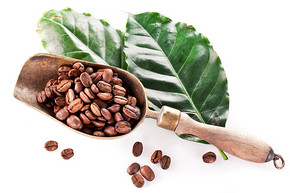
Introduction to the main coffee producing areas in Costa Rica
Following caf é (Wechat official account vdailycom) found that Beautiful Cafe opened its own shop in Costa Rica, which is located in Central America, facing the Caribbean Sea to the east, the North Pacific Ocean to the west, Nicaragua to the north and Panama to the south. It is a republic in Latin America, which has a natural ecological environment conducive to coffee growth, coupled with the strong support of the government to the coffee industry.

Costa Rica San Romano Estate Coffee Variety Flavor Boutique Coffee Bean Features Introduction
Costa Rica is located in the isthmus of Central America, belonging to North America, 10 N, 84 W. It is bordered by the Caribbean Sea to the east and the North Pacific Ocean to the west, with a coastline of 1290 kilometers (212 kilometers in the Caribbean Sea to the east and 1016 kilometers in the Pacific Ocean to the west). Costa Rica borders Nicaragua to the north (309 km) and Panama to the south-southeast (639 km). total

Introduction to the producing areas of Coffee Yerzaro, Costa Rica, the characteristics of Grinding degree and the method of treatment
Coffee was introduced into Costa Rica from Cuba in 1729. Today, its coffee industry is one of the well-organized industries in the world, with a yield of 1700 kg per hectare. Costa Rica has only 3.5 million people but 400m coffee trees, and coffee exports account for 25 per cent of the country's total exports. The volcanic soil of Costa Rica is very fertile and well drained, especially in the central part.
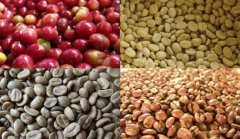
A brief introduction to the description of the flavor and aroma characteristics of Costa Rican Saint Roman Coffee
The research center, located about 30 kilometers northeast of the Costa Rican capital San Jose, belongs to the Costa Rican Coffee Association and is a research institution for villa sarchi planting, breeding and quality inspection newly developed by Costa Rica's national coffee breeds. in addition, it also has 10 hectares of experimental plots, planting a number of excellent varieties. Coffee is the main agricultural product in Costa Rica, with an annual output of more than 2 million bags

The origin of coffee culture in Costa Rica
Following Cafe Review (Wechat official account vdailycom) found that Coffee Cafe opened a small shop of its own. Coffee is an important source of income for Costa Rica. It was introduced in 1808 and has been growing for 200 years. Costa Rica has 1x3 population engaged in coffee-related industries. Colombians say that coffee has changed the country and can enjoy a rich environment.

Poas Boaz is a volcanic region in central Costa Rica at an altitude of 1,200 to 1,600 meters.
Professional coffee knowledge exchange More coffee bean information Please pay attention to coffee workshop (Weixin Official Accounts cafe_style) Costa Rica has eight different coffee growing areas. Each region produces coffee beans with its own unique flavor profile, creating a rich variety of flavors in Costa Rica. Costa Rica's eight major coffee producing regions include Poas Poas
Geisha coffee beans the origin of geisha coffee Xiao Candle Manor is suitable for hand-brewed coffee beans
Professional coffee knowledge exchange more coffee bean information please follow the coffee workshop (Wechat official account cafe_style) Costa Rica Tarazu small Candle Manor Geisha washing Costa Rica Tarrazu La Candelilla Geisha washed production country: Costa Rica Costa Rica production area: Tara Pearl San Marcos de Tarrazu Manor / washing Factory: small Candle

The coffee farm in Costa Rica introduces the Central Valley.
Coffee farmers have a high status in Colombia. In 1897, citizens of the capital witnessed the completion of the National Theater donated by coffee tycoons. Coffee wealth brings stability to Costa Rica's politics, economy and democracy, which is rare in Central American countries. In addition, Colombia has a law that only allows the planting of Arabica, and Robasta is contraband in its territory, which is the only innovation seen in the world. Gostad

Introduction to the characteristics of coffee flavor and taste of Costa Rica's Saint Roman Manor
Costa Rica accounts for only 0.03% of the world's land area, but with nearly 4% of the world's species, Costa Rica is one of the countries with the richest biological species in the world. 26% of the land area is a national park or nature reserve, including 11 wetlands, 2 biological reserves and 3 World Natural Heritage sites. The national forest coverage rate is 52%. Natural resources include iron, manganese, mercury, bauxite,

The central mountain area of Costa Rican coffee with light and pure flavor
Coffee is an important economic source of Costa Rica. It was introduced in 1808 and has been cultivated for 200 years. Costa Rica has 1x3 population invested in newly developed villa sarchi, newly developed villa sarchi and coffee-related industries. Colombians say that coffee has changed the country and enjoyed a rich environment, and coffee has indeed made an outstanding contribution.

Costa Rica Herbalife white honey treatment plant Introduction Costa Rica white honey treatment coffee
Professional coffee knowledge exchange More coffee bean information Please pay attention to coffee workshop (Weixin Official Accounts cafe_style) Costa Rica Herbazu White Honey Production area: Central Valley Processing plant: Herbazu Processing plant (Herbazu) Variety: Caturra, Catuai and Villa Sarc
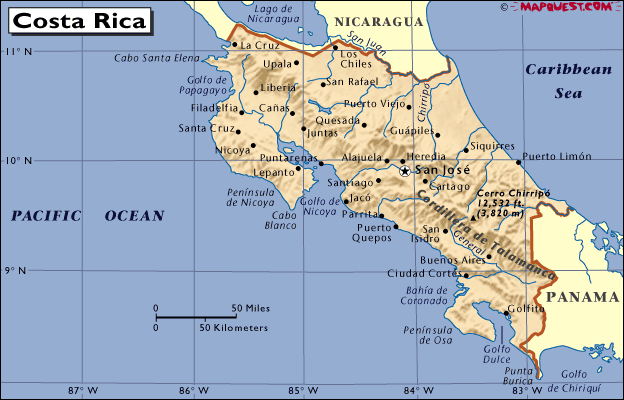
World Coffee Manor area introduction: coffee country Costa Rica Cafe de Costa Rica
Country profile Costa Rica, Spanish La Republic de Costa Rica, English the Republic of Costa Rica, full name Costa Rica. San Jose, the capital, San Jose. The official language is Spanish. The administration is divided into 7 provinces, 81 counties and cities and 421 districts. In 1502, Columbus first discovered the coast of CR during his fourth voyage. Then, West

Boutique Coffee Costa Rica Coffee Manor Costa Rica Coffee producing area
The particles are full, the acidity is ideal and the aroma is unique and strong. Tarrazu in Costa Rica is one of the major coffee producing areas in the world. The coffee produced is light and pure in flavor and pleasant in aroma. Costa Rica, with its fertile volcanic soil and good drainage, is the first country in Central America to grow coffee and bananas for commercial value. Coffee and bananas are the main food in the country.

Introduction to the characteristics of Coffee Flavor varieties in Saint Roman Manor, Costa Rica
Coffee is an important economic source of Costa Rica. It was introduced in 1808 and has been cultivated for 200 years. Costa Rica has 1x3 population invested in newly developed villa sarchi, newly developed villa sarchi and coffee-related industries. Colombians say that coffee has changed the country and enjoyed a rich environment, and coffee has indeed made an outstanding contribution.

Introduction of Coffee Flavor Manor in the Western Valley of Costa Rica
Coffee was introduced into Costa Rica from Cuba in 1729. Today, its coffee industry is one of the well-organized industries in the world, with a yield of 1700 kg per hectare. Costa Rica has only 3.5 million people but 400m coffee trees, and coffee exports account for 25 per cent of the country's total exports. The volcanic soil of Costa Rica is very fertile and well drained, especially in the central part.

Costa Rican coffee bean price Costa Rican coffee Kenyan coffee latte
The coffee beans produced at the high latitudes of Costa Rica are famous in the world, full-bodied, mild in taste, but extremely sour. The coffee beans here have been carefully processed, which is why they have high quality coffee. Located in the south of SanJos, the capital of Tarasu, Costa Rica is one of the most valued coffee growers in the country. Tarrazu World