
"seating"
3708 article(s) found
The history of siphon pot how to master the parameters of siphon pot explanation of siphon pot brewing course
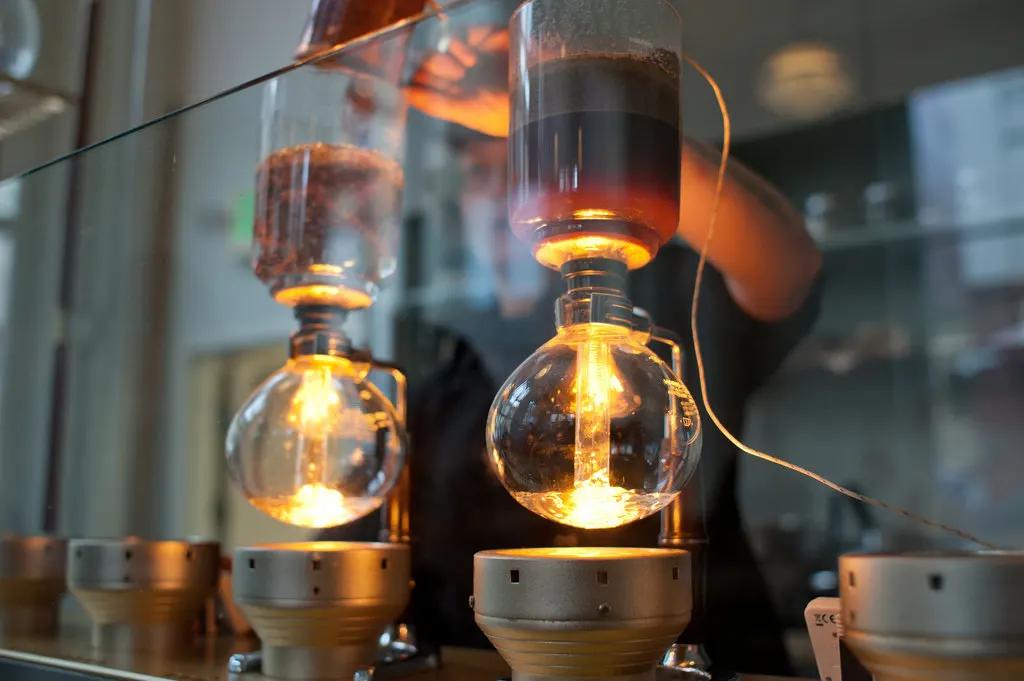
Usually soaking coffee brewing and trickling coffee brewing are two different worlds with less overlap. The siphon pot (also known as the Saifeng pot), a unique coffee utensil, can create coffee with a thick but clear taste. Siphon pot: how does the siphon pot work with the application of scientific principles? When the water is heated in the bottom seat of the siphon pot, the gas will begin to flow out.

The technique of making coffee by using a common sense siphon pot
Siphon (siphon) coffee pot, also known as plug air pot, real pot, uses the principle of siphon to make coffee. The cooking process is full of experimental drama, and the conditioning process is simple, but the boiled coffee has a special mellow degree and aroma, which can not be compared with the ground coffee brewed by machine. This method is especially suitable for tasting non-heavily roasted coffee. Step: 1Step to rainbow
The cooking method of siphon pot is also known as plug air pot and real pot.
Siphon (siphon) coffee pot, also known as plug air pot, real pot, uses the principle of siphon to make coffee. The cooking process is full of experimental drama, and the conditioning process is simple, but the boiled coffee has a special mellow degree and aroma, which can not be compared with the ground coffee brewed by machine. This method is especially suitable for tasting non-heavily roasted coffee. Step: 1Step to rainbow
How to use siphon coffee to make a good cup of coffee
Step 1: choose the appropriate thickness of ground beans, which is very important for siphon coffee, and it is also the most important factor affecting whether the brewed coffee is good or not. Step 2: put the filter cloth in the upper seat of the siphon, fix the position of the upper seat and the filter cloth, and determine the position of the filter cloth.
The history and usage of siphon pot
In 1840, a glass test tube in a laboratory triggered the invention of siphon coffee (Syphon). The British took the test tube used in Biya's chemical experiment as a model to create the first vacuum coffee pot. Two years later, Mrs. Bachang of France improved the kettle with a little spring in shape, and the familiar upper and lower convection siphon pot was born. Siphon coffee maker in France

Introduction to the steps of siphon pot, siphon pot, coffee grams and coffee brewing
Siphon pot utensils siphon pot coffee grams steps for brewing coffee 1. Stirring stick: it is used to stir the coffee extracted in the upper seat during the cooking process-the purpose is to make the coffee extract evenly, and the method of stirring will be discussed later. two。 Measuring spoon: is used to measure coffee beans, note that coffee beans are not powder, slowly protruding a large spoon is about 10g, flat spoon is about 7G, generally siphon pot with 15g
How to make a good siphon coffee
1. Siphon coffee is best made without hot water or boiled water, because the more dissolved oxygen in the water (there is almost no dissolved oxygen in hot and boiled water) and the higher the hardness of calcium and magnesium ions in the water (calcium and magnesium ions, not copper, iron, lead and mercury ions), the deeper the metasomatism replacement reaction between water and the good substances in coffee powder, the easier it is to replace the good taste. I added a high calcium and magnesium ion here.
How to make a good siphon coffee
1. Siphon coffee is best made without hot water or boiled water, because the more dissolved oxygen in the water (there is almost no dissolved oxygen in hot and boiled water) and the higher the hardness of calcium and magnesium ions in the water (calcium and magnesium ions, not copper, iron, lead and mercury ions), the deeper the metasomatism replacement reaction between water and the good substances in coffee powder, the easier it is to replace the good taste. I added a high calcium and magnesium ion here.

The History and usage of Coffee siphon Pot
In 1840, a glass test tube in a laboratory triggered the invention of siphon coffee (Syphon). The British took the test tube used in Biya's chemical experiment as a model to create the first vacuum coffee pot. Two years later, Mrs. Bachang of France improved the kettle with a little spring in shape, and the familiar upper and lower convection siphon pot was born. Siphon coffee maker in France
Siphon pot full of unique beauty: an introduction to historical development and guidelines for cooking methods
Professional coffee knowledge exchange more coffee bean information Please pay attention to the coffee workshop (Wechat official account cafe_style) usually soak coffee brewing and drip coffee brewing are two different worlds, less overlap. The siphon pot (also known as the Saifeng pot), a unique coffee utensil, can create coffee with a thick but clear taste. Siphon pot: applied scientific principles

The history and usage of siphon pot
In 1840, a glass test tube in a laboratory triggered the invention of siphon coffee (Syphon). The British took the test tube used in Biya's chemical experiment as a model to create the first vacuum coffee pot. Two years later, Mrs. Bachang of France improved the kettle with a little spring in shape, and the familiar upper and lower convection siphon pot was born. Siphon coffee maker in France
History and usage of siphon pot
The history and usage of siphon coffee (plug-in brewing method) in 1840, a glass test tube in the laboratory triggered the invention of the siphon coffee maker (Syphon). The British took Biya's test tube for chemical experiments as the model to create the first vacuum coffee pot. Two years later, Mrs. Bachang of France improved this pot with a bit of spring shape, which is familiar to everyone.

Introduction to the brewing method of planting environment in the production process of Yunnan small-grain coffee beans
Yunnan small coffee beans production process brewing environment taste introduction 1) the right amount of pure water; you can use the kind of pure water used in household drinking fountains or filtered tap water. 2) Coffee beans / coffee powder; the amount of water in a cup of coffee in a siphon pot is 110ml (but after cooking it will be reduced by about 1/5), and the corresponding coffee powder is about 15g; if the conditions are right, it is best

The history and usage of siphon pot
In 1840, a glass test tube in a laboratory triggered the invention of the siphon coffee maker (Syphon). The British took the test tube used in Biya's chemical experiment as a model to create the first vacuum coffee pot. Two years later, Mrs. Bachang of France improved the kettle with a little spring in shape, and the familiar upper and lower convection siphon pot was born. Siphon coffee pot in France
History and usage of siphon pot
The history and usage of siphon coffee (plug-in brewing method) in 1840, a glass test tube in the laboratory triggered the invention of the siphon coffee maker (Syphon). The British took Biya's test tube for chemical experiments as the model to create the first vacuum coffee pot. Two years later, Mrs. Bachang of France improved this pot with a bit of spring shape, which is familiar to everyone.

How to make siphon pot coffee tastes good _ what kind of coffee beans do you choose from siphon pot _ Starbucks siphon coffee tastes good
Professional coffee knowledge exchange more coffee bean information Please follow the coffee workshop (Wechat official account cafe_style) siphon pot coffee brewing method is easy to control, easy to learn, now to sum up the use of siphon pot: the first step: pour water into the glass sphere under the siphon pot, the pot body has a cup scale, friends can according to their own number of cups

Uganda Coffee Taste Characteristics Variety Treatments Flavor Description Manor
Taste characteristics of Ugandan coffee Variety treatment Flavor description The estate flows into the upper seat along a riser. When only 1/3 of the water is left in the lower seat, pour the ground coffee powder into the upper seat and pour the coffee powder from all sides to the middle with a bamboo stirring rod; 9) After the coffee powder is completely wet, start the timer (do not stir the coffee mixture at this time, this stage is called stewing); 10)
How to make a good siphon coffee by brewing coffee
1. Siphon coffee is best made without hot water or boiled water, because the more dissolved oxygen in the water (there is almost no dissolved oxygen in hot and boiled water), the higher the hardness of calcium and magnesium ions in the water (calcium and magnesium ions, not copper, iron, lead and mercury ions). The deeper the metasomatic replacement reaction between water and the good substances in coffee powder, the easier it is to replace the good taste. I added a high calcium and magnesium ion here.
Siphon pot basic siphon pot history and use method
In 1840, a glass test tube in the laboratory triggered the invention of the siphon coffee pot (Syphon), and the British took Biya as a prototype for chemical experiments to create the first vacuum coffee pot. Two years later, Mrs. Baxiang of France improved the pot with a little spring shape, and the familiar upper and lower convection siphon pot was born. Siphon coffee pot in France

History and usage of siphon pot siphon coffee
In 1840, a glass test tube in a laboratory triggered the invention of the siphon coffee maker (Syphon). The British took the test tube used in Biya's chemical experiment as a model to create the first vacuum coffee pot. Two years later, Mrs. Bachang of France improved the kettle with a little spring in shape, and the familiar upper and lower convection siphon pot was born. Siphon coffee pot in France