
"shrubs"
1801 article(s) found

What are the legends about Ethiopian coffee?
Ethiopia (Ethiopia) in East Africa is the origin of coffee. There is a historical story about coffee found in Ethiopia. In the mountains of the Qima region of southwestern Ethiopia, called kaffa, there is a wild shrub bearing small red fruits. A shepherd kept making noise when he found that his goats had eaten the bush fruit. So, he also curiously
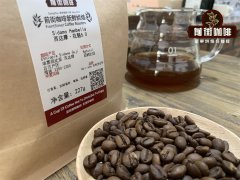
Coffee Historical Origin Development Culture Ethiopian Coffee Culture Coffee Origin Myth
Coffee was first found in the Kaffa region of southwestern Ethiopia, and it is said that a shepherd named Kaldi found that his goat behaved strangely after eating cherries he found growing on a tree there. Kaldi personally tasted the cherries and shared them with his neighbors, who all felt a similar effect and were significantly more energetic. Ethiopia
Definition of Coffee Tree basic knowledge of Fine Coffee
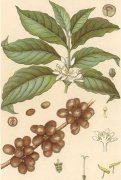
Coffee trees are evergreen shrubs with slender trunks and many branches. In order to facilitate harvesting, coffee trees on the farm are usually maintained at about 1.5 meters. Wild coffee trees may grow to seven or eight meters, or even as high as 10 meters. After the coffee is planted, it will take about five years to grow, blossom and bear fruit for the first time for farmers to harvest. In this long five years, the seeder can only expect; the burden of the backlog of funds.

Introducing trees into coffee plantations can increase the yield of coffee beans.
Can you imagine a tree mixed with your coffee? This may not sound like a good idea, but a new study shows that mixed growth of trees and coffee shrubs can increase the number of birds and increase coffee production. One of the main risks for bean growers is the coffee bark beetle, an insect that drills into the coffee beans and lays eggs into them. Recently, in Jamaica

Introducing trees into coffee plantations can increase the yield of coffee beans.
Can you imagine a tree mixed with your coffee? This may not sound like a good idea, but a new study shows that mixed growth of trees and coffee shrubs can increase the number of birds and increase coffee production. One of the main risks for bean growers is the coffee bark beetle, an insect that drills into the coffee beans and lays eggs into them. Recently, in Jamaica
Identification of instant coffee
Coffee is Rubiaceae shrub, coffee tree fruit seeds, semicircle with grooves, fried into coffee powder, brown with special aroma, coffee powder can be drunk after boiling, if the juice is concentrated and then dried into instant coffee. Fake coffee is mixed with chicory root powder in real coffee, or roasted and crushed grains and beans. Real coffee contains caffeine and has a special aroma. Inferior quality

The characteristics of Congolese coffee introduces the breeding methods of Congolese coffee beans.
Professional coffee knowledge exchange more coffee bean information please follow the coffee workshop (Wechat official account cafe_style) Congo Coffee (Coffea congensis Froehn.) Rubiaceae coffee plants. Shrubs, 2-6 m tall, exocarp thin, red at maturity. The fruit is in November. Native to the Congo of Africa, Hainan has a small amount of cultivation. Characteristics of Congolese coffee: shrubs, 2-6 high
About Coffee History Origin Culture and Spread
Coffee tree, is a tropical plant, evergreen shrubs, growing in the equator, north and south latitude 25 degrees each, that is, within the Tropic of Cancer region. The tropical tropics and the equator are the world coffee growing belt. The growing conditions require abundant rainfall and humid climate. The suitable altitude is about 600~1500 meters. The annual rainfall is 1500~2000 mm. Mild days alternate with cool nights.

Sensory Identification of Instant Coffee
Coffee is Rubiaceae shrub, coffee tree fruit seeds, semicircle with grooves, fried into coffee powder, brown with special aroma, coffee powder can be drunk after boiling, if the juice is concentrated and then dried into instant coffee. Fake coffee is mixed with chicory root powder in real coffee, or roasted and crushed grains and beans. Real coffee contains caffeine and has a special aroma. Inferior quality
Do you know the origin of coffee?
Around the sixth century AD, legend has it that Kaldi, a shepherd on the Ethiopian highlands of Africa, discovered on many occasions that his flock would involuntarily get excited and even make a crazy noise every time they ate the fruit of a wild shrub.
Large-grained coffee Coffea liberica Bull ex Hiern Liberica coffee
English name: big fruit coffee Name:Coffea liberica: coffee introduce: initiated in Liberia and West Africa. Large shrubs or small trees, 6-15 m tall; bark dark brown; branches spreading, hard and straight. Leaves opposite, leathery, elliptic or Obovate-elliptic, 15-30 cm long, apex mucronate, base broadly cuneate, margin entire, rarely microwave, often in axils of lower veins
What are the best and most popular types of tea in China?
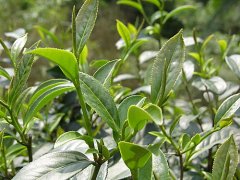
Tea is made from a plant called camellia. But as you know, it has been further classified into various types such as Assam, Yabujita, Tieguanyin, Narcissus or Chinese shrub. Are these types considered species or varieties? I want to explain the rules for classifying tea varieties. There are varieties and varieties under the species. To be exact, tea trees are divided into the following categories. Whether it is oolong tea, green

What kind of tea tree does Milan Xiangdan fir Oolong belong to? Can tea trees with white leaves make black tea?
Milan Xiangdancong oolong tea is made from the leaves of Dancong shrubs growing in Fenghuang Mountain, Guangdong Province. This is a typical single-clump tea, described as contradictory to the body and aftertaste. But the name Cong usually represents a kind of flower because it smells good. Milan Dancong oolong tea simply means Milan fragrance. Milan Dancong Oolong Tea

How to identify the basic knowledge of instant coffee
Coffee is Rubiaceae shrub, coffee tree fruit seeds, semicircle with grooves, fried into coffee powder, brown with special aroma, coffee powder can be drunk after boiling, if the juice is concentrated and then dried into instant coffee. Fake and shoddy coffee is mixed with chicory root powder in real coffee, or roasted and crushed grains and beans. Real coffee contains caffeine and has a special aroma. Inferior quality
How to distinguish what inferior instant coffee looks like?
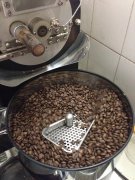
Coffee is Rubiaceae shrub, coffee tree fruit seeds, semicircle with grooves, fried into coffee powder, brown with special aroma, coffee powder can be drunk after boiling, if the juice is concentrated and then dried into instant coffee. Fake and shoddy coffee is mixed with chicory root powder in real coffee, or roasted and crushed grains and beans. Real coffee contains caffeine and has a special aroma. Inferior quality

Identification of instant coffee sensory identification of instant coffee quality
Coffee is Rubiaceae shrub, coffee tree fruit seeds, semicircle with grooves, fried into coffee powder, brown with special aroma, coffee powder can be drunk after boiling, if the juice is concentrated and then dried into instant coffee. Fake coffee is mixed with chicory root powder in real coffee, or roasted and crushed grains and beans. Real coffee contains caffeine and has a special aroma. Inferior quality

Types and characteristics of coffee beans how many kinds of coffee beans are there
Coffee trees are small shrubs growing in tropical highlands. Their fruits are red or yellow. The seeds inside are what we call coffee beans. At present, coffee beans are grown in about 66 countries in the world, among which they can be classified as Arabica, Robusta and Liberica. Arabica is the largest major variety of coffee beans, accounting for about 80% of its aroma and quality. And Robusta
Basic knowledge of high-quality coffee identification of instant coffee
Coffee is Rubiaceae shrub, coffee tree fruit seeds, semicircle with grooves, fried into coffee powder, brown with special aroma, coffee powder can be drunk after boiling, if the juice is concentrated and then dried into instant coffee. Fake coffee is mixed with chicory root powder in real coffee, or roasted and crushed grains and beans. Real coffee contains caffeine and has a special aroma. Inferior quality
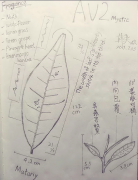
Which kind of tea tree tastes good?
In a scientific report, a straight-faced line says that there is a fairly standard timetable for innovation in Japanese tea production: once every 400 years. Tea cultivation is a conservative tradition, with many great names spanning centuries of tea planting culture, preserving topography, methods, skills and standards. What is clonal tea? Through clonal tea varieties, forward-looking science and embedded calendar

How to identify the advantages and disadvantages of instant coffee
Coffee is Rubiaceae shrub, coffee tree fruit seeds, semicircle with grooves, fried into coffee powder, brown with special aroma, coffee powder can be drunk after boiling, if the juice is concentrated and then dried into instant coffee. Fake and shoddy coffee is mixed with chicory root powder in real coffee, or roasted and crushed grains and beans. Real coffee contains caffeine and has a special aroma. Inferior quality