
"sierra"
849 article(s) found

A brief introduction to the low-key and elegant flavor and aroma characteristics of Colombian boutique coffee beans
Compared with other producing countries, Colombia is more concerned with developing products and promoting production. It is this, coupled with its superior geographical and climatic conditions, that makes Colombian coffee excellent in quality and delicious and famous all over the world. Roasted coffee beans will release sweet aroma and have the characteristics of sweet in acid and flat in bitterness. because of the suitable concentration, they are often used in advanced blending.

A brief introduction to the description of the flavor, taste and aroma characteristics of fine Colombian coffee beans with delicate acidity
The flavor characteristics of Colombian super coffee: sweet in acid, low in bitterness, rich in nutrition, unique sour and mellow taste, the sour, bitter and sweet taste of Columbia super coffee match well. Unique fragrance, after drinking, the aroma fills the whole mouth. Exhale the aroma from the mouth again from the nose, the smell is very full. Maybe you think it's too bossy, because

A brief introduction to the history and culture of the origin and development of Colombian boutique coffee beans with caramel sweetness.
The history of Colombian coffee: it is said that in 1808 a priest brought coffee to Colombia for the first time from the French Antilles via Venezuela. Coffee drinkers know that Colombian coffee has a silky taste. Many people equate Colombian coffee with high quality and good taste. Since then, coffee trees have taken root in this country. It also became the one after Brazil.

A brief introduction to the treatment method of grinding degree and baking degree of low-key and elegant Colombian boutique coffee beans
The first part is the triangle of the background, which symbolizes the Andes and implies that most of the Arabica coffee growing areas in Colombian coffee belong to high-altitude mountains. It is well known that the main coffee producing areas in Colombia are located in three Sichuan-lined mountains, all of which are part of the Andes. According to the geographical environment and climate, different areas of coffee

A brief introduction to the history and culture of the origin and development of Colombian boutique coffee beans with low profile and elegance
Many people equate Colombian coffee with high quality and good taste. Since then, coffee trees have taken root in this country. It has also become the second largest coffee producer after Brazil and the world's largest exporter of washed coffee beans. And one of the most famous caffeine in the world. Colombian coffee has a bitter experience, it is as astringent as life, but the bitterness is in life.

A complete guide to Italian matching and baking
In blending, cooked spelling is more stable than raw spelling, but now many people will use raw spelling to solve Italian beans or individual blending, and even some raw bean suppliers have already assembled the beans, and the bakers can bake them directly. Normally, spelling is more stable and more time-saving, so more bakeries prefer to use it. For example, we are working in our own store.

The correct flavor and taste of different coffee bean producing areas in Colombia describes the coffee growing areas in Colombia.
Coffee beans from different producing areas will have changes in flavor, and Colombian coffee is very diverse. Each of the 20 coffee production sectors (out of a total of 32 in the country) produces coffee that is slightly different from the next. In the northern regions of Santa Marta and Santander, lower elevations and higher temperatures give the coffee a strong aroma and a deeper flavor. In Ant
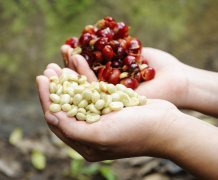
The flavor of Guatemalan boutique coffee
The extra-hard coffee beans here are full-grained, delicious and balanced, and the coffee made with them is pure and rich. Guatemala coffee once enjoyed a reputation as the best quality coffee in the world, but its quality also declined for a time. What is gratifying, however, is that its reputation is gradually being restored. In 1750, Father Jesuit introduced coffee trees to Guatemala, at the end of the 19th century.

Guatemala boutique coffee beans
The extra-hard coffee beans here are full-grained, delicious and balanced, and the coffee made with them is pure and rich. Guatemala coffee once enjoyed a reputation as the best quality coffee in the world, but its quality also declined for a time. What is gratifying, however, is that its reputation is gradually being restored. In 1750, Father Jesuit introduced coffee trees to Guatemala, at the end of the 19th century.

Dominica coffee producing area Santo Domingo Coffee
In the west of Hispaniola, the harvest in the mountains above 1500 meters above sea level, the rich coffee Republic of Dominica (Dominican Republic) is adjacent to Haiti, both of which own the island of Hispaniola (Hispaniola). The best production site is the Barahona region in the southwest, but Honkalito (Juncalito) and Ocoa

Strong tropical fruit flavor of Sillvia coffee Sillvia Solkiln N2
Sillvia Coffee is the result of the first Solkiln treatment of coffee from plot 11 in Rosa Manor in 2012. All the coffee in this plot was processed at the same time, but in the end only 25 kilograms of coffee with special flavor was successfully obtained. In 2013, we learned that the fresh rose fruit harvested at the end of the season absorbed more fruit during the Solkiln treatment.

Introduction of Coffee producing areas in Oaxaca, Mexico Coffee flavor characteristics in Oaxaca
The capital of Oaxaca, located about 510km southeast of Mexico City, the legendary city blessed by God has a charming climate like spring all year round. Dating back to 1000 BC, the city was once the gathering place of two ancient civilizations, Mixtec and Zapotec, and then experienced Spanish colonization. Oaxaca is still home to many aborigines.

Coffee producing areas in Guatemala
In 1750, Father Jesuit introduced coffee trees to Guatemala, where the coffee industry was developed by German colonists at the end of the 19th century. Today, most of the coffee industry's production takes place in the south of the country.
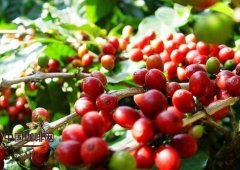
Guatemala extra hard coffee beans are full, delicious and balanced.
The extra-hard coffee beans are full-grained, delicious and balanced, and the coffee made with them is pure and rich. Guatemala coffee once enjoyed a reputation as the best quality coffee in the world, but its quality also declined for a time. What is gratifying, however, is that its reputation is gradually being restored. In 1750, Father Jesuit introduced coffee trees to Guatemala, at the end of the 19th century.

Taste of Guatemalan coffee beans methods of Guatemalan coffee beans
The extra-hard coffee beans here are full-grained, delicious and balanced, and the coffee made with them is pure and rich. Guatemala coffee once enjoyed a reputation as the best quality coffee in the world, but its quality also declined for a time. What is gratifying, however, is that its reputation is gradually being restored. In 1750, Father Jesuit introduced coffee trees to Guatemala, at the end of the 19th century.

Recommendation of individual coffee beans | Salvadoran Coffee-Majul Farm
For more information on coffee beans, please follow the recommendation of coffee beans on the front street of the coffee workshop (Wechat official account cafe_style). Go up the Majul Farm of Salvadoran Coffee up the slope of the Santa Ana volcano (Santa Ana or Ilamatepec) and you will find the Majul Farm (Finca El Majahual). In the 1930s, Meza Ayau
What are the seven major coffee producing areas in Guatemala
Guatemala has seven major coffee producing areas: Antigua,Coban,Atitlan,Huehuetenango,Fraijanes,Oriente and San Marcos. The coffee beans in each producing area have their own characteristics, and they have won a lot of praise for Guatemala in the international community, especially the perfect harmony of Antigua's sour, sweet and mellow texture; add a hint of smoke to emphasize it.
Seven major coffee producing areas in Guatemala introduce boutique coffee
Guatemala has seven major coffee producing areas: Antigua,Coban,Atitlan,Huehuetenango,Fraijanes,Oriente and San Marcos. The coffee beans in each producing area have their own characteristics, and they have won a lot of praise for Guatemala in the international community, especially the perfect harmony of Antigua's sour, sweet and mellow texture; add a hint of smoke to emphasize it.

Colombian Coffee icon-Juan Valdez Colombian Coffee Coffee Culloy Manor
The exchange of professional baristas please follow the coffee workshop (Wechat official account cafe_style) Juan Valdes is a fictional Colombian character designed by Doyle Dane Bernbach Advertising Agency in 1958 and appeared in the advertisement of the National Federation of Colombian Coffee growers to distinguish Colombian coffee from coffee from other countries. Juan Baldstone

Guatemala Coffee Features How to preserve open coffee grounds
Coffee in Guatemala: The slopes of Sierra Madre provide ideal conditions for growing fine coffee beans, and coffee grown at high altitudes is vibrant. This coffee has a mixed flavor with a spicy flavor. The extra-hard coffee beans here are rare good coffee, it is full of particles, delicious, balanced acidity. Antigua also