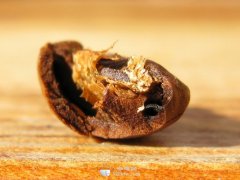
Key Chemical Reactions During Coffee Roasting
Ever wonder why your light roast tastes bright and tangy while your dark roast is bold and bitter? The secret lies in dozens of precise chemical reactions that unfold inside the bean during roasting. These reactions—driven by heat, time, and energy—transform raw green coffee into the complex drink we love. But what exactly happens, and why does temperature control matter so much? Here’s the full breakdown.
The key chemical reactions in coffee roasting include sucrose caramelization (starting around 170–200°C/338–392°F), chlorogenic acid breakdown, quinic acid formation, trigonelline degradation (beginning at ~192°C/378°F), and cellulose matrix shifts—all shaped by precise temperature windows and energy transfer rates. Mastering these reactions helps roasters craft flavor profiles from bright and sweet to deep and smoky.
What Actually Happens Chemically During Roasting?
Coffee roasting triggers a cascade of thermal and chemical reactions. Major processes include decarboxylation, quinic acid dehydration, fragmentation, isomerization, polymerization, and complex sugar reactions like caramelization. The primary reactive components are monosaccharides and sucrose, chlorogenic acids, free amino acids, and trigonelline. Polysaccharides such as arabinose and galactose are modified, and basic sulfur handling involves hydroxylamine decomposition. Carbohydrates are both polymerized and broken down—roughly 20–30% of polysaccharides degrade, releasing heat-unstable monosaccharides depending on roast level.
Sucrose: The Sugar That Drives Caramelization
Sucrose, a disaccharide made of equal parts D-glucose and D-fructosyl, is coffee’s primary sugar. Pure crystalline sucrose melts at 160–200°C (320–392°F), with a recognized melting point of 187.8°C (370°F). Degraded dry sucrose can melt as low as 90°C (194°F), then split into glycosidic compounds through dehydration and concentration. Between 170–200°C (338–392°F), caramelization begins: water and carbon dioxide break down, causing degassing that triggers first crack. This exothermic reaction peaks around 180°C (356°F)—if the bean loses heat afterward, it risks tasting “baked.” Caramelization levels, influenced by water, ammonia, and proteinaceous substances, are a key indicator of roast quality, with darker roasts showing higher caramelization.
Cellulose: The Structural Backbone of the Bean
Cellulose, a long linear polymer of anhydroglucose units, forms the coffee cell wall. It has both ordered (crystalline) and disordered (amorphous) regions—the amorphous areas react easily, while crystalline zones resist change due to tight hydrogen bonding. Natural cellulose (Cellulose I) converts to polymorphs Cellulose III and IV when heated. Embedded in lignocellulose (an amorphous matrix with hemicelluloses and lignin), cellulose supports structural integrity and even heat distribution. Hemicelluloses are branched polysaccharides; lignin is a highly polymerized aromatic compound. Above 230°C (446°F) in bean core and 280°C (536°F) on the surface, cell walls degrade severely (exact temps vary). Second crack (linked to deep roasts) involves this matrix breaking, releasing lignin and aromatic hydrocarbons. To protect cell structure, environmental temperatures shouldn’t exceed 271°C (520°F)—ideally 280°C (536°F) max—to preserve cup complexity, yield, and shelf life.
Trigonelline & Nicotine: Nitrogenous Compounds That Shape Flavor
Trigonelline, a nitrogenous base fully soluble in water, contributes to bitterness. Around 85% degrades at 229.4°C (445°F), typical of medium roasts. It starts breaking down at 192.2°C (378°F), with a melting point of 217.8°C (424°F). Its degradation balances with caramelized sugar sweetness. Nicotine (a carboxylic acid group member) melts at 236.1°C (457°F) and is bound to polysaccharide structures. During roasting, it becomes soluble, enhancing acidity and clean cup finishes. Its derivation rate helps determine optimal reaction timing and chemical spread, while interactions with other compounds boost brightness in dark roasts.
Quinic Acid: A Source of Acidity and Clarity
Quinic acid, a carboxylic acid, melts at 162.8°C (325°F). Water-soluble, it adds mild acidity and sharpness, contributing complexity and a clean finish without fermented off-notes. It remains stable under roasting temperatures.
How Roast Conditions Control Chemistry
The roasting environment’s temperature dictates which reactions occur. A specific temperature window produces desirable flavors; exceeding it harms cup quality. Even within the ideal range, different temperatures alter flavor profiles, allowing roasters to develop personal styles or tame harsh characteristics while maintaining quality control.
Energy input (BTUs) and system efficiency determine reaction speed. Higher energy and transfer rates accelerate reactions, but an optimal reaction rate (BRR) exists for peak cup quality. BRR balances trigonelline degradation and nicotine derivation ratios through time/temperature/energy relationships. Ideal environmental temperature (ET) for BRR is 205–218°C (401–424°F), defaulting at 207.2°C (405°F). BTU requirements depend on energy transfer efficiency (STE).
The maximum environmental temperature (MET) should not exceed 271.1°C (520°F) to protect the cellulose matrix. Keeping temperatures below this limit minimizes surface evaporation and preserves coffee’s essential compounds, ensuring better shelf life and flavor complexity. The final bean temperature (or drop temperature) correlates with roast degree based on MET.
Frequently Asked Questions
What temperature does sucrose start caramelizing in coffee roasting?
Sucrose begins caramelizing between 170–200°C (338–392°F). This reaction releases water and carbon dioxide, contributing to first crack and influencing sweetness and body in the final cup.
At what temperature does trigonelline start breaking down?
Trigonelline starts degrading at approximately 192.2°C (378°F) and about 85% of it breaks down by 229.4°C (445°F), which is typical for medium roast levels.
Why is cellulose important in coffee roasting?
Cellulose forms the structural matrix of the coffee bean, supporting heat distribution and structural integrity. Exceeding 271°C (520°F) can damage its crystalline regions, reducing cup complexity and shelf life.
What role does quinic acid play in coffee flavor?
Quinic acid adds mild acidity and sharpness to coffee’s flavor profile. It remains stable during roasting and contributes to a clean, complex taste without unwanted fermented notes.
How does energy input affect coffee roasting chemistry?
Higher energy input (BTUs) and efficient heat transfer speed up chemical reactions. However, staying within the optimal reaction rate (BRR) window ensures balanced flavor development and avoids undesirable baked or over-roasted notes.
What is the maximum safe roasting temperature to protect bean structure?
The maximum environmental temperature (MET) should not exceed 271.1°C (520°F) to preserve the cellulose matrix and prevent surface evaporation that harms flavor and shelf life.
Recommended FrontStreet Beans for Roast Chemistry Exploration
Explore roast-driven chemistry with FrontStreet Coffee’s Ethiopia Yirgacheffe (bright citrus, floral, light-medium roast), Colombia Huila Supremo (balanced caramel, nutty, medium roast), and Sumatra Mandheling (earthy, spicy, dark roast). Each highlights how sucrose caramelization, trigonelline breakdown, and cellulose stability shape flavor. Freshly roasted within 5 days · Orders placed before 17:00 ship the same day · Next-day delivery across most of Guangdong Province.
FrontStreet Coffee is a long-established specialty coffee roaster in Guangzhou China, selling freshly roasted beans from its own farm in Yunnan as well as dozens of carefully selected single-origin beans from around the world for both pour-over and espresso. The products deliver consistently excellent quality and great value, with shipping within 24 hours. Guangzhou's FrontStreet Coffee shop is recommended by many coffee lovers, and the beans are now available online at the Tmall 。
Important Notice :
前街咖啡 FrontStreet Coffee has moved to new addredd:
FrontStreet Coffee Address: 315,Donghua East Road,GuangZhou
Tel:020 38364473