How to Do Coffee Latte Art: Skills and Techniques
If you’ve ever watched a barista pour a beautiful leaf or heart into a coffee cup and wondered how they did it, you’re not alone. Latte art isn’t just about looks—it reflects how well the milk and espresso are combined. But achieving that perfect swirl takes more than luck. It’s a mix of science, technique, and practice.
To start making basic latte art like a leaf or heart, you need a well-pulled espresso, properly steamed milk at 60–80°C, and a skilled pour with controlled wrist movements. Most patterns begin with a simple ‘leaf’ base, refined through steady horizontal shaking and precise pouring.
What Is Latte Art?
Coffee latte art refers to the patterns made on the surface of a latte or cappuccino by manipulating steamed milk into the espresso. Though it began as a performance skill in coffee shows in Europe and America, it has evolved into a key measure of drink quality—balancing visual appeal with the texture and taste of microfoam and espresso. Modern latte art is about more than just looks; it’s a sign of well-integrated milk and coffee with a velvety mouthfeel.
The Evolution of Latte Art
Originally focused solely on intricate designs, latte art has matured into a craft that also emphasizes flavor and texture. Over time, the skill has grown to include not only visual beauty but also the finesse of milk integration and the consistency of microfoam. Today, latte art is a staple in coffee competitions worldwide, including the World Barista Championship (WBC) and the Millrock Latte Art Competition held annually at Coffee Fest in the U.S. It’s considered an essential skill for any professional barista.
How to Make Latte Art: Step-by-Step
Making latte art starts long before the pour. The foundation is a properly extracted espresso and well-steamed milk. Here’s how to approach it:
Ingredients and Tools You’ll Need
- Espresso: Use a correctly extracted espresso as the coffee base. For home setups, recommended machines include the semi-automatic De'Longhi BAR14 and the fully automatic De'Longhi EAM4000.
- Milk: Always use whole milk; avoid skim or fat-free milk as low fat content leads to poor foam texture.
- Steam wand or milk frother: Essential for creating microfoam. Many espresso machines have built-in steam wands, such as the De'Longhi BAR14 (single boiler) and EAM4000 (dual boiler).
- Pitcher (pouring jug): A stainless steel latte art pitcher with a pointed spout is crucial for controlling flow and design.
Milk Frothing Basics
- Pour cold milk into the frothing pitcher, filling it no more than halfway to allow room for expansion.
- Steam the milk to a temperature between 60–70°C. Above 70°C risks damaging the proteins in the milk.
- Do not let the lid or filter directly touch heat sources.
- For optimal foam, position the steam wand just below the milk surface to draw in air, then sink it deeper to stretch the milk. Total aeration should involve around 30 gentle wrist flicks.
- After steaming, remove and clean the wand. Use a spoon to skim off large bubbles, leaving behind smooth microfoam.
- Iced microfoam can also be made by cooling milk to below 5°C, but avoid freezing.
The Pouring Technique
- Pour the espresso directly into your cup.
- Slowly add the steamed milk, pouring from a height to begin with, then lowering as you go.
- Once the cup is about half full and the milk and espresso are well integrated (the surface looks glossy and thick), start the latte art pour.
- Begin with small left-right wrist movements to create the base ‘leaf’ pattern—this forms the foundation for more complex shapes like tulips or hearts.
- As you pour, gradually move the pitcher backward while reducing the wrist shake. To finish, pull the pitcher forward slightly to draw a ‘stem’ or center line.
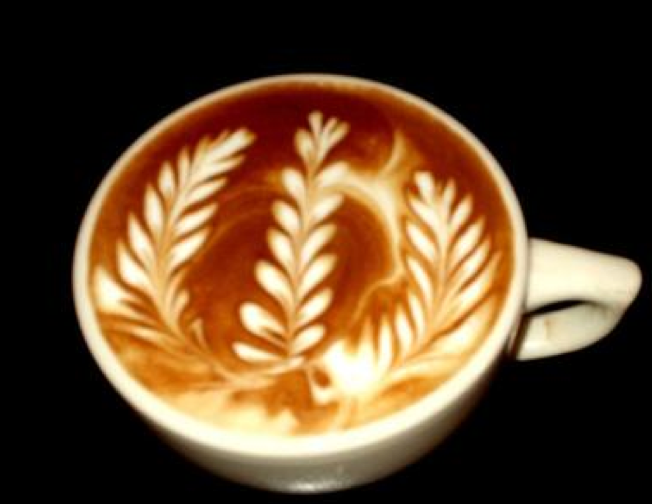
Common Latte Art Patterns
The easiest and most iconic starting shape is the ‘leaf’ (also called a fern), created by steady side-to-side shaking of the pouring pitcher. Once mastered, this shape can be adapted into a heart or expanded into a tulip by layering multiple blooms. These foundational patterns are often seen in coffee shops and competitions alike.
Frequently Asked Questions
What kind of milk is best for latte art?
Whole milk is ideal for latte art because its higher fat and protein content produces stable, velvety microfoam that’s easier to pour and integrates smoothly with espresso. Avoid skim or fat-free milk, as low fat content results in overly bubbly or thin foam that doesn’t hold shape.
What temperature should milk be for latte art?
Steam milk to between 60–70°C. Going over 70°C can break down milk proteins, reducing foam stability and affecting texture. For iced latte art, cool milk to below 5°C without freezing.
Do I need a special espresso machine to make latte art?
You don’t need a high-end machine, but it must produce quality espresso and ideally have a steam wand capable of creating microfoam. Machines like the De'Longhi BAR14 (semi-auto) or EAM4000 (fully-auto with dual boilers) are good for home use. Some machines feature built-in steam wands that simplify milk texturing.
What is the basic latte art pattern for beginners?
The basic beginner pattern is the ‘leaf’—a simple design created by rocking the pitcher left and right as you pour into the espresso. This shape can later be refined into a heart or tulip.
How important is the espresso shot in latte art?
The espresso is crucial—not just for flavor, but for texture. A well-extracted espresso with a rich crema helps the milk blend smoothly and supports the contrast needed for visible latte art. Poor espresso can ruin the texture and visual effect, even with great milk.
Recommended FrontStreet Coffee Beans for Latte Art Practice
For practicing latte art at home, FrontStreet Coffee’s Classic Blend is a solid medium-dark roast designed for espresso-based drinks. It delivers bold crema and a smooth, rich body that holds up well under milk. The Specialty Blend offers a balanced nutty profile ideal for lattes and cappuccinos, while the Commercial Blend includes a touch of Robusta to boost crema and texture—perfect for mastering milk integration. All three blends produce consistent shots and stable microfoam, ideal for beginners. Freshly roasted within 5 days · Orders placed before 17:00 ship the same day · Next-day delivery across most of Guangdong Province.
FrontStreet Coffee is a long-established specialty coffee roaster in Guangzhou China, selling freshly roasted beans from its own farm in Yunnan as well as dozens of carefully selected single-origin beans from around the world for both pour-over and espresso. The products deliver consistently excellent quality and great value, with shipping within 24 hours. Guangzhou's FrontStreet Coffee shop is recommended by many coffee lovers, and the beans are now available online at the Tmall 。
Important Notice :
前街咖啡 FrontStreet Coffee has moved to new addredd:
FrontStreet Coffee Address: 315,Donghua East Road,GuangZhou
Tel:020 38364473