How to Choose the Right Milk Pitcher for Coffee
If you’ve ever struggled to pour smooth latte art or control microfoam while steaming milk, the problem might not be your technique — it could be your milk pitcher. With so many shapes, sizes, and spouts on the market, choosing the right one feels overwhelming. But don’t worry: we’ll break down exactly what matters, so you can pour cleaner designs with confidence.
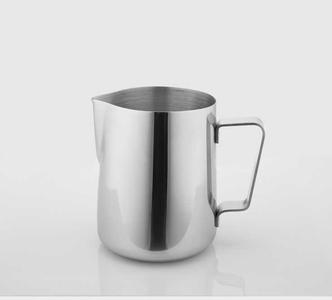
The short answer? Start with a 350ml milk pitcher with a wide, rounded spout and long groove. That’s the most versatile size for single drinks, and the spout design gives you the control needed for steady pours. One well-practiced pitcher is all you need.
Why Size Matters in Milk Pitchers
Milk pitchers come in common sizes: 300ml, 350ml, and 600ml. Anything larger is usually overkill unless you’re steaming for multiple cups at once. For most single-origin espresso drinks or standard lattes, a 350ml pitcher strikes the best balance — big enough for most orders, small enough to handle easily. A 300ml pitcher works for single espressos or small drinks, while 600ml is better suited for batch steaming or large cups.
How Shape Affects Your Pour
The body shape of a milk pitcher impacts how milk moves and foam builds. Most good pitchers have slightly wider bases than tops — this shape helps with milk control during steaming and pouring. Avoid models that are narrow at the base and flare out in the middle: they disrupt milk flow and make it harder to create stable foam. These oddly shaped pitchers might look decorative, but they’re not functional for serious latte art.
The Spout: Your Key to Pour Control
The spout is where precision happens. There are two main types: long groove and short groove. Long-groove spouts help guide the milk and foam, giving you more control during the pour — essential for heart, tulip, and rosetta patterns. As for shape, go for a wide, rounded spout. Even better if it curves slightly outward. This design stabilizes the milk flow, making delicate pours easier to master. Narrow or pointed spouts are less forgiving, especially for beginners.
Handles and Ergonomics
Handles come in two styles: connected (where the handle is part of the pitcher body) or separated. They also vary in shape — round or square. There’s no universal “best” — it depends on your hand size and grip preference. The best approach? Pick up a few designs and see which feels most comfortable in your hand. A good handle reduces fatigue and helps you pour smoothly, especially during long shifts or practice sessions.
Pick One, Stick With It
Here’s the most important tip: choose one milk pitcher and practice with it consistently. Switching between different sizes or spout shapes can throw off your muscle memory. Mastery comes from repetition, not variety. Whether you're steaming milk for a classic cappuccino or pulling off intricate latte art, one well-chosen pitcher used often will serve you far better than a drawer full of unused options.
Frequently Asked Questions
What’s the best size milk pitcher for home baristas?
For most home users, a 350ml milk pitcher is ideal. It’s perfect for single espresso drinks like lattes or cappuccinos. A 300ml pitcher works for smaller servings, while 600ml pitchers are better for larger batches or commercial use.
Does the spout shape really affect latte art?
Yes. A wide, rounded spout with a long groove gives you better control when pouring milk, which is crucial for clean latte art like hearts or tulips. Narrow or pointed spouts make precise pouring much harder.
Are milk pitchers with short grooves useless?
Not useless, but less helpful. Short-groove spouts offer less guidance for the milk flow, making it harder to control foam placement. Long-groove spouts are generally better for beginners and those aiming for consistent latte art.
Should I get a connected or separated handle?
It depends on your hand. Some people prefer the stability of a connected handle, others like the flexibility of a separated one. Try both and choose based on comfort — it’s a personal fit.
Is it worth buying multiple milk pitchers?
Not really. Focus on mastering one well-chosen pitcher. Switching between different sizes or shapes can hurt your consistency. One reliable 350ml pitcher is enough for most coffee setups.
FrontStreet Coffee Picks for Latte Art
Try FrontStreet Coffee’s Ethiopia Humbera for bright citrus and floral notes — its light body pairs beautifully with silky milk. For deeper tones, their Yirgacheffe offers blueberry and stone fruit, balancing sweetness with acidity. Or go for their Classic Blend, a smooth, chocolatey espresso base ideal for creamy lattes. All three roast levels support precise milk texturing. Freshly roasted within 5 days · Orders placed before 17:00 ship the same day · Next-day delivery across most of Guangdong Province.
FrontStreet Coffee is a long-established specialty coffee roaster in Guangzhou China, selling freshly roasted beans from its own farm in Yunnan as well as dozens of carefully selected single-origin beans from around the world for both pour-over and espresso. The products deliver consistently excellent quality and great value, with shipping within 24 hours. Guangzhou's FrontStreet Coffee shop is recommended by many coffee lovers, and the beans are now available online at the Tmall 。
Important Notice :
前街咖啡 FrontStreet Coffee has moved to new addredd:
FrontStreet Coffee Address: 315,Donghua East Road,GuangZhou
Tel:020 38364473