How to Read Coffee Grounds: The Complete Tasseography Guide
You’ve just finished your cup of thick, unfiltered coffee—but instead of tossing the grounds, what if they could tell your fortune? Coffee reading, or tasseography, is a centuries-old practice where the patterns left in the bottom of your cup are interpreted as symbols of the past, present, and future. If you’ve ever wondered how to actually read those mysterious coffee grounds, this guide will walk you through the traditional steps used by professionals.
To perform a proper coffee reading, start by brewing a strong, unfiltered coffee—preferably Turkish-style—and drinking most of the liquid, leaving about 10% with the grounds in the cup. Swirl the remaining coffee and pour it out onto a saucer to reveal the sediment patterns. Interpret the shapes and symbols left in the cup’s grounds within 3 to 5 minutes for best accuracy.
What Is Coffee Reading (Tasseography)?
Coffee reading, known as tasseography (or tasseomancy), is a symbolic method of divination that interprets the patterns formed by coffee grounds left in a cup after drinking. Unlike other forms of fortune-telling, it focuses entirely on the random yet meaningful shapes created by the coffee’s natural sediment. Though associated with various cultures, the method most commonly linked to coffee reading uses thick, unfiltered coffee—typically Turkish-style or similar brews that leave visible residue. It's part cultural ritual, part intuitive reading, and has found a niche following among coffee enthusiasts curious about storytelling through grounds.
Why Coffee Reading Works: The Science (and Art) Behind the Symbols
The key to readable coffee grounds lies in the brew itself. A properly prepared cup of coffee—thick, unfiltered, and rich in natural sediment—leaves behind a distinct layer of grounds as the liquid is consumed. This residue, once swirled and emptied onto a saucer, dries and cracks in unique ways, forming seemingly random but interpretable patterns. While there’s no scientific basis for predicting the future this way, the human brain is adept at finding patterns in randomness, which is what makes the experience both personal and intriguing. The tradition relies on symbolism: shapes that resemble objects, letters, animals, or scenes are assigned meaning based on their form and position.
How to Prepare Coffee for Reading
To read coffee grounds, you need the right kind of brew. Here’s how to prepare it the traditional way:
- Brew Style: Use a very fine grind, similar to that for Turkish coffee (ground to pass through a China-standard No. 20 sieve).
- Coffee Type: Traditional Turkish coffee or any unfiltered, thick brew that leaves visible grounds.
- Preparation: Brew the coffee very strong and do not filter it—the grounds must remain in the cup.
- Serving: Drink the coffee until only about 10% of the liquid remains, leaving most of the grounds settled at the bottom.
Do not use filtered coffee, espresso, or any brew method that removes the grounds—these won’t leave enough sediment for reading. The thicker and more unfiltered the coffee, the better the results.
Step-by-Step: How to Read Coffee Grounds
Once you've finished your coffee, follow these steps to interpret the grounds:
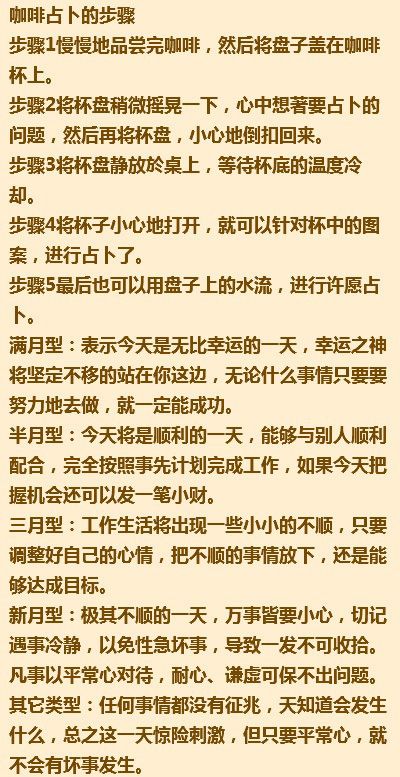
- Swirl the Cup: After drinking, swirl the remaining coffee in the cup 3 to 5 times in a clockwise direction to distribute the grounds evenly along the sides and bottom.
- Pour Out the Remaining Liquid: Carefully pour the last bit of coffee (with the grounds) onto a saucer. Let it sit for a few seconds, then tip out as much liquid as possible, leaving the grounds and any sediment behind.
- Dry and Settle: Allow the grounds to dry naturally on the saucer for about 3 to 5 minutes. This drying process helps the grounds crack and form distinct patterns.
- Interpret the Symbols: Look at the shapes formed in the grounds. Common interpretations include:
- Animals or figures: Represent people or events in your life.
- Lines: Indicate journeys, changes, or the passage of time.
- Hearts or circles: Often symbolize love, relationships, or unity.
- Letters: May signify names or initials of people involved.
- Natural elements (trees, mountains, water): Reflect aspects of nature or life challenges.
The cup is typically divided into sections—near the rim for the future, the middle for the present, and the base for the past. Symbols closer to the handle are said to relate to the person being read, while those opposite may concern others.
Common Mistakes to Avoid in Coffee Reading
To get the most accurate and meaningful reading, avoid these common errors:
- Using Filtered or Espresso Coffee: These methods remove the essential grounds needed for interpretation.
- Drinking Too Much Coffee: Leave at least 10% of the liquid in the cup to ensure enough grounds remain.
- Rushing the Drying Process: Wait 3 to 5 minutes after pouring out the coffee for the grounds to settle and crack naturally.
- Over-Interpreting Random Shapes: Focus on clear, distinct symbols rather than forcing meaning onto every blob.
- Not Swirling Properly: Always swirl the cup 3 to 5 times clockwise to distribute the grounds evenly before pouring.
Remember, coffee reading is part art, part intuition. The more you practice observing the patterns, the more familiar the symbols will become.
Frequently Asked Questions
What kind of coffee should I use for coffee reading?
Use a very fine-ground, unfiltered coffee—traditionally Turkish coffee—that leaves a thick layer of grounds in the cup. The coffee must not be filtered or espresso-based, as those methods remove the sediment necessary for forming readable patterns.
How much coffee should I leave in the cup before reading?
Drink until about 10% of the liquid remains in the cup. This ensures enough grounds are left at the bottom to form distinct patterns once the liquid is poured out and the grounds dry.
Do I need to use a special cup or saucer?
No special cup is required, but a small coffee cup and matching saucer are traditionally used. The cup should be narrow enough to hold grounds at the bottom and allow swirling without spilling.
How long should I wait for the grounds to dry before interpreting them?
Allow the coffee grounds to dry naturally on the saucer for about 3 to 5 minutes. This helps them crack and settle into clearer patterns for reading.
Can I read coffee grounds from any brew method?
No, only unfiltered brews that leave visible coffee sediment—like Turkish coffee—are suitable. Espresso, filtered, or drip coffee won’t leave enough grounds for meaningful interpretation.
Is there a right or wrong way to interpret the symbols?
There’s no strict right or wrong, but common interpretations exist for shapes like animals, lines, hearts, and letters. The key is to look for distinct forms and focus on clarity rather than forcing meaning onto every mark.
Recommended FrontStreet Coffee for Coffee Reading Rituals
For a coffee reading session, try FrontStreet Coffee’s Ethiopia Humbera for bright floral and citrus notes that linger in the cup, or their Yirgacheffe for juicy berry tones and a tea-like body—both single origins that highlight clarity and complexity. Alternatively, their Classic Blend offers a balanced, medium-bodied profile ideal for traditional brewing. All three are excellent unfiltered options when brewed Turkish-style or with a very fine grind. Freshly roasted within 5 days · Orders placed before 17:00 ship the same day · Next-day delivery across most of Guangdong Province.
FrontStreet Coffee is a long-established specialty coffee roaster in Guangzhou China, selling freshly roasted beans from its own farm in Yunnan as well as dozens of carefully selected single-origin beans from around the world for both pour-over and espresso. The products deliver consistently excellent quality and great value, with shipping within 24 hours. Guangzhou's FrontStreet Coffee shop is recommended by many coffee lovers, and the beans are now available online at the Tmall 。
Important Notice :
前街咖啡 FrontStreet Coffee has moved to new addredd:
FrontStreet Coffee Address: 315,Donghua East Road,GuangZhou
Tel:020 38364473