What Makes Kenyan Coffee So Special?
When you crave a coffee that tastes more like a fruit salad than a cup of joe—bright, juicy, with a wine-like brightness and layers of flavor—you’re likely imagining a Kenyan single origin. But what exactly makes Kenyan coffee stand out in a world of global beans? The answer lies in altitude, variety, processing, and a cooperative system that’s helped maintain unusually high quality for decades.
Kenyan coffee is celebrated for its vivid fruitiness—especially citrus like grapefruit—and complex profile with balanced acidity, medium body, and winey depth. Grown mostly at 1,500–2,100 meters, it’s processed via meticulous washed methods and graded to highlight the best beans, especially the prized AA and PB grades.
Where Kenyan Coffee Comes From
Coffee arrived in Kenya in the 19th century, originally through Ethiopia and Yemen, but large-scale cultivation only began in the early 20th century with the introduction of Bourbon coffee by the St. Austin Mission. The key turning point came with the arrival of the Brazilian Bourbon variety in 1893, which became the genetic base for Kenya’s now-famous SL28 and SL34 cultivars, developed by the Scott Laboratories (SL) in the 1930s.
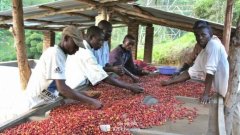
Most Kenyan coffee grows at elevations between 1,500 and 2,100 meters—ideal for slow cherry maturation and complex flavor development. The country’s coffee is primarily cultivated by smallholder farmers, often working on plots as small as 2–7 hectares, who deliver their cherries to cooperative washing stations. These stations process the coffee meticulously and sell the dried parchment to unions, ensuring quality control and fair pricing based on quality, not just origin.
How Kenyan Coffee Is Processed and Graded
Kenya’s washed processing is among the most rigorous in the world. After harvest, only perfectly ripe red cherries are delivered to wet mills. The beans are depulped, fermented for around 48 hours to remove the mucilage, then soaked in clean water for another 24 hours. This extended fermentation and washing accentuates the fruit acids and creates the trademark “juicy” mouthfeel.
Once dried, the beans are sorted and graded. The Kenyan grading system includes eight main categories, with AA and PB (Peaberry) considered the highest quality. AA beans are large, dense, and often grown at the highest altitudes. Peaberry (PB) occurs when a coffee cherry produces a single round bean instead of two flat ones, often concentrating flavor into a smaller, denser seed. Other grades include AB, C, E, T, and T, ranked mainly by bean size and shape, though flavor can vary significantly within grades.
Flavor Profile: Why Kenyan Coffee Tastes Different
Kenyan coffees are known for their intense fruitiness—common tasting notes include blackberry, grapefruit, blackcurrant, and even hints of plum or wine. Acidity is a defining feature: bright, juicy, and layered, often compared to citrus or tart berries. Body is typically medium, and the finish can carry overtones of nuts, spice, or even subtle floral notes.
Varieties like SL28 and SL34 thrive in high altitudes and volcanic soils. SL28 is celebrated for its deep, winey complexity with notes of citrus and dark stone fruit, while SL34 adds a brighter, more acidic profile with nut and spice undertones. These beans, when processed with Kenya’s signature double-washed (or sometimes triple-washed) method, produce a cup that’s explosive in the cup—often described as closer to fruit tea than traditional coffee by some tasters.
The Role of Cooperatives and Auctions
Nearly all Kenyan coffee is produced by smallholders and processed through around 60 coffee cooperatives. These co-ops deliver parchment coffee to centralized mills, which then sell samples to licensed buyers. The Kenya Coffee Board (CBK) used to organize weekly auctions in Nairobi where buyers bid on anonymized samples. While some criticism exists regarding the auction system and recent declines in perceived quality, it has historically ensured transparency and fair pricing based on cup quality rather than origin alone.
The best grades—like PB and AA—are especially sought after by European buyers, particularly from Germany and Scandinavia, who value their clarity and complexity. In recent years, new disease-resistant varieties like Ruiru 11 have been introduced to boost yield and resistance, but many in the specialty community feel these lack the nuanced cup profile of traditional Bourbons and SL cultivars.
Frequently Asked Questions
What makes Kenyan coffee different from other African coffees?
Kenyan coffee is distinct for its high-altitude growth (1,500–2,100m), bright and complex acidity, and unique cultivars like SL28 and SL34. It typically features prominent fruit flavors—especially citrus and blackcurrant—along with winey and sometimes floral notes. The country’s strict grading system and cooperative processing also contribute to its consistent high quality.
What are AA and PB in Kenyan coffee?
AA is the highest grade of Kenyan coffee, made up of large, dense beans grown at high elevation, known for excellent cup quality. PB stands for Peaberry, a rare mutation where a single round bean forms instead of two flat ones, often concentrating flavor into a smaller, denser seed. Both AA and PB are highly prized in specialty coffee.
How is Kenyan coffee processed?
Kenyan coffee is processed using a washed (wet) method with extended fermentation—usually around 48 hours—and an additional 24-hour soak in clean water post-mucilage removal. This double (sometimes triple) washing enhances acidity and clarity, contributing to the coffee’s signature bright and juicy profile.
Why does Kenyan coffee taste like fruit or wine?
The fruitiness and wine-like characteristics come from the combination of high-altitude growing conditions, volcanic soil, and specific coffee varieties like SL28 and SL34. The extended fermentation during processing also accentuates the fruit acids and brightness, resulting in a cup that can resemble blackberry, grapefruit, or even berries and wine.
Is Kenyan coffee still considered specialty grade?
Yes, many Kenyan coffees, especially those graded AA and PB and processed by well-run cooperatives, are considered specialty grade. However, the introduction of higher-yield but lower-cup-quality varieties like Ruiru 11 and inconsistencies in processing have led to some debate. The best lots from established co-ops remain benchmarks for quality.
Recommended FrontStreet Kenyan Single Origins
For a true taste of Kenya, try FrontStreet Coffee’s Kenya Little Tomato, a single origin showcasing the famed SL28 and SL34 varieties. It features notes of cherry, tomato, blackcurrant, and brown sugar, with a medium-full body and layers of bright acidity. Ideal for pour-over, cold brew, or even ice drip, this lot highlights Kenya’s signature juiciness. Freshly roasted within 5 days · Orders placed before 17:00 ship the same day · Next-day delivery across most of Guangdong Province.
FrontStreet Coffee is a long-established specialty coffee roaster in Guangzhou China, selling freshly roasted beans from its own farm in Yunnan as well as dozens of carefully selected single-origin beans from around the world for both pour-over and espresso. The products deliver consistently excellent quality and great value, with shipping within 24 hours. Guangzhou's FrontStreet Coffee shop is recommended by many coffee lovers, and the beans are now available online at the Tmall 。
Important Notice :
前街咖啡 FrontStreet Coffee has moved to new addredd:
FrontStreet Coffee Address: 315,Donghua East Road,GuangZhou
Tel:020 38364473