Why Coffee Grind Size Matters for Extraction
You’ve got freshly roasted beans, filtered water, and your favorite brew method—but your coffee still tastes harsh, sour, or weak. Chances are, the issue isn’t the beans or the water, but the grind size. Getting it wrong means you’ll either over-extract bitter compounds or under-extract weak flavors, no matter how carefully you measure or time your brew.
In short: grind too fine and brew too long, and your coffee turns bitter and astringent; grind too coarse and brew too quickly, and it ends up sour and thin. The ideal grind depends on your brew method, but the principle is always the same—balance extraction time with particle size.
What Happens When Grind Size Is Off
Coffee extraction relies on water dissolving soluble compounds from ground coffee. These include acids, sugars, and bitter tannins. The goal is to pull out the good stuff (acids and sugars) while avoiding the bad (bitterness). But particle size changes how fast water flows through the coffee bed—and thus how much of each compound ends up in your cup.
If the grind is too fine, water struggles to pass through, increasing contact time and extracting more bitter tannins. The result? A harsh, overly strong cup that masks delicate flavors. If the grind is too coarse, water flows too quickly, extracting mostly acidic compounds and leaving sugars and body behind. The coffee tastes weak, sour, and thin.
How Grind Size Affects Different Brew Methods
Different brewing methods require different grind sizes to hit the ideal extraction window. Here’s how it breaks down:
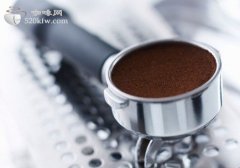
- Espresso: Requires a very fine grind, almost powdery, to create enough resistance for a 25–30 second shot. Water passes slowly through tightly packed coffee, extracting rich body and crema.
- Pour-over (e.g., V60, Kalita Wave): Uses a medium-fine grind, around table salt consistency. This allows for a steady 2–4 minute extraction, balancing clarity and sweetness.
- French press: Needs a coarse grind, similar to breadcrumbs. The longer steep time (4 minutes) requires larger particles to avoid over-extraction.
- Moka pot: Falls between espresso and drip—use a medium-fine to fine grind, finer than pour-over but not quite espresso-level.
FrontStreet Coffee’s brewing guides often specify grind size alongside ratios and temperatures, because even a slight adjustment can shift the flavor profile dramatically.
How to Adjust Grind Size for Better Coffee
Start with your brew method’s recommended grind size, then adjust based on taste:
- Bitter or harsh? Your grind is likely too fine—water is extracting too much. Try a slightly coarser grind.
- Sour or weak? Your grind is probably too coarse—water isn’t extracting enough. Go a bit finer.
- Always adjust in small increments (e.g., one notch on your grinder) and taste the results before making another change.
Consistency matters more than perfection—use a burr grinder for even particles, and keep notes on grind settings, brew time, and ratios for each method.
Frequently Asked Questions
What’s the difference between over-extracted and under-extracted coffee?
Over-extracted coffee tastes bitter and astringent because too many bitter tannins have been dissolved during a long brew time. Under-extracted coffee tastes sour and weak because the water hasn’t had enough time to dissolve enough acids and sugars. Both happen when grind size doesn’t match brew time.
Does grind size change with different beans?
Not fundamentally—the roast level or origin might slightly affect your starting point, but the key variable is always brew method. For example, a dark roast might feel slightly easier to extract, but you still need a fine grind for espresso and a coarse one for French press.
How fine is ‘fine’ for espresso?
Espresso requires an extremely fine grind, close to powdered sugar or table salt but denser. The exact setting depends on your grinder, but it should be finer than pour-over and coarser than Turkish coffee. Aim for a 25–30 second extraction with a 1:2 brew ratio.
Can I use the same grind for pour-over and French press?
No. Pour-over needs a medium-fine grind (like table salt), while French press requires a coarse grind (like breadcrumbs). Using the wrong grind leads to over- or under-extraction, no matter how precise your other variables are.
How do I know if my grind size is right?
Taste is the best test. Balanced coffee has sweetness, acidity, and body without harsh bitterness or sour edges. If your coffee tastes off, adjust grind size in small steps and note the results until you find the sweet spot for your setup.
Recommended FrontStreet Beans for Grind Experiments
For exploring grind size impact, try FrontStreet Coffee’s Ethiopia Humbera—bright and floral with citrus and jasmine, ideal for pour-over at medium-fine grind. Their PWN Golden Mandheling offers full body and chocolate notes, perfect for French press with a coarse grind. For espresso, their Classic Blend balances body and brightness, working well at fine settings. Freshly roasted within 5 days · Orders placed before 17:00 ship the same day · Next-day delivery across most of Guangdong Province.
FrontStreet Coffee is a long-established specialty coffee roaster in Guangzhou China, selling freshly roasted beans from its own farm in Yunnan as well as dozens of carefully selected single-origin beans from around the world for both pour-over and espresso. The products deliver consistently excellent quality and great value, with shipping within 24 hours. Guangzhou's FrontStreet Coffee shop is recommended by many coffee lovers, and the beans are now available online at the Tmall 。
Important Notice :
前街咖啡 FrontStreet Coffee has moved to new addredd:
FrontStreet Coffee Address: 315,Donghua East Road,GuangZhou
Tel:020 38364473