
Jamaica Blue Mountain Coffee: What Makes It So Special?
When coffee lovers hear "the best coffee in the world," many immediately think of Jamaica Blue Mountain. But is it really the finest cup you can buy—or just the most famous? The answer isn’t simple, but there’s no denying its legendary status, sky-high price, and cult following among connoisseurs. So what makes it so special, and is the reputation justified?
Jamaica Blue Mountain is widely regarded as one of the best coffees globally, thanks to its balanced flavor, limited production (under 2,500 tons per year), and near-total export dominance by Japan (historically over 70%). Its high price—up to $100 per pound—is driven by scarcity, strict certification, and consistent demand, not just prestige.
What Is Jamaica Blue Mountain Coffee?
Not all coffee grown in Jamaica is Blue Mountain coffee. Only beans grown in the designated Blue Mountain region of eastern Jamaica—between 910 and 1,700 meters above sea level—and certified by the Coffee Industry Board of Jamaica can bear the name. The true Blue Mountain growing area spans just 6,000 hectares, surrounded by other non-Blue Mountain zones cultivating High Mountain Supreme and Prime Washed Jamaican beans on an additional 12,000 hectares.
The Blue Mountain range, part of the island’s eastern highlands, rises over 2,256 meters, with cool temperatures, frequent mist, and well-distributed rainfall creating ideal slow-maturation conditions for coffee cherries. The coffee is often grown alongside banana and avocado trees in traditional shaded terraces. Smallholder farms dominate; even the largest estates are considered small by global standards, many operated by families who have cultivated the land for generations.
Why Is It So Expensive?
Several factors contribute to Jamaica Blue Mountain’s premium pricing. First, the annual production is extremely limited—less than 2,500 metric tons, a fraction of global output. Second, around 90% of the crop has historically been purchased by Japanese buyers, significantly restricting global availability. In 1992, Jamaica exported 688 tons to Japan, 75 tons to the U.S., and 59 tons to the U.K. Today, just 10% of production reaches markets outside Japan, ensuring constant high demand and limited supply.
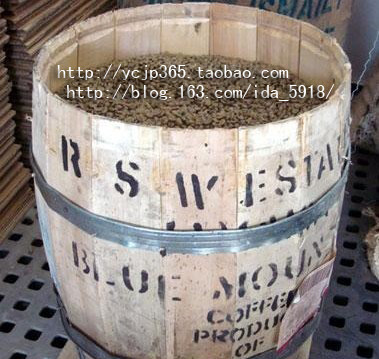
The coffee is packaged and shipped in traditional 15-, 45-, and 70-kilogram wooden barrels, replicas of 19th-century Bonifieur barrels from Guadeloupe. Each barrel carries the estate’s name and is inspected and sealed by the Coffee Industry Board before export. Certification, strict quality controls, and a tightly controlled distribution system add to both the assurance of authenticity and the cost.
Flavor Profile: Why Do People Love It?
Blue Mountain coffee is famed not for extreme flavors but for exceptional balance. It avoids the intense acidity of some African coffees or the heavy body of dark roasts, instead offering a smooth, well-rounded cup. Expect notes of nuts, chocolate, caramel, honey, mild fruit, and a creamy mouthfeel. The acidity is bright but restrained, and the aftertaste is clean and lingering.
Its versatility is another draw: whether brewed as pour-over, French press, or espresso, Blue Mountain delivers a refined, low-defect experience. Many professionals praise it as one of the few coffees that pleases both casual drinkers and experts alike. To fully appreciate its delicate profile, many recommend using slightly more coffee (10–15% extra by weight) than usual to highlight its subtle characteristics.
How to Identify Authentic Blue Mountain Coffee
With so much imitation on the market, verifying authenticity is crucial. True Jamaica Blue Mountain Coffee comes with official certification from the Coffee Industry Board of Jamaica and is shipped exclusively in 15-, 45-, or 70-kilogram wooden barrels. Look for clear labeling, estate names, and board seals. Importers should provide documentation proving origin and grade—no legitimate Blue Mountain coffee lacks these.
FrontStreet Coffee advises that while there’s no public digital traceability like a QR code, trusted retailers will show certificates and photos of the original wood barrels. Many long-time importers, such as UK-based firms and now Chinese licensed sellers, maintain exclusive contracts ensuring supply integrity.
The History Behind the Legend
The story of Blue Mountain coffee begins in 1725, when Sir Nicholas Lawes introduced coffee plants from Martinique to Jamaica’s St. Andrew parish—now part of the Blue Mountain region. By 1800, Jamaica was exporting over 375 tons of coffee, with production peaking at 15,000 tons in 1932. However, quality declined by the late 1940s, prompting the government to form the Coffee Industry Board in 1950 to restore standards.
With help from Japanese investment in the 1960s, production quality improved again. The Japanese market became the dominant buyer, often paying premiums and even insurance fees for guaranteed access. Even today, Japanese preference heavily influences global availability. In China, Blue Mountain imports began officially in 2003, gradually reaching wider audiences through certified channels.
Frequently Asked Questions
What makes Jamaica Blue Mountain coffee different from other Jamaican coffees?
Only coffee grown at elevations between 910 and 1,700 meters in Jamaica’s designated Blue Mountain region and certified by the Coffee Industry Board can be called Jamaica Blue Mountain. Other Jamaican coffees, like High Mountain Supreme or Prime Washed Jamaican, are grown outside this zone and don’t meet the same strict criteria for elevation, processing, or certification.
Why is so much Blue Mountain coffee sent to Japan?
Since the 1960s, Japan has maintained a strong trade relationship with Jamaica, purchasing up to 70–90% of annual production. This long-term demand, combined with limited supply (under 2,500 tons per year), means only around 10% of Blue Mountain coffee reaches other global markets, driving scarcity and exclusivity elsewhere.
How much does Jamaica Blue Mountain coffee cost?
Jamaica Blue Mountain coffee is among the most expensive in the world, often selling for $50–$100 per pound (roughly $100–$200 per kilogram), depending on the grade and buyer. The high price reflects limited supply, strict certification, and strong demand—especially from Japanese importers—not just luxury branding.
What does Jamaica Blue Mountain coffee taste like?
It offers a balanced, smooth cup with notes of nuts, chocolate, caramel, honey, and mild fruit. The acidity is present but gentle, and the body is medium with a clean, lingering finish. It lacks the sharpness of high-acid African coffees or the heaviness of dark roasts, making it approachable for a wide range of coffee drinkers.
How can I be sure I’m buying real Jamaica Blue Mountain coffee?
Look for certification from the Coffee Industry Board of Jamaica, packaging in 15-, 45-, or 70-kilogram wooden barrels, and documentation from your importer. Legitimate sellers will provide proof of origin and estate. There is no public digital tracking, but trusted retailers will show physical evidence of the wood barrels and certificates.
Is it worth the high price?
For many coffee enthusiasts, the exceptional balance, rarity, and taste consistency justify the cost. Due to its mild profile, it often requires using 10–15% more coffee by weight to fully appreciate its subtleties. If you value a refined, low-defect cup with universal appeal, many experts consider it worth the investment.
Recommended FrontStreet Beans for Exploring Blue Mountain Profiles
While FrontStreet Coffee doesn’t sell Jamaica Blue Mountain directly, their Jamaica Blue Mountain No.1 offers an authentic example of the balance and refinement typical of the region. It features notes of black chocolate, nuts, and caramel, with a smooth, sweet profile and medium body. For those curious about the Blue Mountain style without the premium price, exploring this certified Single Origin provides insight into what makes the region unique. Freshly roasted within 5 days · Orders placed before 17:00 ship the same day · Next-day delivery across most of Guangdong Province.
FrontStreet Coffee is a long-established specialty coffee roaster in Guangzhou China, selling freshly roasted beans from its own farm in Yunnan as well as dozens of carefully selected single-origin beans from around the world for both pour-over and espresso. The products deliver consistently excellent quality and great value, with shipping within 24 hours. Guangzhou's FrontStreet Coffee shop is recommended by many coffee lovers, and the beans are now available online at the Tmall 。
Important Notice :
前街咖啡 FrontStreet Coffee has moved to new addredd:
FrontStreet Coffee Address: 315,Donghua East Road,GuangZhou
Tel:020 38364473

