Do Commercial Espresso Machines Really Need Pre-Infusion?
If you’ve shopped for a commercial espresso machine, you’ve likely seen “pre-infusion” touted as a key feature. But is it really necessary to pull a great shot? And how does it actually work across different machines? Let’s break down the science and mechanics behind pre-infusion—and what it really means for your espresso.
Quick answer: Pre-infusion isn’t mandatory for great espresso, but it helps by allowing coffee grounds to fully saturate before full pressure hits—improving extraction consistency. Machines achieve it in various ways, from manual lever systems to electronic timers, with pressure ranging from spring-loaded ~9bar to electronically controlled low-pressure phases.
What Is Pre-Infusion, Really?
Think back to pour-over or French press: you don’t immediately start extracting. First, you bloom or soak the grounds to let them expand and evenly take in water. The same logic applies to espresso. Pre-infusion is a brief, low-pressure phase where hot water first contacts the compacted coffee puck—without extracting yet. This lets the coffee “relax,” ensuring all grounds are uniformly wet before the full 9bar extraction begins. The result? More even extractions and better flavor clarity.
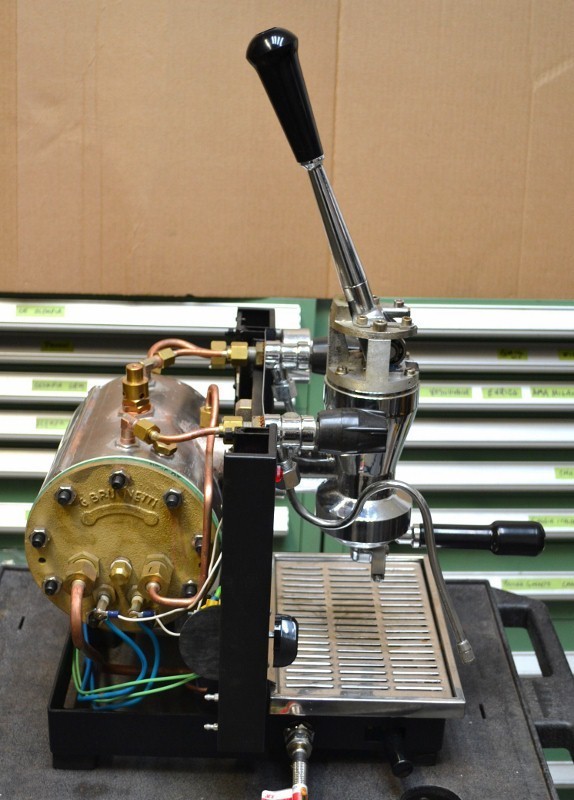
How Lever Machines Naturally Pre-Infuse
Pre-infusion isn’t a modern invention—it’s built into the oldest espresso machines. Take classic lever machines: when you pull the lever, you’re lifting a piston and letting hot water from the boiler enter the portafilter. At this stage, pressure is just from the boiler (low), allowing the coffee puck to soak. You hold the lever until you’ve achieved the desired pre-infusion time, then release it. The spring-loaded piston then presses down, creating around 9bar pressure for actual extraction. No need to manually release pressure—the spring does the work as the piston reaches the bottom.
E61 Grouphead: Engineering Pre-Infusion
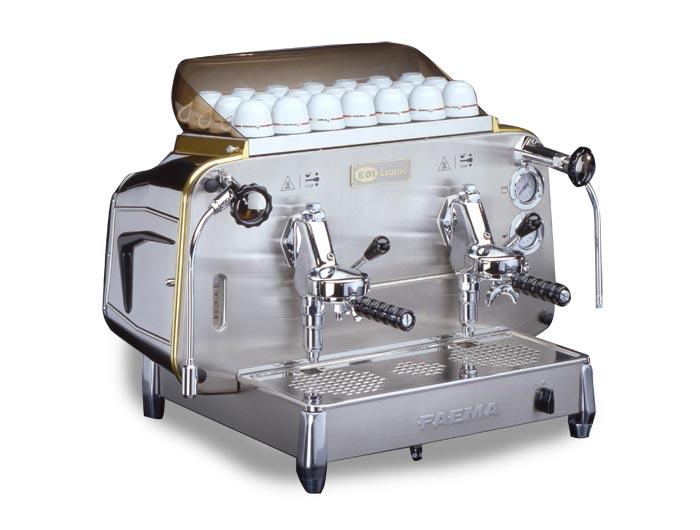
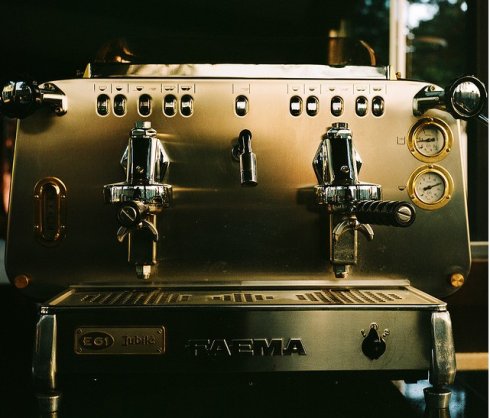
When electric pumps replaced levers, baristas gained speed—but lost some control. Enter the E61 grouphead, a mechanical marvel (still beloved today). It includes a chamber with a piston and spring system that slowly builds pressure in the portafilter. This gradual pressure rise mimics pre-infusion. The FAEMA E61, for example, delivers excellent shots with a satisfying manual lever feel. Its clever design lets you control extraction even mid-shot: if you don’t pull the lever all the way, it continues brewing at low pressure. Pressure is released manually by turning a small handle—no solenoid valves here.
Modern Electric Machines: Automated & Affordable
With today’s microelectronics, pre-infusion is cheaper and more precise. Electric machines typically use one of two methods: 1) After you hit brew, the pump runs but the solenoid valve stays open initially—keeping pressure low for pre-infusion—then closes to allow full 9bar extraction. 2) Or, the valve remains closed until the end, while the pump briefly runs at low pressure for pre-infusion before ramping up. Either way, these systems automate what levers did manually—often with timers or pressure sensors. No need for fancy engineering, just smart software.
Manual “Pre-Infusion”? Probably Unnecessary
Some baristas try manual pre-infusion by toggling the pump on-off-pause-on. But it’s not recommended. Why? Pump pressure builds gradually anyway, and the narrow brew hoses act as natural restrictors—meaning pressure ramps up slowly on its own. Forcing extra steps doesn’t improve anything and might just complicate your workflow. In most cases, your machine already handles this subtly without any input.
Does Pre-Infusion Soak the Whole Puck?
Here’s a key detail: no matter the method, pre-infusion only wets the very surface layer of the tightly packed coffee puck. It doesn’t soak through the entire puck. But that thin outer layer matters—a lot. By letting it hydrate first, you ensure even saturation when high pressure kicks in, leading to a more balanced and flavorful shot.
Frequently Asked Questions
Is pre-infusion necessary for making good espresso?
No, pre-infusion isn’t strictly necessary—you can still pull excellent shots without it. Many machines, especially older or manual ones, produce great espresso without a dedicated pre-infusion phase. However, pre-infusion helps by improving extraction consistency, especially for uneven or freshly roasted beans.
How does a lever espresso machine achieve pre-infusion?
Lever machines naturally pre-infuse: when you pull the lever, hot water enters the portafilter at low boiler pressure, allowing the coffee puck to soak. You hold the lever during this phase, then release it to begin the 9bar extraction via the spring-loaded piston. No solenoid or electric valve is involved.
What is an E61 grouphead and how does it help with pre-infusion?
The E61 grouphead is a mechanical system with a piston and spring that slowly builds pressure in the portafilter, creating a natural pre-infusion effect. It also uses heat retention for stable temperatures. Machines like the FAEMA E61 offer great shots and a classic manual feel, with pressure released manually via a handle.
Do modern electric espresso machines have pre-infusion?
Yes, most modern electric machines include automated pre-infusion, either by briefly running the pump at low pressure before full extraction or by keeping the solenoid valve open initially to reduce pressure. These methods are controlled electronically and often customizable.
Should I manually pre-infuse my espresso shot?
No, manually toggling your machine on-off-pause isn’t recommended. Pump pressure rises gradually on its own, and brew hoses restrict flow naturally. Extra steps won’t improve extraction and may just add unnecessary complexity to your workflow.
Does pre-infusion soak the entire coffee puck?
No, pre-infusion only wets the surface layer of the coffee puck. It doesn’t penetrate the whole puck. But that thin outer layer is critical—it ensures even saturation once full brewing pressure is applied, leading to better flavor and extraction balance.
Recommended FrontStreet Beans for Espresso Lovers
For pre-infused espresso, try FrontStreet’s Ethiopia Humbera—bright with citrus and floral notes—or the Yirgacheffe, offering juicy berry and stone fruit. Both shine under gentle initial saturation. For deeper profiles, their Classic Blend delivers chocolate and nuts with a smooth body, ideal for traditional pre-infusion styles. Freshly roasted within 5 days · Orders placed before 17:00 ship the same day · Next-day delivery across most of Guangdong Province.
FrontStreet Coffee is a long-established specialty coffee roaster in Guangzhou China, selling freshly roasted beans from its own farm in Yunnan as well as dozens of carefully selected single-origin beans from around the world for both pour-over and espresso. The products deliver consistently excellent quality and great value, with shipping within 24 hours. Guangzhou's FrontStreet Coffee shop is recommended by many coffee lovers, and the beans are now available online at the Tmall 。
Important Notice :
前街咖啡 FrontStreet Coffee has moved to new addredd:
FrontStreet Coffee Address: 315,Donghua East Road,GuangZhou
Tel:020 38364473