How to Visually Identify Coffee Roast Levels Step by Step
When you buy green coffee or roast at home, how do you know when your coffee hits the right roast level? Judging just by eye isn’t enough—color can mislead. Many factors like processing method, origin, and bean density affect roast appearance. That’s why experienced roasters rely on more than just visuals. Here’s how to accurately assess roast level by watching, listening, and smelling.
The fastest way to judge roast level is to combine three cues: visual color, first and second crack timing, and aroma during roasting. Key benchmarks include first crack starting around 401°F (205°C), city roast ending near 426°F (219°C), and second crack beginning around 454°F (234.5°C). These indicators, more than color alone, determine roast development.
Why Visual Assessment Alone Isn’t Reliable
Judging roast level by eye is limited. Color varies based on bean origin and processing—Sumatra roasted to second crack often looks like a city roast, while Kenyan or St. Helena beans may appear darker than they are. Natural processed beans especially show inconsistent coloration. Visual assessment gives clues, but accurate roast profiling depends on sound, temperature, and smell too.
Coffee quality isn’t about how it looks, but how it tastes. A dark roasted Sumatra might look ‘wrong’ but taste amazing. Always let cup quality be your guide.
What Actually Happens During Roasting
Roasting is a series of physical and chemical changes driven by heat transfer. Early stages remove moisture through evaporation. The first audible crack (first crack) signals the start of significant structural change. Between first and second crack lies the ideal window for highlighting origin character—commonly called “city” to “city+” roasts. After second crack begins, you’re moving into dark roast territory where roast flavors dominate.
Key reactions include endothermic (heat-absorbing) phases early on, followed by exothermic (heat-releasing) cracks. Temperature inside the bean differs from ambient readings. For accuracy, pros also monitor internal bean temp, which can reach 356°F (180°C) at first crack.
Step-by-Step Visual Guide to Roast Development
This guide uses a Probat 12kg roaster with sample rods to track roast changes over time. Note: temperatures are approximate and may vary by machine. Focus on the sequence of visual cues, not absolute values. All times and temps are relative to batch start (0:00 = room temp ~75°F / 23°C).

1. Green Bean (0:00 – 75°F / 23°C)
A mixed lot of organic beans, possibly including some Kona. Appearance varies; not representative of high-grown typicals.
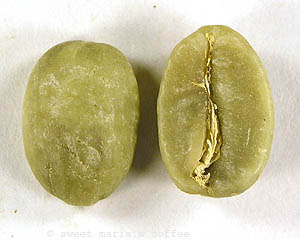
2. Beginning to Pale (4:00 – 270°F / 132°C)
Beans begin losing green hue. No expansion yet. Heat transfer delays visible change in large drum roasters.
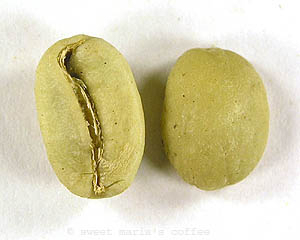
3. Early Yellowing (6:00 – 327°F / 164°C)
Beans are drying but not expanding. Wet grassy aroma. All pre-first-crack phases are endothermic—beans absorb heat.
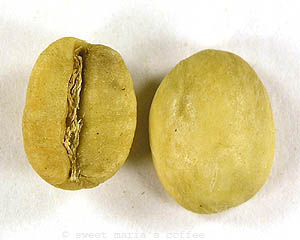
4. Brown-Yellow Stage (6:30 – 345°F / 174°C)
Beans turn yellow-brown with faint marble patterns. Slight moisture roast aroma. Some beans (e.g., Costa Rica, Mexico) appear brighter.
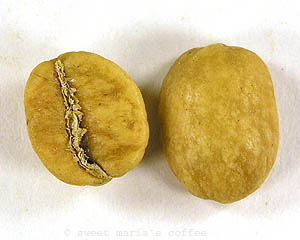
5. Light Brown Pre-Crack (8:00 – 370°F / 188°C)
Approaching first crack. Minor bean expansion, center cuts opening, silverskin starting to loosen.

6. Brown Pre-Crack (9:00 – 393°F / 200°C)
Nearing first crack. Rapid browning due to caramelization and Maillard reactions.
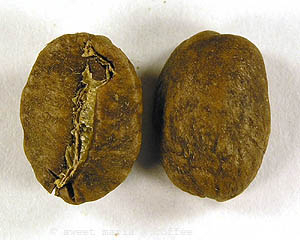
7. First Crack Begins (9:20 – 401°F / 205°C)
Listen for light, popcorn-like pops. This is first crack—distinct from the louder second crack. Internal bean temp here is ~356°F (180°C).
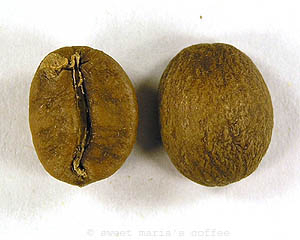
8. First Crack Ongoing (10:00 – 415°F / 213°C)
Beans expand, silverskin fully releases. Surface colors are uneven. First crack is exothermic—can cause cooling if heat isn’t maintained.
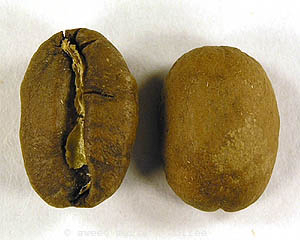
9. First Crack Ends (10:40 – 426°F / 219°C)
End of first crack = city roast. Surface smooths slightly but retains fine dark markings. Expansion due to steam and CO₂.

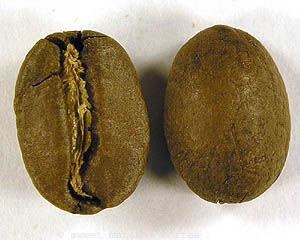
10. City+ Roast (11:05 – 435°F / 224°C)
Short endothermic window before second crack starts. Color darkens quickly with minimal temp change.

11. Light Vienna / Deep City+ (11:30 – 444°F / 229°C)
Near second crack. Fiber structure weakens. Light dark roast development begins.

12. Vienna / Second Crack Starts (11:50 – 454°F / 234.5°C)
Second crack is imminent or just beginning. Roast termination at 10 sec past first sound. Judge by audio, not just color.
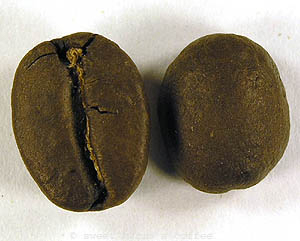
13. Vienna to Light French (12:15 – 465°F / 240.5°C)
Origin character fades as roast flavor emerges. Some beans perform well here. Note: Northern Italian espresso often roasts to internal 440–446°F (227–230°C); Southern Italian is similar to light French.

14. French Roast (12:40 – 474°F / 245.6°C)
Sugars heavily caramelize then burn. Wood structure carbonizes. Smoke increases. 474°F exceeds normal Probat limits (465°F max recommended).
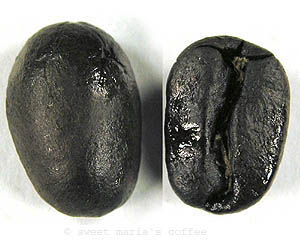
15. Fully Carbonized (13:00 – 486°F / 252°C)
Over 25% ash. Beans are burnt remnants. Not drinkable.
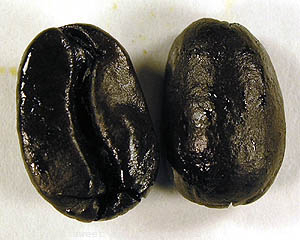
16. Ignition Risk (13:30 – 497°F / 258°C)
Roast is near combustion. Large batches risk ignition upon discharge. Not recommended.
Frequently Asked Questions
What is the first crack in coffee roasting?
First crack is the initial audible popping sound, occurring around 401°F (205°C), caused by moisture and pressure inside the bean expanding rapidly. It signals the start of significant roast development and structural change.
What is the second crack in coffee roasting?
Second crack begins around 454°F (234.5°C) and is a faster, more intense cracking sound. It results from the fracturing of the bean’s cellulose structure and leads to darker, oilier roasts with more roast-driven flavors.
How can I tell roast level by color alone?
Color alone is unreliable due to bean variety, processing method, and density. For example, Sumatra roasted to second crack may look like a city roast, while Kenyan beans may appear darker than they are. Always combine color with crack timing and aroma.
What roast level shows the most origin character?
City to City+ roasts (roughly first crack to just before second crack, around 401–426°F / 205–219°C) best highlight origin flavors. Darker roasts increasingly emphasize roast characteristics over terroir.
Why does internal bean temperature matter more than ambient?
Ambient roaster temperature doesn’t reflect the bean’s actual thermal state. Internal bean temperature, which can reach around 356°F (180°C) at first crack, gives a more accurate measure of roast development.
Is there a standard definition for 'city roast' or 'French roast'?
No. Terms like 'city', 'full city', 'French', or 'espresso' vary by roaster and region. They are not regulated and often refer to subjective profiles rather than exact temperatures or times.
FrontStreet Coffee Picks for Exploring Roast Levels
Try FrontStreet’s Ethiopia Guji Worka Natural for bright, fruity notes in lighter roasts; their Colombia Huila Supremo for balanced city-to-city+ profiles with citrus and caramel; or the Sumatra Mandheling for seeing how a classic dark roast develops body and earthiness. These beans showcase how origin character interacts with different roast levels. Freshly roasted within 5 days · Orders placed before 17:00 ship the same day · Next-day delivery across most of Guangdong Province.
FrontStreet Coffee is a long-established specialty coffee roaster in Guangzhou China, selling freshly roasted beans from its own farm in Yunnan as well as dozens of carefully selected single-origin beans from around the world for both pour-over and espresso. The products deliver consistently excellent quality and great value, with shipping within 24 hours. Guangzhou's FrontStreet Coffee shop is recommended by many coffee lovers, and the beans are now available online at the Tmall 。
Important Notice :
前街咖啡 FrontStreet Coffee has moved to new addredd:
FrontStreet Coffee Address: 315,Donghua East Road,GuangZhou
Tel:020 38364473