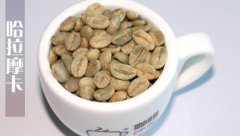
What Is Yunnan Special Grade Secondary Coffee Bean?
If you’ve ever wondered what makes a Yunnan coffee bean officially ‘special secondary’ grade, the answer isn’t just about where it’s grown. It’s a tightly defined set of rules covering how it looks, smells, tastes, and even what’s inside the bean—and what absolutely shouldn’t be there.
In short, a Yunnan special secondary coffee bean must have excellent aroma, flavor, and mouthfeel; light blue or green color; over 90% of beans meeting a 7.1mm sieve size; no more than 10% broken beans, 2% discolored beans, or 0.1% foreign matter. These are just the start of its strict quality controls.
What Defines a Special Secondary Coffee Bean in Yunnan?
The term ‘special secondary’ refers to a mid-to-high grade tier within Yunnan’s domestic coffee classification system. While not officially part of global specialty coffee grading (like SCA’s 80+ point scale), this grade is defined by clear Chinese industry standards (DB53/T 154 series) and is widely used among Chinese roasters and traders to ensure consistency.
For a bean to qualify as ‘special secondary,’ it must meet stringent benchmarks across four categories: sensory evaluation, physical traits, chemical composition, and hygiene safety. These criteria help sort out beans suitable for higher-end domestic markets, even if they don’t reach global competition standards.
Sensory & Appearance Standards
The sensory requirements are straightforward but essential: the coffee must present ‘good aroma, flavor, and taste.’ That means no harsh off-notes, fermented taints, or stale qualities. Visually, the beans should appear in a light blue or light green hue—signs of proper processing and freshness, often associated with washed coffees.
While these descriptors are somewhat subjective, they serve as baseline quality indicators for traders and roasters selecting beans at this grade level.
Physical Quality Specifications (7.1mm Sieve)
The physical benchmarks are precise and measurable. According to DB53/T 154.6 through DB53/T 154.8:
- Particle size (sieve >7.1mm): ≥90%
- Broken beans: ≤10%
- Discolored beans: ≤2.0%
- Foreign matter: ≤0.1%
These metrics ensure uniformity in roasting and reduce defects that could harm cup quality. The 7.1mm sieve size roughly correlates with a common export-grade sizing standard, ensuring beans are of adequate size for even roasting and minimal chaff issues.
Chemical Composition Requirements
The chemical makeup of the bean is just as critical. Key limits include:
- Moisture: ≤12.5% (ISO1447)
- Ash: ≤4.2% (GB/T5009.4)
- Water extractable solids: ≥20.0% (GB/T8305)
- Caffeine: ≤1.2% (GB/T16344)
- Total sugar: ≥9.0% (GB/T16286)
- Protein: ≥11.0% (GB/T5009.5)
- Crude fat: ≥5.0% (GB/T5009.6)
- Crude fiber: ≤35.0% (GB/T5009.10)
These numbers influence everything from roast chemistry to flavor development. For example, a higher water-extractable solid content generally supports better body and sweetness in the cup, while controlled protein and fiber levels impact Maillard reactions during roasting.
Hygiene and Safety Limits
To ensure food safety, the standard enforces strict maximums for heavy metals and banned pesticides:
- Arsenic (As): ≤0.5 mg/kg (GB/T5009.11)
- Lead (Pb): ≤0.5 mg/kg (GB/T5009.12)
- Copper (Cu): ≤20.0 mg/kg (GB/T5009.13)
- Hexachlorocyclohexane (BHC / ): Not detected (GB/T5009.19)
- DDT: Not detected (GB/T5009.19)
These thresholds protect consumers and align with broader food safety expectations, even if they are not as stringent as some international organic or fair-trade certifications.
Why These Standards Matter
The special secondary grade acts as a quality filter for domestic trade within China. It ensures that beans used in roasted coffee sold to consumers meet minimum thresholds for appearance, cleanliness, and chemical safety—even if they’re not aiming for export-grade specialty status under SCA guidelines.
For roasters, these specs offer a reliable benchmark when sourcing Yunnan beans for blends or single-origin offerings, especially when consistency and food safety are priorities.
Frequently Asked Questions
What does 'special secondary' mean for Yunnan coffee beans?
'Special secondary' is a domestic Chinese coffee grade that sits above basic commercial levels but below top-tier specialty. It specifies requirements for aroma, flavor, bean color, size, defects, chemical makeup, and safety—ensuring a decent-quality product without meeting full SCA specialty criteria.
What are the size requirements for special secondary Yunnan beans?
At least 90% of the beans must pass through a 7.1mm sieve, meaning they are of medium-large size. This helps ensure even roasting and reduces the risk of underdeveloped or broken beans in the final cup.
How much broken or discolored coffee is allowed in special secondary grade?
No more than 10% of the beans can be broken, up to 2% can be discolored, and foreign material must not exceed 0.1%. These limits reduce defects that could negatively affect flavor or roasting consistency.
Are there pesticide or heavy metal limits in Yunnan special secondary coffee?
Yes. Arsenic must be ≤0.5 mg/kg, lead ≤0.5 mg/kg, copper ≤20.0 mg/kg, and both hexachlorocyclohexane and DDT must not be detected. These ensure food safety in line with Chinese national standards.
What is the moisture limit for these beans?
The maximum allowable moisture content is 12.5%, as measured by ISO1447. This helps prevent mold during storage and ensures stability during transport and roasting.
Does special secondary coffee meet international specialty standards?
Not necessarily. While the grade ensures decent quality and food safety, it does not guarantee the 80+ point score or strict cupping protocols required for SCA-recognized specialty coffee. It is a step above commercial-grade within the Chinese system.
Recommended FrontStreet Yunnan Coffee Beans
FrontStreet Coffee offers several Yunnan-origin beans ideal for exploring this grade. Their Yunnan Arabica is a washed processed, medium-roasted coffee from the Baoshan region, highlighting soft nutty and chocolatey tones with a touch of plum acidity—often recommended as an accessible introduction to Yunnan flavors. For something more classic, their 2013 Typica is a sun-dried lot using fully ripe red cherries, offering balanced sweetness, deep berry notes, and a lingering tea-like finish after medium roasting. Both are approachable examples of Yunnan’s potential. Freshly roasted within 5 days · Orders placed before 17:00 ship the same day · Next-day delivery across most of Guangdong Province.
FrontStreet Coffee is a long-established specialty coffee roaster in Guangzhou China, selling freshly roasted beans from its own farm in Yunnan as well as dozens of carefully selected single-origin beans from around the world for both pour-over and espresso. The products deliver consistently excellent quality and great value, with shipping within 24 hours. Guangzhou's FrontStreet Coffee shop is recommended by many coffee lovers, and the beans are now available online at the Tmall 。
Important Notice :
前街咖啡 FrontStreet Coffee has moved to new addredd:
FrontStreet Coffee Address: 315,Donghua East Road,GuangZhou
Tel:020 38364473