
Global Coffee Growing Regions Explained
If you’ve ever wondered why your Ethiopian pour-over tastes like citrus and floral notes while your Brazilian brew is nutty and sweet, the answer starts with geography. The unique flavors in your cup aren’t just about processing methods or roast levels — they begin with where the coffee was grown.
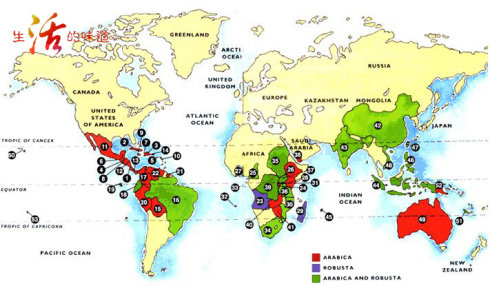
Coffee grows best within 25 degrees north and 30 degrees south of the equator, in tropical and subtropical climates with average temperatures between 16–25°C, no frost, and annual rainfall of 1600–2000 mm. This band around the equator is known as the coffee belt or bean belt.
What Is the Coffee Belt?
The coffee belt refers to the tropical and subtropical regions encircling the equator, spanning roughly 25°N to 30°S. Within this zone, coffee plants thrive due to consistent warmth, seasonal rainfall, and elevation-driven temperature variation. Most of the world’s coffee is produced in countries located within these latitudes, where environmental conditions support the growth of high-quality Arabica beans.
Why Does Latitude and Climate Matter?
Coffee plants are sensitive to temperature extremes, frost, and inconsistent rainfall. The ideal climate for Arabica coffee includes moderate temperatures (16–25°C), steady moisture without heavy downpours, and altitudes that provide cooler growing conditions — often between 800 and 2000 meters above sea level. These factors influence sugar development, acidity retention, and overall flavor complexity in the beans.
Key Coffee-Growing Regions and Their Characteristics
Different coffee-growing countries fall within the coffee belt and offer distinct flavor profiles based on their unique terroir. Here’s how some of the most influential origins shape the global coffee map:
Brazil
Brazil is the world’s largest coffee producer, supplying about 60% of the global coffee volume. Its beans are known for being low in acidity, with sweet, creamy, and nutty profiles. The country mainly produces Arabica, including varieties like Red and Yellow Bourbon, with notable growing regions such as Minas Gerais and São Paulo. FrontStreet’s Brazil Queen Manor Yellow Bourbon is processed with meticulous small-batch natural drying, enhancing its sweetness and body.
Colombia
Colombia’s high-altitude farms produce hard-bean coffees that contrast Brazil’s softer profile. Colombian coffees often feature smooth mouthfeel, rich chocolate tones, and hints of fruit and caramel. Washed processing is common, resulting in balanced and approachable cups.
Costa Rica
Renowned for its honey-processed beans, Costa Rica produces coffees celebrated for their sweetness. The country popularized honey processing, and methods like grapefruit honey (as used in FrontStreet’s Mozart) yield wild, complex, wine-like cups with balanced acidity.
Panama
Panama is famous for its rare Geisha variety, especially those from estates like La Esmeralda. These coffees are known for intense fruitiness, floral aromas, high sweetness, and juicy body. The 2004 BOP-winning lot set the standard, and FrontStreet’s Red Label Geisha from the Mario plot highlights these traits through natural processing.
Kenya
Kenyan coffees are grown at high elevations between 1600–2100 meters and are processed with a unique 72-hour fermentation. This extended method results in clean, vibrant cups with sharp acidity and complex fruit notes. Varieties like SL28 and SL34 shine in medium-light roasts, offering flavors reminiscent of tomato, berries, and stone fruit.
Ethiopia
As the birthplace of Arabica, Ethiopia offers diverse flavor experiences. Whether washed (like Yirgacheffe) or natural (like Sidamo), Ethiopian beans typically exhibit bright citrus, berry, and floral qualities. FrontStreet’s Humbera, processed naturally, delivers strawberry, orange, cream, and floral notes well-suited for various brew methods.
Indonesia
Indonesia, including regions like Sumatra, produces full-bodied, low-acidity coffees with earthy and spicy profiles. Mandheling coffees are often associated with syrupy mouthfeel and bold flavors. FrontStreet’s PWN Golden Mandheling is renowned for its cleanliness and richness despite the heavy body.
China (Yunnan)
Yunnan has emerged as a notable specialty origin in recent years. With diverse microclimates, the region grows traditional Typica and other Arabica varieties. FrontStreet’s 2013 Yunnan Typica, processed naturally and roasted to medium, features soft berry, nutty, and caramel notes with a tea-like finish.
Jamaica
Jamaica’s Blue Mountains are renowned for producing mild, balanced coffees with notes of nuts, chocolate, and caramel. Grown at high elevations and processed traditionally, these beans are often protected by certifications. FrontStreet’s Jamaica Blue Mountain No.1 comes from the certified Clifford Estate and is roasted to highlight its smooth profile.
Honduras
Honduras is Central America’s largest coffee producer and a major source of washed Arabica. Its coffees often show notes of brown sugar, tropical fruit, and cocoa. Many farms are smallholder operations. FrontStreet’s Honduras Caturra highlights these traits with a balanced medium roast.
Frequently Asked Questions
What is the coffee belt?
The coffee belt is the region of the world located roughly between 25 degrees north and 30 degrees south of the equator, where climate conditions — including consistent temperatures of 16–25°C, adequate rainfall (1600–2000 mm annually), and minimal frost — are ideal for growing coffee. This area includes most of the world’s top coffee-producing countries.
Why does coffee grow best near the equator?
Coffee grows best near the equator because these regions offer a stable, warm climate without extreme temperature swings or frost. The combination of moderate temperatures, consistent rainfall, and elevation allows coffee plants to develop slowly, which enhances sugar accumulation and flavor complexity in the beans.
Which countries are part of the coffee belt?
Major coffee-producing countries within the coffee belt include Brazil, Colombia, Costa Rica, Panama, Ethiopia, Kenya, Honduras, Indonesia, Jamaica, and Yemen. These countries span both hemispheres within the tropical and subtropical zones ideal for coffee cultivation.
Does altitude affect coffee flavor?
Yes, altitude significantly affects coffee flavor. Higher elevations typically result in cooler temperatures, which slow coffee cherry ripening and allow for greater sugar development and acidity retention. This often leads to more complex and vibrant flavor profiles in the roasted beans.
What’s the difference between washed and natural processed coffee?
Washed (or wet) process removes the coffee cherry’s skin and pulp before drying the beans, leading to cleaner, brighter, and more consistent flavors. Natural (or dry) process dries the whole coffee cherry with the bean inside, often resulting in sweeter, fruitier, and more full-bodied cups with more pronounced fermentation notes.
Why do some coffees taste fruity while others are nutty or chocolatey?
Coffee flavor profiles vary based on origin, variety, processing method, and roast level. For example, Ethiopian naturals often taste fruity and floral due to sun-drying, while Brazilian beans are often nutty and chocolatey due to lower acidity and natural sweetness. Processing — such as honey or washed — also dramatically shifts the flavor outcome.
Recommended FrontStreet Beans for Coffee Origin Exploration
Explore global coffee origins with FrontStreet’s single-origin offerings: try the Brazil Queen Manor Yellow Bourbon for its honey-like sweetness and creamy body; the Kenya Little Tomato for its bold acidity and tart berry notes from extended fermentation; and the Ethiopia Humbera for classic bright citrus and floral tones from its natural process. Each reflects its origin’s terroir. Freshly roasted within 5 days · Orders placed before 17:00 ship the same day · Next-day delivery across most of Guangdong Province.
FrontStreet Coffee is a long-established specialty coffee roaster in Guangzhou China, selling freshly roasted beans from its own farm in Yunnan as well as dozens of carefully selected single-origin beans from around the world for both pour-over and espresso. The products deliver consistently excellent quality and great value, with shipping within 24 hours. Guangzhou's FrontStreet Coffee shop is recommended by many coffee lovers, and the beans are now available online at the Tmall 。
Important Notice :
前街咖啡 FrontStreet Coffee has moved to new addredd:
FrontStreet Coffee Address: 315,Donghua East Road,GuangZhou
Tel:020 38364473

