
How Coffee Beans Are Processed: Natural vs Washed
When you sip a cup of specialty coffee, you’re tasting more than just roast level or origin—you’re experiencing the result of how those beans were prepared after harvest. The way coffee cherries are processed has a huge impact on the final flavor, cleanliness, and price of your brew. But how exactly does that work?
There are two main methods: the natural (or dry) process, which is cheaper and leaves the fruit intact; and the washed (or wet) process, which removes the fruit immediately and costs more but often yields cleaner, brighter flavors. Most high-quality beans are washed, while budget or traditional lots may be natural.
What Is Coffee Bean Processing?
Coffee bean processing prepares harvested cherries for roasting. The two main methods are natural (dry) and washed (wet). The choice impacts cost, flavor, and quality. Natural processing is simpler and used for lower-grade beans; washed processing is more labor-intensive and produces higher-quality, more consistent beans. Most Arabica is washed, except in places like Brazil and Ethiopia where natural is common. Some Robusta in Indonesia is washed, but it’s rare.
Natural (Dry) Process: Traditional and Low-Tech
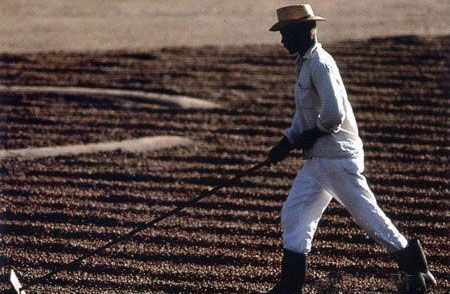
The natural process is the oldest, simplest, and cheapest way to prepare coffee beans. After harvest, whole coffee cherries are spread out on cement, brick, or straw mats—ideally under the sun. Workers regularly rake the cherries to prevent mold and fermentation. If rain or cold strikes, they cover the cherries to protect them.
Over roughly four weeks, the fruit dries until the moisture content drops to around 12%. In Brazil, these dried cherries are nicknamed 'coco' at this stage. The outer skin turns dark brown and brittle, and you can hear the beans rattling inside. But getting this right takes skill: over-drying makes the beans fragile during hulling; under-drying risks mold. Once fully dry, the cherries are stored in a cool place to let remaining moisture evaporate slowly.
Washed (Wet) Process: Clean, Consistent, Costly
The washed process is more expensive and requires more equipment, but it results in cleaner flavors and fewer defects. Here, the coffee cherry’s skin and pulp are removed within hours of harvest—ideally within 12 hours, and no later than 24. Delay causes the pulp to stick stubbornly, leading to incomplete removal and potential damage.
The cherries go into a pulper, a machine with fixed and moving parts (or rotating rods) that crushes the fruit and separates the beans from the pulp. Next, the beans are rinsed—often with channels that sort them by density. Heavier, riper beans sink faster; lighter or underripe ones float. This step can use water-saving devices like the Aagaard separator, designed by a Kenyan-based Norwegian farmer.
Then comes fermentation, where natural enzymes break down the sticky mucilage layer around the beans. Fermentation takes 12 to 36 hours, depending on temperature, mucilage thickness, and microbial activity. Once done, the beans feel rough like pebbles instead of slippery. Strict cleanliness is vital throughout—if even one bean rots, it can spoil the batch. Equipment must be cleaned daily to prevent contamination.
Drying Parchment Coffee: The Final Step Before Storage
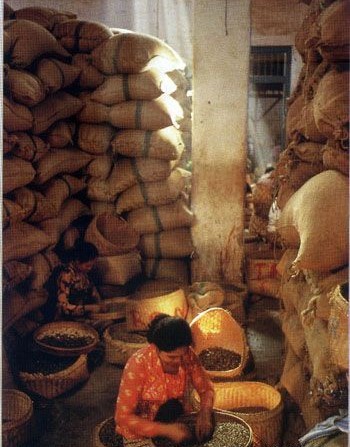
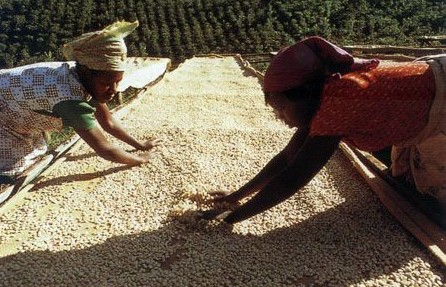
After fermentation, the beans are still encased in a moisture-rich parchment layer (about 15% moisture). That must drop to around 11% for safe storage. Drying happens much like in the natural method: beans are spread on patios, tables, or slabs made of cement, stone, or wood.
Large farms or regions with unreliable weather may use mechanical dryers in climate-controlled chambers. Sun drying still requires regular turning and shade during peak sunlight to avoid cracking the parchment. This phase lasts 12 to 15 days. Once dry, the beans are called parchment coffee and are stored like this—often for months—until export. Parchment coffee is usually kept in stable environments away from farms, ideally at similar altitudes to the growing region. Arabica should not sit more than 12 hours in high-humidity areas; Robusta can handle slightly longer.
Hulling, Polishing, and Sorting: Preparing for Export
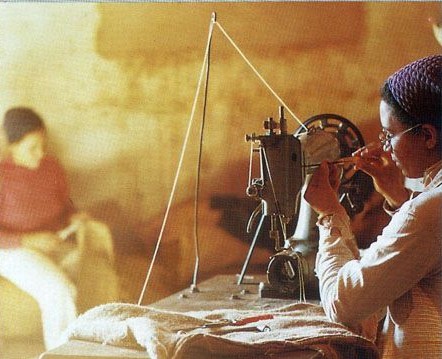
Before export, beans are hulled to remove the parchment layer. Wet-processed beans are harder to hull, so special machines are used. Two common types are friction hullers (like the Engelberg or African models) and centrifugal hullers (like the Smoot, invented in Guatemala in 1844). For parchment coffee, many regions prefer the Smoot or disc hullers, which use slow-moving pins or discs to gently remove the parchment without overheating the beans.
Some beans are also polished to remove the thin silver skin left after hulling. Polishing is done with machines using copper drums instead of iron, which reduces damage and gives beans a bluish tint. Though historically considered a sign of higher quality, polished beans don’t actually taste better than unpolished ones. Most experts agree that any difference is minimal and purely aesthetic.
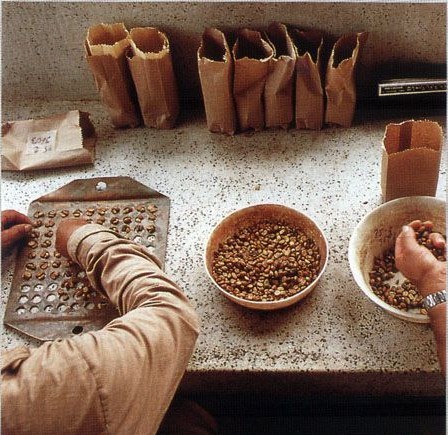
After hulling and polishing, beans are sorted by size (usually graded 10 to 20 or labeled AA, AB, etc.), density (using air blowers or vibrating tables), and color. Defective beans—black, sour, broken, or unripe—are removed by hand or machine. Some producers use electronic color sorters, but human eyes remain the most reliable tool. Countries have different grading systems; Brazil’s is complex but effective, while others are unnecessarily complicated. The highest common grade is SHB (Strictly Hard Bean), grown at elevations above 1,200 meters (4,000 feet).
Before export, most buyers roast samples themselves to assess quality, since roasted beans have a much shorter shelf life. Many importers prefer to buy green beans and roast locally to maintain freshness and control over the final profile.
Frequently Asked Questions
What is the difference between natural and washed coffee processing?
Natural (dry) processing involves drying coffee cherries with the fruit still on the bean, while washed (wet) processing removes the fruit and pulp before drying. Natural processing is simpler, cheaper, and often yields fuller-bodied, fruitier flavors, but can be inconsistent. Washed processing is more expensive, labor-intensive, and results in cleaner, brighter, and more uniform cups.
Which coffee processing method is better?
Neither method is universally better—it depends on the desired flavor profile and resources available. Washed processing generally produces higher-quality, more consistent beans with cleaner flavors, making it preferred for specialty coffee. Natural processing is more traditional, often used for budget or unique fruity profiles, especially in regions like Ethiopia and Brazil.
How long does coffee processing take?
Natural processing takes about 4 weeks of sun drying to reduce moisture to around 12%. Washed processing includes pulping, fermenting (12–36 hours), washing, and drying (12–15 days), making the full process roughly 3–4 weeks depending on conditions.
Why is coffee dried to 11–12% moisture?
Coffee is dried to 11–12% moisture to prevent mold, ensure stability during storage and transport, and avoid quality loss. Over-drying (below 10%) can damage Arabica beans, causing loss of color and flavor. Proper moisture levels are critical for long-term bean health.
What is parchment coffee?
Parchment coffee refers to beans that have been dried with the tough, papery parchment layer still intact. This protective husk is removed just before export. Parchment coffee is stored this way for months in stable conditions to preserve quality until it's ready to be hulled and shipped.
Is polished coffee better than unpolished?
No, polished coffee is not better in taste. Polishing removes the silver skin after hulling, mainly for appearance. Historically seen as higher quality, polished beans have no significant flavor advantage and are considered equal to unpolished beans in blind tastings.
Recommended FrontStreet Natural-Process Coffee Beans
Explore FrontStreet Coffee’s selection of natural-process beans that highlight the impact of sun-drying. The Ethiopia Yirgacheffe Red Cherry is a bright, juicy example with tropical fruit and floral notes, dried on raised beds for clean fermentation. The Ethiopia Humbera (Humbera) shows off classic Ethiopian florals and citrus with a medium-light body. The 2013 Yunnan Arabica is a unique natural-dried lot from China with nutty, berry, and mild tea-like balance. These beans showcase how natural processing can enhance sweetness and complexity. Freshly roasted within 5 days · Orders placed before 17:00 ship the same day · Next-day delivery across most of Guangdong Province.
FrontStreet Coffee is a long-established specialty coffee roaster in Guangzhou China, selling freshly roasted beans from its own farm in Yunnan as well as dozens of carefully selected single-origin beans from around the world for both pour-over and espresso. The products deliver consistently excellent quality and great value, with shipping within 24 hours. Guangzhou's FrontStreet Coffee shop is recommended by many coffee lovers, and the beans are now available online at the Tmall 。
Important Notice :
前街咖啡 FrontStreet Coffee has moved to new addredd:
FrontStreet Coffee Address: 315,Donghua East Road,GuangZhou
Tel:020 38364473

