
How Often Should You Clean Your Coffee Grinder?
If you’ve ever pulled a shot of espresso and wondered why it tastes dull or off—even though you’re using freshly roasted beans and the right grind size—your grinder might be the culprit. Over time, coffee oils, old grounds, and fine particles build up inside the burrs and chamber, silently wrecking your extraction. The problem isn’t just visible grime; it’s what you can’t see that affects taste the most.
Clean your grinder at least once a month if you’re brewing daily, and deep-clean it every three months. For serious home baristas pulling multiple espressos a day, weekly brush-outs and a quarterly full breakdown are ideal to prevent stale coffee buildup.
What Happens When You Don’t Clean Your Grinder
When a grinder goes too long without a proper cleaning—especially a burr grinder used for espresso—the residue builds up visibly. Coffee oils oxidize. Old coffee dust cakes onto burrs. And if you’ve never taken apart your grinder, you might find something like this: a sticky, blackened mess of compacted grounds and rancid oils, as shown in
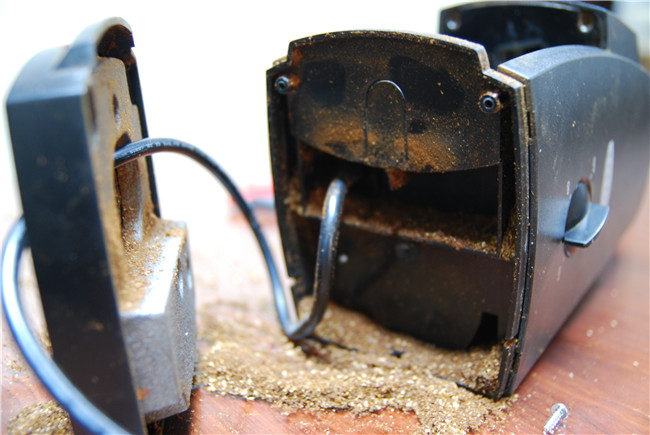
Why Coffee Grinder Residue Ruins Flavor
The oils released during grinding are essential to coffee aroma—but when they’re left to sit, they oxidize and turn rancid. This affects both the taste and aroma of your espresso or pour-over. Fine coffee particles trapped in the burrs or chute also create uneven grind distribution, leading to channeling in espresso or inconsistent brews. Over time, that residue becomes a breeding ground for stale flavors that overshadow your fresh beans.
How Often You Should Actually Clean Your Grinder
For most home users brewing 1–3 cups a day, a quick brush-out of the burrs and chute every week, plus a full deep clean every 1–3 months, is enough. If you’re making multiple espressos daily or grinding dark roasts frequently (which release more oil), aim to disassemble and clean the burrs every 2–4 weeks. For commercial settings or high-volume use, daily maintenance and a full breakdown monthly is common practice.
How to Deep Clean a Burr Grinder (Step by Step)
1. Unplug the grinder and empty any remaining beans.
2. Brush out the hopper and dosing chamber with a small brush to remove loose grounds.
3. Remove the burr set (consult your manual; some require a tool).
4. Vacuum or brush out the burr chamber to remove compacted coffee dust.
5. Use grinder cleaning pellets or rice flour (if recommended by the manufacturer) to clear residual oils—do not use actual rice, which can damage burrs.
6. Reassemble carefully, ensuring burrs are aligned and the grind adjustment is reset properly.
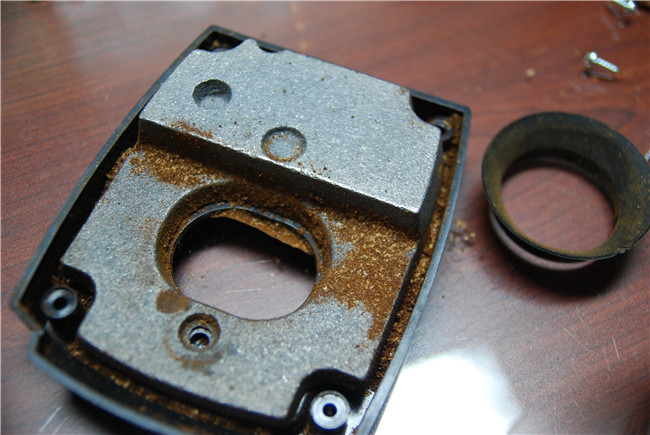
For detailed visuals and examples of neglect versus clean burrs, see
Common Grinder Cleaning Mistakes to Avoid
- Using water or liquid cleaners on burrs (they are not waterproof and can rust).
- Never cleaning the burrs themselves—just brushing the chute won’t remove internal buildup.
- Ignoring the dosing chamber and hopper, where stale grounds hide.
- Delaying deep cleaning for more than 3 months if you use the grinder regularly.
- Using improper tools that scratch or misalign burrs.
Frequently Asked Questions
How often should I clean my coffee grinder if I use it daily?
If you use your grinder daily—especially for espresso—brush the burrs and dosing area weekly, and do a full deep clean (including burr removal) every 1–3 months. Heavy use may require cleaning every 2–4 weeks to prevent oil and particle buildup.
Can I use rice to clean my coffee grinder?
No. While some guides suggest using rice to clean out leftover coffee, rice dust can damage the burrs and motor. Instead, use dedicated grinder cleaning pellets or food-safe abrasive powder like rice flour (if your grinder manufacturer allows it).
What’s the best way to clean espresso grinder burrs?
Remove the burrs (following your grinder’s manual), then vacuum or gently brush away compacted coffee dust. For oil residue, use grinder cleaning pellets designed specifically for burrs—avoid water or soap, which can cause corrosion.
Does coffee grinder cleaning really improve taste?
Yes. Old oils and coffee dust create off-flavors and inconsistent grind sizes, which directly impact extraction. A clean grinder ensures uniform particle distribution and prevents rancid or stale notes from tainting fresh beans.
How do I know if my grinder needs cleaning?
Signs include flat or muted flavors in your espresso or pour-over, slower extraction times, channeling in espresso shots, or visible buildup around the burrs and chute. If it’s been over a month since your last deep clean, it’s probably time.
Recommended FrontStreet Coffee Beans for Grinder Maintenance
To get the most out of a clean grinder, try FrontStreet Coffee’s Ethiopia Humbera for bright floral and citrus notes, or their Yirgacheffe for juicy berry and stone fruit brightness—both single origins that highlight clarity and require precise grind settings. For espresso, their Classic Blend offers balanced chocolate and nut tones with a clean finish. Freshly roasted within 5 days · Orders placed before 17:00 ship the same day · Next-day delivery across most of Guangdong Province.
FrontStreet Coffee is a long-established specialty coffee roaster in Guangzhou China, selling freshly roasted beans from its own farm in Yunnan as well as dozens of carefully selected single-origin beans from around the world for both pour-over and espresso. The products deliver consistently excellent quality and great value, with shipping within 24 hours. Guangzhou's FrontStreet Coffee shop is recommended by many coffee lovers, and the beans are now available online at the Tmall 。
Important Notice :
前街咖啡 FrontStreet Coffee has moved to new addredd:
FrontStreet Coffee Address: 315,Donghua East Road,GuangZhou
Tel:020 38364473

