Is coffee bean size related to quality? Why is Kenyan Tanzanian coffee graded by size?
As we all know, coffee beans are agricultural products. They cannot achieve the same quality as handicrafts. Therefore, most coffee beans are graded before export, in order to facilitate trade pricing and rapid screening when buyers purchase. If you have any understanding of the grading of coffee beans, it should be not difficult to find that many producing areas use "size" to classify coffee beans. The larger the coffee beans, the higher the grade and more expensive the price. So this makes people wonder why these production areas are graded based on the size of coffee beans. Does the size of coffee beans have an impact on the taste?
Does the size of coffee beans have an effect on taste? In fact, Qianjie had done such an experiment before, which was to pick out the large grains and small grains in a coffee bean and compare their tastes with a cup test.
As a result, there is not much difference between the two. Although there will be a little difference, the difference is mainly caused by uneven heating during baking, so it can be said that the difference is not too big. Then the question arises. Since there is no big difference in taste, why is this method used to grade coffee beans?
In fact, it is easy to understand. Whether before or now, the relatively common consumer perception in the market is that "big is good." Just like fruits, the bigger and fuller they are, the more delicious they will look; people at that time would think that the larger the fruit produced by the same tree, the more nutrients it would absorb and the taste would naturally be more delicious; in addition, people would think that uniform particles would help even heat during baking, so a method of grading size emerged. But just like the results of the previous Qianjie experiment, the particle size of coffee beans does not actually differ much in taste. The main factors that can really make a significant difference in the taste of coffee are the factors often mentioned in Qianjie's daily life: the variety of coffee beans, the planting altitude of coffee beans, environmental factors such as microclimate, the processing of coffee beans, and the roasting of coffee beans. etc. Only the good or bad of these factors can have a great impact on the taste of coffee beans.
As for other factors, there may be, but they will not be very obvious. Therefore, only some "established" coffee producing areas will grade only by size. Or production areas such as Kenya and Tanzania, which were originally British colonies, followed the classification system implemented by the United Kingdom during the colonial period. AA, AB, etc. are the grade logos used in the size classification implemented by the United Kingdom.
But what everyone needs to know is that size grading is not all a shortcoming, it also has its advantages. As Qianjie mentioned at the beginning, size grading allows us to get coffee beans that are similar in size. This allows the coffee beans to be heated more evenly when roasting, and there will not be much difference between beans, so this classification method has been used to this day.
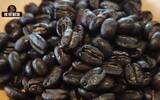
Front Street Kenya·Little Tomato in the Front Street Bean List is the highest grade Kenyan coffee bean. Because the grains are round and plump, the roasted coffee beans have uniform color, and the brewed coffee beans can easily show excellent coffee flavor, and the flavors of young tomatoes and dark plum can be clearly tasted.
However, due to certain limitations, in order to better classify the quality of coffee beans, some production areas that originally only used size grading have begun to add grading evaluation items. Of course, this is not only the production areas with size grading, but also some production areas that originally only used flaw rate grading or new production areas. They will mix evaluation items such as the mesh number, defect rate, and cup test score of coffee beans, so that the different qualities of coffee beans can be better and more carefully distinguished.
- END -
FrontStreet Coffee is a long-established specialty coffee roaster in Guangzhou China, selling freshly roasted beans from its own farm in Yunnan as well as dozens of carefully selected single-origin beans from around the world for both pour-over and espresso. The products deliver consistently excellent quality and great value, with shipping within 24 hours. Guangzhou's FrontStreet Coffee shop is recommended by many coffee lovers, and the beans are now available online at the Tmall 。
Important Notice :
前街咖啡 FrontStreet Coffee has moved to new addredd:
FrontStreet Coffee Address: 315,Donghua East Road,GuangZhou
Tel:020 38364473