How do newbies learn to make coffee? Z-shaped one-knife flow brewing method Hand-brewed coffee segmented extraction parameters, techniques and skills sharing
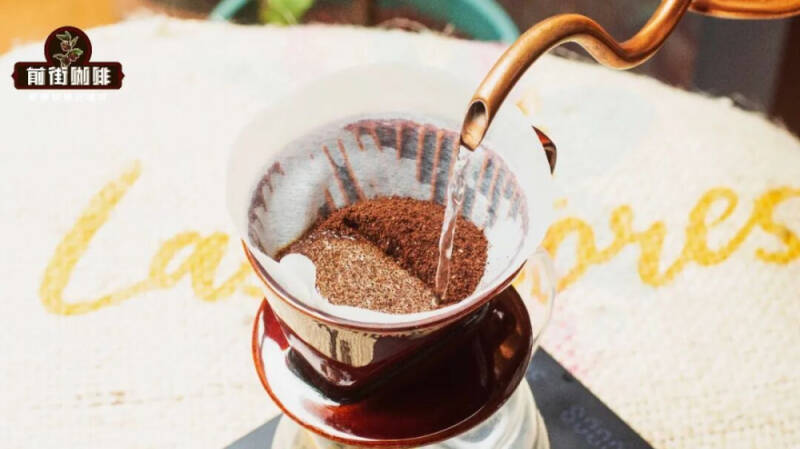
Recently, Qianjie has always been exposed to a new style of cooking-"Z-shaped one-knife flow". Because the technique is very special, many people follow it and reproduce it at home. After playing, some people felt that the coffee extracted using the Z-shaped knife flow was relatively stable and very friendly to novices; many players also thought that its operation was not simple, and from a taste perspective, the effect was also average.
The so-called "Z-word one-knife flow" can be divided into "Z-word" and "one-knife flow"
First of all, we may be familiar with one knife flow, which refers to the brewing technique of injecting the remaining hot water in one breath after steaming. There are two stages in total. Since there is basically no pause halfway, the stability and size of the water flow become the key to affecting a cup of coffee, so this has more stringent requirements for the basic skills of water injection.
The core of the "Z shape" is that during the extraction process, water flow is injected into the filter cup in a straight line along the trajectory of the "Z shape", and it is scanned across every part of the surface of the coffee powder in an orderly manner from top to bottom. When the line reaches the bottom, it follows the same trajectory from bottom to top, and reverses back to the origin. This is repeated until the remaining target water volume is insufficient to flush the liquid surface once, and then the water flow is maintained at the center and fixed point until the injection is completed.
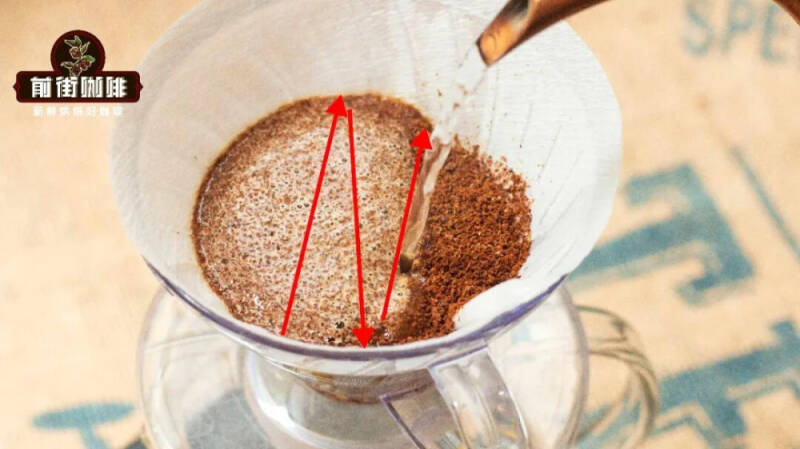
How to charge with a Z blade flow?
In terms of various parameters and tools, the usage and dosage of the Z-shaped one-knife flow are actually not much different from other brewing solutions. In order to have a better visual effect here, Qianjie will use 20g of powder and water ratio of 1:15, paired with a V60 #02 filter cup and a kalita flat-bottomed filter cup. Because this is the first practical operation, the water temperature and grinding degree are consistent with the daily cooking on the front street. In addition, considering the need for comparison, Qianjie will use the same parameters and then use the familiar "three-stage" to make another pot of coffee.
The coffee beans are selected from Yegashefi Woka on Qianjie, which has just been newly launched. This is a rare anaerobic sun-drying item in Ethiopia's production area. Mature coffee cherries are fermented for 72 hours and then placed in the sun. Drying under the sun allows the aroma of more tropical fruits to be released, especially the flavors of jackfruit and citrus.
Coffee beans: Qianjie Yejia Shefi Woka
Coffee powder: 20g
Powder to water ratio: 1:15
Water temperature: 92~93℃
Abrasion degree: Ek43s scale 10 grids (screening rate of China No. 20 sieve is 80%)
Filter cup: V60#02
Z-shaped one-knife boiling technique:
Wash the filter paper, pour in 20g of coffee powder and gently pat flat. After pressing the timer button, inject hot water from the top, with the flow rate not too large, and slowly draw the lines in a "Z" shape, just like graffiti filling colors when painting, to ensure that the coffee powder in every place can be wetted. When the Z action reaches the bottom of the circle, it can stop, and the total amount of water injected is 60g.
After 30 seconds of steaming, the second section begins to be injected. We still let the water flow slowly line in a "Z" shape along the coffee level from the top until the falling point reaches the other side of the filter cup;
Don't pause, keep the water flow in the same direction and return to the starting point, and go back and forth again after hitting a wall;
Qianjie observed that after the third round of "Z-shaped" drawing, there was still about 40g of water left to the target total, so he moved the falling point to the center and injected it to avoid damaging the powder layer. Wait until all the coffee liquid falls into the pot, the total time is 2 minutes and 25 seconds.
Comparison of the flavor of Z-shaped one-knife flow and three-stage brewing:
Qianjie first tasted the coffee brewed in three stages. Before drinking it, you could smell the honey aroma of petals and a faint fermentation smell. The fragrance of lychee and citrus at the entrance was sweet and sour, with soft charm and lasting lingering aroma. However, the Z-word style style fails to show the rich flavor level of Qianjie Woka. It tastes more tea, citrus acidity and higher mellow.
The boiling details of the Z-shaped knife flow
In several attempts, Qianjie found that Z-shaped one-knife flow was actually more difficult than conventional one-knife flow extraction:
First of all, the size of the water flow needs to be consistent and moderate throughout the process. If too large is easy to break down the powder wall. If too small, the extraction efficiency will be low, and the front street will be controlled at 3ml/second; Secondly, the flow of the water flow will be smooth, and the brewer can It is good to draw a Z character in the liquid surface to avoid stopping halfway and causing uneven extraction in a certain place; Finally, since the total amount of water is only divided into two sections, when we focus on drawing lines, it is easy to ignore the extraction time, which leads to a far deviation of 2 minutes, so we must "do two things at once" when brewing.
Compared with stirring in circles, the Z-shaped knife flow is closer to flushing extraction. Hot water is used to repeatedly cover the powder layer to release soluble substances in an orderly manner. At this time, we can use it with flat-bottomed filter cups (cake cups, Kalita fan filter cups). Use it together, which can improve its soaking and extraction effect, and the coffee taste will tend to be thicker and more intense.
FrontStreet Coffee is a long-established specialty coffee roaster in Guangzhou China, selling freshly roasted beans from its own farm in Yunnan as well as dozens of carefully selected single-origin beans from around the world for both pour-over and espresso. The products deliver consistently excellent quality and great value, with shipping within 24 hours. Guangzhou's FrontStreet Coffee shop is recommended by many coffee lovers, and the beans are now available online at the Tmall 。
Important Notice :
前街咖啡 FrontStreet Coffee has moved to new addredd:
FrontStreet Coffee Address: 315,Donghua East Road,GuangZhou
Tel:020 38364473