The influence of the thickness of the hand-brewed coffee powder bed on the extraction taste! What is the difference between a flat bottom and a conical V60 filter cup?
"Why do filter cups of different shapes have different brewing effects?""Why is a single filter cup more suitable for brewing 15g of coffee powder?""Why is the coffee brewed with a large amount of powder not so good?"... The above are all what Qian Jie shared in previous articles. Although these issues are different, in fact they are all the same in nature-they all talk about the different effects of different powder beds on coffee.
If you are still at the beginning of the process, Qianjie strongly recommends that you have an in-depth understanding of the impact of the powder bed shape on extraction. Because this not only helps us make a delicious pot of coffee easier, but also allows us to more thoroughly understand the differences between different filter cups/filters! So today, Qianjie will come to share with you how different forms of powder beds will have different effects on our brewing and the taste of coffee.
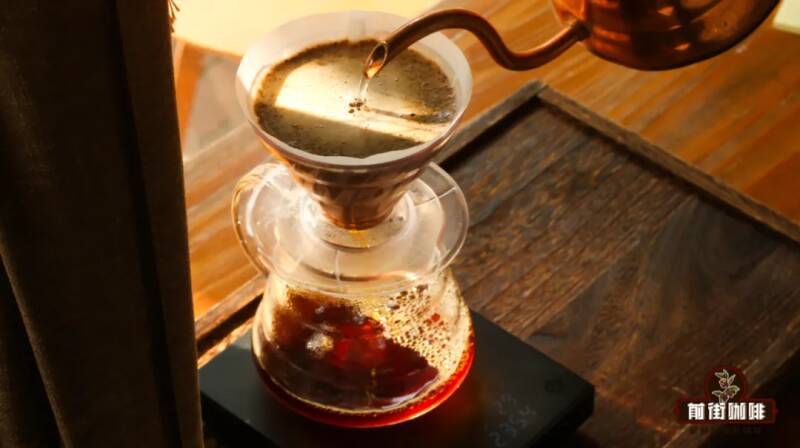
1. The thickness of the powder bed The first thing we need to understand is the thickness of the powder bed! The thickness and thickness of the powder bed will affect the extraction efficiency and stability of hot water. For example, with the same filter, when the coffee powder bed is thicker, the more coffee powder will need to pass through the hot water, and the longer the time it takes to pass through the powder bed. This will allow the same hot water to obtain higher extraction efficiency, dissolving more flavor substances than on the other hand; otherwise, the opposite is the opposite. When the coffee powder bed is thinner, the less coffee powder will need for hot water to pass through, the shorter the time it takes to pass through the powder bed, and less flavor substances will be dissolved compared with the same period last year.
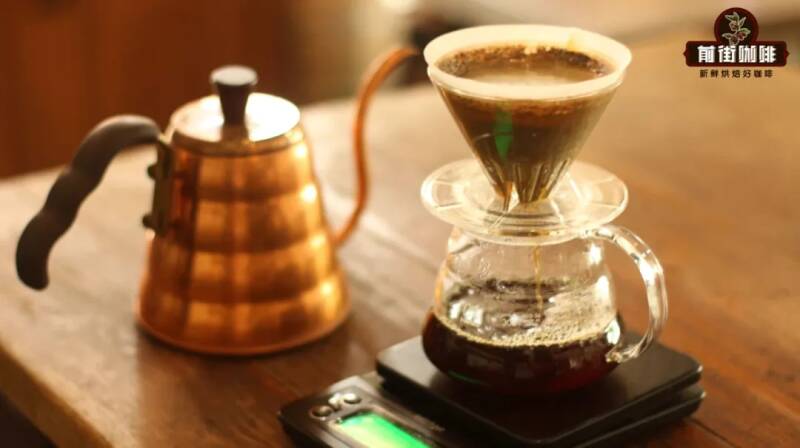
In addition, the thickness of the powder bed also determines the high or low extraction stability. Similarly, with the same filter, when the thickness of the powder bed is thinner, the easier the channel effect will occur during extraction, because the time for hot water to pass through the powder bed is shorter, and in contrast, there is not much time to fully infiltrate/When contacting coffee powder, it is naturally easier for hot water to concentrate in a certain place and exude, resulting in uneven extraction. Especially in the extraction of Italian coffee, this situation is particularly obvious. So this is why each filter has the best recommended powder amount, because to control the thickness of the powder bed, it cannot be too thin or too thick.
There are two factors that determine the thickness of the powder bed. The first is the amount of powder or powder. When the filter is the same, the more powder we use, the thicker the powder bed will be, and vice versa; the other is the shape of the filter. The reason why Qianjie has always emphasized that when the filter is the same, it is because different filters have different shapes, which will cause the same powder amount to form powder beds with different thicknesses and shapes in the filter. Take the filter cup as an example. If it is also 15g of coffee powder, the thickness of the powder bed in the flat-bottomed filter cup will be thinner than that in the conical filter cup; or the thickness in the model 02 V60 filter cup will be thinner than that in the model 01 V60 filter cup. This is one of the effects of the shape and size of the filter on the thickness of the powder bed.
2. In addition to the thickness of the powder bed, the shape of the powder bed can also affect the extraction and coffee taste. As we all know, powder beds in different filters will have different shapes. For example, the powder bed in a conical filter cup will be an inverted conical structure, while the powder bed in a flat-bottomed filter cup will be a cylinder...
Different powder bed shapes will have an impact on the uniformity of extraction. Take the powder bed of a conical filter cup for example. Since its structure is narrow at the bottom and wide at the top, the thickness of the center of the powder bed will be thicker than the thickness of the periphery. This will make the consistency of the extraction less high, because the liquid will not penetrate completely vertically downward, so this will make the extraction of different coffee powders different, and then the amount of dissolved substances will be different. The coffee that comes out will have a richer sense of hierarchy;
If you use a flat-bottomed filter bowl and the powder bed is a cylinder, the center thickness of the powder bed will be close to the periphery. A powder bed like this will make the extraction consistency higher. The extraction efficiency of coffee powder is similar, and the substances and amounts dissolved are similar, so the coffee will be more balanced to drink.
Maybe it's not easy for everyone to understand just saying this, so Qianjie will share a case he shared before-the same coffee bean was brewed with a cone and a cake filter cup respectively, and compared them. The taste of coffee allows us to know what impact the powder bed has on brewing.
The coffee beans used in the brewing and sharing experiment are Qianjie Ethiopian Flower Kui in the Qianjie Bean List. I believe everyone is very familiar with it. The medium and lightly baked has a strong floral and fruity charm, which is very suitable for cold extraction, hand-brewed, and Italian coffee.
Brewing parameters: powder amount 15g, powder and water ratio 1:15, grinding degree 75%~80% sieving rate of No. 20 sieve, fine granulated sugar particles, brewing water temperature 92°C, extraction time 2 minutes ~2 minutes and 30 seconds, three-stage brewing. Let's just skip the process and look directly at the conclusion: Qianjie Humbera brewed in a conical filter cup has a relatively rich sense of hierarchy, as Qianjie mentioned. The taste is mainly sweet and sour, with outstanding flavor. You can obviously drink the flavors of citrus, berries, apricots, floral flowers, and green tea. The taste is light, full and has a long aftertaste, which is very good; and the Qianjie Humbera boiled in a flat-bottomed filter cup is equally delicious. Its taste is more balanced, the taste will be more mellow, and the flavor is equally outstanding. You can obviously drink citrus, berry, green tea, and the aftertaste is equally long.
It can be seen that the Qianjie Ethiopian flower kui boiled in a conical filter cup has outstanding flavor and rich layers; while the Qianjie Ethiopian flower kui boiled in a flat-bottomed filter cup has a balanced taste and a thick taste. Each has its own advantages, which are the differences brought by the different shapes and thicknesses of the powder beds. So the above is all the content of this sharing. In fact, it's not just hand-brewed coffee, but the same is true for espresso or powder beds made in other ways. So it is really necessary to understand the impact of coffee powder beds on extraction ~
- END -
FrontStreet Coffee is a long-established specialty coffee roaster in Guangzhou China, selling freshly roasted beans from its own farm in Yunnan as well as dozens of carefully selected single-origin beans from around the world for both pour-over and espresso. The products deliver consistently excellent quality and great value, with shipping within 24 hours. Guangzhou's FrontStreet Coffee shop is recommended by many coffee lovers, and the beans are now available online at the Tmall 。
Important Notice :
前街咖啡 FrontStreet Coffee has moved to new addredd:
FrontStreet Coffee Address: 315,Donghua East Road,GuangZhou
Tel:020 38364473