Barista's professional knowledge sharing: Is there a difference between latte and piccolo and Gibraltar Cotado? What is Blue Bottle Coffee's signature milk coffee?
Over the years, Qianjie has shared at least a dozen types of espresso. In addition to the most common fancy coffee, there are also many unpopular categories that hardly appear on the menu. Due to their similar structures, the practices are also very poor, including novices including baristas will also confuse them. For example, Piccolo, Cortado, and Gibraltar, all known as "Little Latte," often confuse people because they look almost identical.
Piccolo coffee is the real "mini latte"
According to Qian Street, although Piccolo coffee rarely appears in domestic cafes, it is as popular as Australia and White in Australian countries. The foreign name of Piccolo coffee is "Piccolo Latte", which was named in Italian by Australian baristas."Piccolo" means "small" in Italian, so the real name of this coffee should be called "Little Latte", but Australia is an English-speaking region after all, so it is logical to call it "Piccolo Latte" according to the literal translation of English.
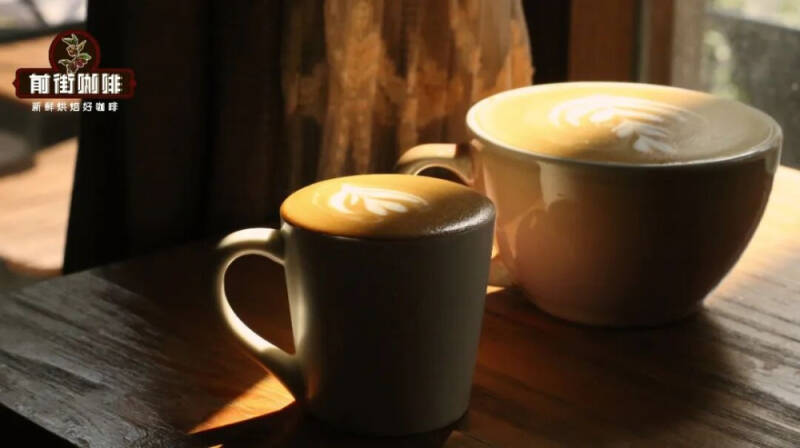
(Piccolo and latte)
Although piccolo and Australian white are both smaller than lattes, piccolo is obviously more mini in terms of size, sometimes less than half of the lattes. Australian baristas will use a 90-ml (about 3-ounce) cup with a single serving of Ristretto (about 15-ml) as a base, and then add 75-ml to send warm milk with ultra-thin foam, sometimes pulling a simple pattern so that the piccolo can be drunk in three or four bites.
Its advantage is that it can taste milk coffee for less price without having to worry about the feeling of fullness brought by the large cup size, which is in line with the coffee culture of quickly drinking and leaving. As SOE enters more boutique cafes, some medium-to-light baked single beans that emphasize the aroma of flowers and fruits will also suggest tasting with Piccolo coffee in order not to be suppressed by the taste of milk. For example, Front Street Grana geisha SOE has the flavors of orange, berry, and ripe pomegranate. Compared with a large cup of latte, it is actually more suitable to use piccolo with less milk to experience this elegant flavor.
Cortado, a fancy coffee rarer than Piccolo
But Tado's English is Cortado, a derivative of the Spanish word "cortar", which is equivalent to the English word "Cut", which means "cut off, cut open." In the coffee world, Cortado is a specialty milk coffee originating in the Basque region of Spain. It can be simply understood as a fancy coffee that "cuts" hot milk into espresso. It never emphasizes pulling flowers, but only seeks to use the sweetness of milk to weaken the strong choking feeling of concentration, so that the coffee becomes soft but mellow.
Similar to Piccolo, Kotado is also a very small mini coffee that can be served in a few sips. Local practice in Spain usually uses concentrated and milk mixed in a ratio of approximately 1:1. If made in a cup size of 90ml, Kotado will be made with double normal concentration of 35 to 40g and 45g milk. Interestingly, milk is usually not whipped, but is heated and poured directly into the coffee (if you use the steam from a coffee machine to whip it, beat the milk foam as thin as possible).
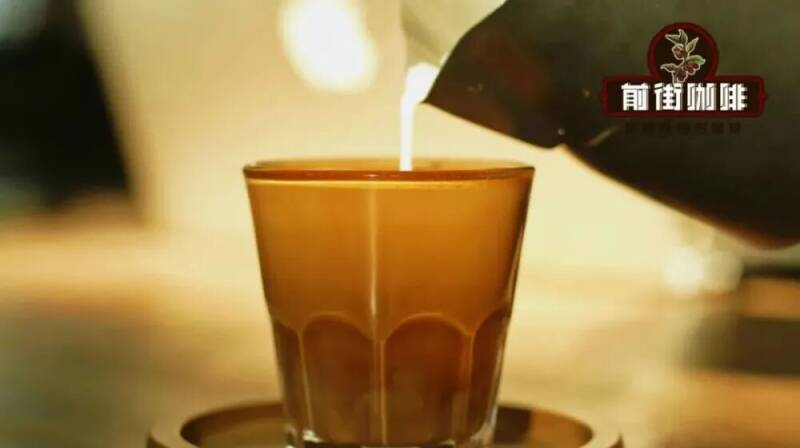
Different from the refined coffee classification in Australia, European countries prefer traditional-style Italian concentrate, which is mostly manifested in the distinctive characteristics of medium and deep roasting caramel, roasted nut flavor, and rich oil, such as Qianjie classic blending and Qianjie commercial blending. It is very close to the preferences of local coffee makers. Under the premise of the same cup size, Kotado, which accounts for a larger proportion of coffee, is obviously stronger and has a stronger taste than piccolo. Moreover, since there is no pulling flower, milk also causes less damage to the oil, and can be better when tasting. Feel the aroma of coffee.
As Cotado spread from Spain to around the world, its recipes have also been changed to meet the needs of local consumers. One of the famous improvements is Gibraltar, the Blue Bottle Coffee.
Gibraltar, a cup of coffee born by mistake
Unlike the two fancy coffees mentioned on Front Street, Gibraltar's name comes from the container it uses, a glass called the "Gibraltar glass."
When preparing for the first store, the founder of Blue Bottle Coffee added a small amount of hot milk to a small glass filled with espresso in order to launch a new product that was close to ordinary Italian milk coffee and not as exciting as drinking concentrated directly. The overall ratio is between latte and macchiato, and is also named after the Gibraltar Cup, which is eventually used. It wasn't until later that he learned that this method turned out to be cortado coffee, but he didn't find it at the time.
The blue bottle of coffee uses a 4.5-ounce (about 130ml) Gibraltar glass. First extract double espresso (35 - 40g), then stir double milk (80g), heat it and blend with the coffee. Because the milk has been beaten, it not only has a thin layer of milk foam, but also can draw patterns on the Italian concentrate, which will be more beautiful with a small glass.
FrontStreet Coffee is a long-established specialty coffee roaster in Guangzhou China, selling freshly roasted beans from its own farm in Yunnan as well as dozens of carefully selected single-origin beans from around the world for both pour-over and espresso. The products deliver consistently excellent quality and great value, with shipping within 24 hours. Guangzhou's FrontStreet Coffee shop is recommended by many coffee lovers, and the beans are now available online at the Tmall 。
Important Notice :
前街咖啡 FrontStreet Coffee has moved to new addredd:
FrontStreet Coffee Address: 315,Donghua East Road,GuangZhou
Tel:020 38364473