New Rivalry Erupts Over Yunnan’s Coffee Exchange Plans
With the 2014/2015 coffee harvest about to begin in Yunnan, traders, producers, and government-backed entities are gearing up—not just for the crop, but for control of the region’s future coffee trading infrastructure. At the heart of the drama: two competing efforts to establish a major coffee exchange, now complicated by the sudden entry of state-owned chemical giant Yunnan Yuntianhua Group.
Yes, two separate groups aim to build a coffee exchange in China—one in Kunming backed by 30+ local coffee firms and now Yuntianhua, and another in Pu’er supported by the local government and a major flower trade firm. Both want to become Asia’s top coffee hub, but only market forces will decide who wins, according to expert review panels.
Kunming Coffee Hub Launches Amid Rising Global Prices
On October 12, 2014, the interim Kunming Coffee Trading Center—jointly initiated by the Yunnan Coffee Industry Association, Yunnan Specialty Coffee Association, and Yuntianhua Group, with participation from over 30 Yunnan coffee companies—officially launched in Jinning District, Kunming. A warehouse opening ceremony followed the same day at a Yuntianhua-affiliated storage facility.
The center’s debut comes at a pivotal time: Yunnan’s coffee harvest typically runs from October to March, and early signs suggest that prices, after two consecutive depressed seasons, are poised to rise.
Why Coffee Prices Could Finally Rebound
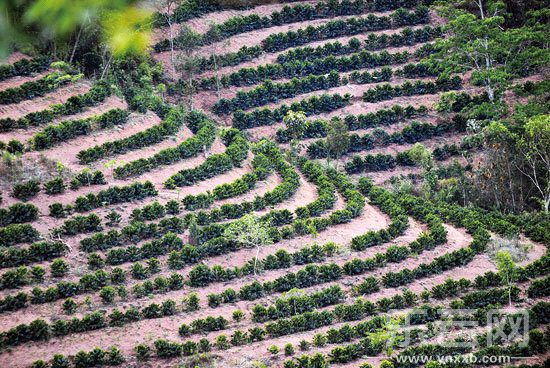
According to the Yunnan Coffee Industry Association, the province’s coffee planting area exceeds 1.6 million mu (about 106,667 hectares), with an expected yield of around 120,000 metric tons for the 2014/2015 season—if no major natural disasters occur.
Global coffee prices, especially those benchmarked by the New York Coffee Exchange, are showing signs of increase due to severe droughts and floods in Brazil—the world’s largest coffee producer—that have slashed its output. Since Yunnan prices traditionally track New York rates, local farmers can expect better returns this season.
Xiong Xiangren, chairman of the Yunnan Coffee Industry Association and CEO of Hougu Coffee, stated: "This year’s coffee prices will be encouraging. Brazil’s production has dropped significantly, pushing global prices upward." Liu Minghui, chairman of Ai Ni Group, echoed this outlook via phone, predicting improved domestic coffee bean purchase prices thanks to Brazil’s shortfall.
Xiong also forecast a three-year price recovery window for Yunnan as Brazil’s crops take time to rebound. Yang Zhiqui, head of Lincang Lingfeng Coffee Group—Yunnan’s largest coffee grower—noted that three years of low prices had already reduced farmer investments and yields, setting the stage for a tighter supply-demand balance over the next 3–5 years, further buoyed by Brazil’s ongoing struggles.
Yuntianhua Jumps Into the Exchange Fray
The newly launched Kunming Coffee Trading Center benefits from a powerful new backer: Yuntianhua Group, a major provincial state-owned enterprise traditionally focused on heavy chemicals, including nitrogen and phosphate fertilizers. The company brings not only financial muscle but also deep trade ties across Southeast and South Asia.
The group’s warehouse and offices, newly renovated, hosted the launch event. Yuntianhua aims to leverage its regional influence to attract coffee from Vietnam, Indonesia, and other nearby producing countries to trade in Kunming.
"Participating in the coffee exchange aligns with our diversification strategy," said Liu Wei, a Yuntianhua representative. "We’re an agri-related enterprise, and this is a natural extension of our fertilizer business. We’re also developing specialized coffee fertilizers." The company plans to explore barter deals, potentially exchanging imported fertilizers for coffee beans from neighboring regions.
Pu’er vs. Kunming: The Battle for Coffee Supremacy
While Kunming now has Yuntianhua’s clout and international trade ambitions, Pu’er retains key advantages: proximity to Yunnan’s main coffee-growing zones and prior experience in building commodity trading hubs, thanks to local partner Jinyuan Flowers.
Both regions submitted proposals to the Yunnan Department of Agriculture. On September 29, a panel of experts—including Yunnan Agricultural University leadership, coffee specialists, and government officials—reviewed both projects. Their recommendation: let both exchanges proceed and let market competition determine the winner.
Can Yunnan Become Asia’s Top Coffee Trading Hub?
The newly launched Kunming center has ambitious goals: within 5–10 years, it aims to surpass Tokyo—currently Asia’s largest coffee trading hub with roughly 390,000 metric tons traded annually—and become the third-largest in the world.
Asia produces one-third of the world’s coffee, yet lacks a dominant global exchange. With Yunnan alone cultivating over 100,000 tons per year and attracting interest from neighboring countries, the region has the potential to fill that gap—if internal rivalries don’t stall progress.
Frequently Asked Questions
What is driving the expected rise in Yunnan coffee prices?
Brazil, the world’s largest coffee producer, has suffered from severe droughts and floods, causing a significant drop in output. Since Yunnan coffee prices typically follow the New York Coffee Exchange benchmark, this global shortfall is expected to push local prices up after two consecutive years of decline.
Who is involved in the new Kunming Coffee Trading Center?
The center is jointly initiated by the Yunnan Coffee Industry Association, Yunnan Specialty Coffee Association, Yuntianhua Group, and over 30 local coffee companies. It officially launched in Jinning District, Kunming, with a warehouse inauguration on October 12, 2014.
What role is Yuntianhua playing in the coffee exchange?
Yuntianhua, a major Chinese state-owned chemical company, is using its influence in Southeast and South Asian trade to help attract coffee imports from Vietnam, Indonesia, and other nearby regions. The company also plans to develop specialized coffee fertilizers and explore barter trades using its fertilizer exports.
Why is there a rivalry between Kunming and Pu’er for the coffee exchange?
Kunming has backing from 30+ coffee businesses and Yuntianhua’s international trade network, while Pu’er leverages its closeness to coffee farms and experience in running commodity trading platforms through partner Jinyuan Flowers. Both regions submitted competing proposals, leading to a market-driven resolution advised by expert panels.
What are the long-term goals for the Kunming Coffee Trading Center?
The center aims to become the largest coffee trading hub in Asia and the third-largest globally within 5–10 years, with projected trading volumes surpassing Tokyo’s current annual volume of around 390,000 metric tons.
How much coffee does Yunnan produce?
Yunnan’s coffee planting area exceeds 1.6 million mu, with an expected harvest of approximately 120,000 metric tons for the 2014/2015 season under normal conditions. The province contributes a significant portion of Asia’s total coffee output.
Top FrontStreet Coffee Beans from Yunnan
Explore classic Yunnan coffee profiles with FrontStreet’s Yunnan Arabica offerings. The FrontStreet 2013 Yunnan Typica is a sun-dried, single-origin lot with bold fruit acidity, citrus and berry notes, and a sweet caramel finish—ideal for experiencing traditional Yunnan terroir. For a cleaner, more balanced cup, try FrontStreet Yunnan Arabica, a washed coffee with a medium body, mild sweetness, and subtle nut tones. Both beans highlight Yunnan’s signature smoothness and versatility. Freshly roasted within 5 days · Orders placed before 17:00 ship the same day · Next-day delivery across most of Guangdong Province.
FrontStreet Coffee is a long-established specialty coffee roaster in Guangzhou China, selling freshly roasted beans from its own farm in Yunnan as well as dozens of carefully selected single-origin beans from around the world for both pour-over and espresso. The products deliver consistently excellent quality and great value, with shipping within 24 hours. Guangzhou's FrontStreet Coffee shop is recommended by many coffee lovers, and the beans are now available online at the Tmall 。
Important Notice :
前街咖啡 FrontStreet Coffee has moved to new addredd:
FrontStreet Coffee Address: 315,Donghua East Road,GuangZhou
Tel:020 38364473