What Is Instant Coffee, Really? The Full Manufacturing Guide
If you’ve ever wondered how your cup of instant coffee is made—or why some taste wildly better than others—you’re not alone. Instant coffee might seem like a simple product, but behind the convenience is a detailed, multi-step industrial process that influences everything from aroma to solubility. Understanding how it’s made reveals why quality varies so much, and what really goes into your morning brew.
In short: instant coffee is produced by extracting soluble compounds from roasted and ground coffee beans, then drying the extract into powder or granules. The process includes bean selection, roasting, grinding, extraction (at temperatures often between 120°C–180°C), and drying—either by spray or freeze-drying. Key variables like roast level, bean blend, and extraction temperature critically determine the final flavor, solubility, and quality.
What Exactly Is Instant Coffee?
Instant coffee, also called soluble coffee, is a powdered or granulated form of coffee made by brewing regular coffee and then removing the water to leave behind soluble solids. It dissolves instantly in hot water, making it fast and convenient. Though it lacks the complexity of freshly brewed coffee, it’s widely used in homes, food processing, and commercial products like desserts, candies, and dairy items. In China, it’s also a common ingredient in everything from ice cream to baked goods.
How Instant Coffee Is Made: Step by Step
1. Selecting the Green Coffee Beans
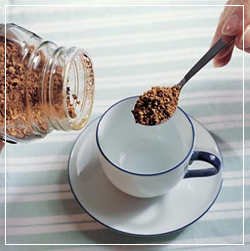
Virtually any green coffee bean—Arabica or Robusta—can be used to make instant coffee, but most production uses standard-grade beans rather than premium lots. Quality control focuses on low moisture (under 12%), minimal defects, and consistent size. While single-origin instant coffees exist, most are blends designed for cost efficiency and flavor balance. Indonesian Robusta, for example, is highly blendable. Roasters typically prioritize beans that are pest-free, uniformly sized, and low in debris. Blending multiple origins helps achieve year-round consistency and reduces risk from climate or supply issues.
2. Roasting the Coffee Beans
Roasting transforms green beans into aromatic, brown coffee beans through carefully controlled heat application. This process involves both physical changes (like bean expansion) and chemical reactions (including the Maillard reaction). Roast levels are categorized as light, medium, or dark, and greatly influence the flavor profile of the final coffee. For instance, lightly roasted Arabica (like washed Typica) shows high acidity and lighter body, while darker roasts develop stronger, deeper flavors with less acidity. Roasting is usually done in horizontal drum roasters (most common), vertical roasters, or fluidized bed systems. A typical batch might roast around 240kg of beans for 10–12 minutes, with internal air temperatures reaching up to 450°C. After roasting, beans must be quickly cooled and processed within days to preserve freshness.
3. Grinding the Coffee
Roasted beans are ground to increase surface area for better extraction. Most grinders are either cutting, impact, or roller types, though some modern systems use frozen grinding to preserve volatile aromas. The grind size is typically fine to medium, balanced for extraction efficiency and handling. Many producers use a two-stage process: coarse crushing followed by fine grinding. Water may be added during grinding to aid the process. Freshness drops quickly post-grinding—flavor lasts just 2–3 days—so extraction must happen soon after.
4. Extracting the Solubles
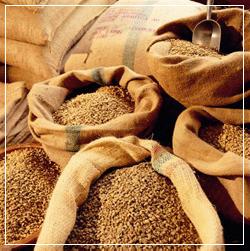
This is the heart of instant coffee production. Extraction pulls both soluble solids and aromatic compounds from the ground coffee using hot water. Most factories use multi-stage percolation systems with 5–8 extraction tanks arranged in sequence. A common 6-tank system moves coffee through tanks in waves: the first tank is empty, the second holds spent grounds, and the sixth is freshly loaded. Water temperatures can reach up to 180°C, though insulation may allow slightly lower settings. Early methods used 100°C water, but yields were poor and resulted in sticky, hard-to-dry powders. Today, higher temperatures improve extraction rates, especially of carbohydrates, resulting in smoother, more stable instant coffee. Extraction yields a liquid with around 25% soluble solids.
5. Separating Aroma and Solubles (Optional Advanced Step)
Some premium processes split extraction into two parts: one at around 120°C to capture volatile aromas (called Aroma), and another at 160°C to extract the rest of the solubles (called Hydrolysate). These are later blended in different ratios to produce various quality grades. A typical base-grade mix might use 20% Aroma and 80% Hydrolysate, while flavored or premium products use 40% Aroma and 60% Hydrolysate or higher.
6. Drying the Extract
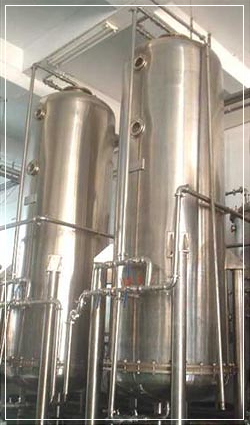
The extracted coffee liquid is dried into powder or granules using either spray drying or freeze drying. Spray drying is more common due to speed and cost, though freeze drying preserves more aroma and results in higher-quality, though more expensive, instant coffee. (Note: this article does not detail the drying methods further but confirms their critical role in final product quality.)
Quality Control in Instant Coffee
The quality of instant coffee is governed by strict standards across several categories:
- Aroma: The most difficult to control, relying on bean selection, roast level, and extraction precision. Aroma dictates much of the final drinking experience.
- Chemical Composition: Includes moisture (must be under 3%), caffeine content (typically 2.5%–5%), and pH (3.5–5.5, important for food product compatibility).
- Physical Properties: Color, density, and particle size distribution affect appearance and dissolve rate. Smaller, more uniform particles dissolve more easily.
- Microbial Safety: Standards limit total plate count (ideally below 30,000/g), coliforms (should be negative), yeast and mold (below 300/g).
Overall, producing high-quality instant coffee requires careful control at every stage—from green bean selection through drying—to ensure a consistent, flavorful, and safe product.
Frequently Asked Questions
What is the main difference between instant coffee and regular coffee?
Instant coffee is made by extracting soluble solids and aromas from brewed coffee, then removing the water to create a dry powder or granules that dissolve instantly in hot water. Regular coffee is brewed directly from ground beans using hot water without removing the water content, resulting in a fresher, more complex cup.
What beans are used to make instant coffee?
Both Arabica and Robusta beans are used, but most instant coffee is made from standard-grade beans rather than premium lots. Many products are blends of Robusta and lower-grade Brazilian Arabica for cost and solubility balance, though higher-quality versions may include more Arabica or single-origin components.
What roast levels are used for instant coffee?
Instant coffee can be made from light, medium, or dark roasted beans. Light roasts preserve acidity and floral notes but result in lighter flavor, while dark roasts offer bolder, deeper tastes with less acidity. The chosen roast impacts the final aroma and solubility of the instant product.
How is instant coffee produced from roasted beans?
After roasting, beans are ground, then hot water is used to extract soluble compounds and aromas. The resulting liquid is separated from the grounds and dried—usually via spray or freeze drying—to produce the final powder or granules. Temperature, grind size, and extraction time all affect the yield and flavor.
Why does instant coffee sometimes taste bad?
Poor taste often comes from low-quality beans, excessive Robusta content, over-roasting, or degradation during extraction and drying. Aroma loss, high moisture, or imbalanced chemical composition can also negatively affect flavor. Premium instant coffees with higher Aroma content and careful processing tend to taste better.
What temperature is used to extract coffee for instant coffee?
Extraction temperatures typically range from 120°C to 180°C. Older methods used 100°C, but modern systems favor higher temperatures to improve extraction efficiency, especially of carbohydrates, leading to better flavor and solubility. Temperatures that are too low result in lower yield and thicker, stickier extracts.
Recommended FrontStreet Coffee Beans for Single-Origin Lovers
For those curious about the origin of single-origin beans that often inspire better-quality instant coffee blends, try FrontStreet’s Ethiopia Yirgacheffe (Gedeb) for bright citrus and floral notes, Jamaica Blue Mountain No.1 (Typica) for balanced chocolate and almond tones, or Brazil Queen Manor (Yellow Bourbon) for creamy peanut and caramel depth. Each offers distinct flavour profiles that highlight the importance of bean origin—something even instant coffee aims to replicate. Freshly roasted within 5 days · Orders placed before 17:00 ship the same day · Next-day delivery across most of Guangdong Province.
FrontStreet Coffee is a long-established specialty coffee roaster in Guangzhou China, selling freshly roasted beans from its own farm in Yunnan as well as dozens of carefully selected single-origin beans from around the world for both pour-over and espresso. The products deliver consistently excellent quality and great value, with shipping within 24 hours. Guangzhou's FrontStreet Coffee shop is recommended by many coffee lovers, and the beans are now available online at the Tmall 。
Important Notice :
前街咖啡 FrontStreet Coffee has moved to new addredd:
FrontStreet Coffee Address: 315,Donghua East Road,GuangZhou
Tel:020 38364473