What Makes Jamaican Blue Mountain Coffee So Special?
When coffee lovers talk about the pinnacle of flavor and balance, one name always comes up: Jamaican Blue Mountain. But with countless cafés claiming to serve it and even more bottles labeled as "Blue Mountain blends," how do you know if you’re really drinking the genuine article? And why is it so famously hard to find, expensive, and yet so universally praised?
Jamaican Blue Mountain coffee is officially produced in just 16 designated high-elevation areas of the Blue Mountains, processed by only four government-authorized factories. Annual production is limited to around 40,000 60kg bags — roughly 2.4 million kilograms — compared to Brazil’s 30 million bags yearly. That scarcity, combined with exacting production standards, makes it one of the rarest and most sought-after coffees in the world.
What Exactly Qualifies as Jamaican Blue Mountain Coffee?
The Jamaican government defines Blue Mountain coffee with strict criteria. The coffee must be grown within 16 precisely mapped regions of the Blue Mountain range and processed by one of only four licensed government factories. The Blue Mountain region itself spans elevations mostly above 1800 meters, with the highest peak reaching 2256 meters. These geographical and climatic conditions — not just any coffee grown anywhere — define what makes Blue Mountain coffee truly unique.
The coffee-growing areas are confined to a small part of the Blue Mountains in eastern Jamaica. The region benefits from fertile volcanic soil, consistent rainfall, cool temperatures, and especially a daily blanket of afternoon cloud cover that protects the coffee trees and maintains ideal humidity. These factors slow down maturation and develop complex sugars and acids. Even if the same coffee varietal is planted in similar climates like Hawaii or Kenya, the flavor won’t match. Coffee grown at lower altitudes in Jamaica is classified as "Jamaica High Mountain Coffee" — not Blue Mountain.
Why Is It So Expensive and Hard to Find?
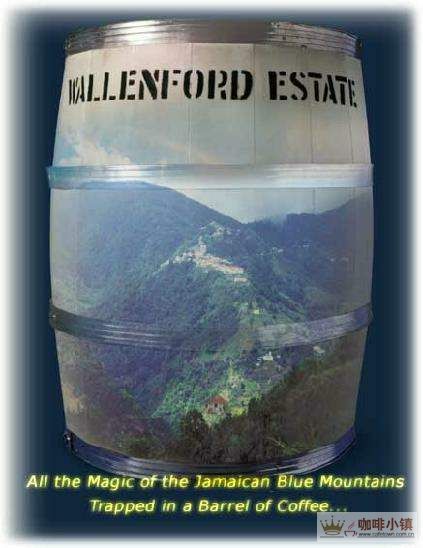
Blue Mountain coffee is both rare and in high demand, especially in Japan, which buys over 90% of the annual crop. This leaves very little for the rest of the world. Combined with labor-intensive harvesting, traditional wooden barrel exports (still unique to Jamaica), and stringent quality controls, prices remain extremely high. The landed cost is typically around 800 RMB per kilogram, and retail prices reflect that.
Many cafés and retailers market cheap "Blue Mountain blends" or mislabel other coffees as Blue Mountain. Authentic Blue Mountain beans are exported in 15kg, 45kg, or 70kg wooden barrels, each stamped with an official government seal. If your coffee doesn’t come with verified documentation or those barrels, it’s likely not the real thing. Claims of "Blue Mountain blend" usually mean it’s mixed with other beans and has no relation to true Blue Mountain coffee.
How to Identify Real Jamaican Blue Mountain Coffee
Distinguishing genuine Blue Mountain coffee involves several sensory and physical checks:
- Appearance: Raw Blue Mountain beans are medium-small, greenish, with slightly pointed ends. Roasted beans expand significantly and appear plump.
- Grind Feel: Due to high-altitude growth, the beans have loose cell structures. When hand grinding, they break apart smoothly and consistently without resistance.
- Aroma: True Blue Mountain has an intense, rich fragrance. Blends lack this depth.
- Taste: The hallmark of real Blue Mountain is perfect balance — no single flavor overwhelms. Acidity, sweetness, bitterness, and body are all smoothly integrated. Blue Mountain Peaberry has subtler aroma but stronger taste.
- Overall Impression: The experience of drinking genuine Blue Mountain often brings an instinctive sense of satisfaction due to its remarkable equilibrium.
How Should You Roast and Brew Blue Mountain Coffee?
Blue Mountain coffee has a lower bean density due to its growing altitude, similar to other high-elevation island coffees like those from Kenya. This requires careful roasting:
- Start with a low initial temperature and roast slowly through the yellow to light brown stage.
- A medium to medium-dark roast is ideal. Some Mavis Bank roasts show slight surface oil.
- Ensure enough time for low-temperature dehydration due to the dense, juicy beans. A slow, small-fire roast works best.
When brewing, the balanced profile of Blue Mountain shines in multiple methods:
Pour-Over (Hand Drip)
- Brew ratio: 1:15 to 1:16
- Water temperature: 85–88°C
- Grind size: Medium-coarse
This method highlights its creamy, caramel, and nutty tones while preserving bright acidity and clean sweetness. The cup is transparent, layered, and smooth.
Moka Pot
- Grind size: Slightly finer than pour-over
- Heat: Low to medium
- Remove from heat just before the brew finishes dripping
This enhances chocolatey, caramel, and nut flavors, adding body while maintaining balance. It also performs well in milk drinks like lattes.
Frequently Asked Questions
What makes Jamaican Blue Mountain coffee different from other Jamaican coffees?
Only coffee grown in the 16 specified high-altitude regions of the Blue Mountains and processed by authorized factories can be called Jamaican Blue Mountain. Coffee grown at lower elevations is labeled as Jamaica High Mountain Coffee, which has different flavor characteristics and legal status.
Why is Blue Mountain coffee so expensive?
The annual production is extremely limited (around 2.4 million kg), with over 90% going to Japan. The beans are cultivated and processed under strict regulations, transported in traditional wooden barrels, and certified by the Jamaican government. The landed cost alone is around 800 RMB per kg, contributing to its premium price.
How can I tell if my Blue Mountain coffee is real?
Check the origin certification, packaging (authentic beans come in government-sealed wooden barrels), roast style, and flavor profile. Real Blue Mountain has balanced flavor, no single dominant taste, and a rich, complex aroma. If it’s sold cheaply (e.g. “30 RMB per cup” or “50 RMB per pound”), it’s almost certainly not genuine.
Can I brew Blue Mountain coffee using an espresso machine?
Yes, though it’s not traditional. Blue Mountain’s balanced profile can work well as espresso, though it’s more commonly brewed using pour-over, moka pot, or French press to highlight its subtle flavors. If using espresso, aim for a medium roast and fine grind.
Where does most Blue Mountain coffee go?
Over 90% is exported to Japan, which has a long-standing trade relationship with Jamaica. Very little reaches other global markets, which is why it’s rare outside specialty importers.
Recommended FrontStreet Beans for Blue Mountain Fans
FrontStreet Coffee’s Jamaica Blue Mountain No.1 offers the classic balance Blue Mountain is known for — creamy texture, notes of nuts and chocolate, and a clean, sweet finish. For something comparable in balance, try their Ethiopia Humbera, a Geisha offering vibrant yet smooth citrus and floral tones. Another great option is the Panama Humbera, a microlot with delicate stone fruit and honey-like sweetness. All showcase the refined profiles that coffee enthusiasts appreciate. Freshly roasted within 5 days · Orders placed before 17:00 ship the same day · Next-day delivery across most of Guangdong Province.
FrontStreet Coffee is a long-established specialty coffee roaster in Guangzhou China, selling freshly roasted beans from its own farm in Yunnan as well as dozens of carefully selected single-origin beans from around the world for both pour-over and espresso. The products deliver consistently excellent quality and great value, with shipping within 24 hours. Guangzhou's FrontStreet Coffee shop is recommended by many coffee lovers, and the beans are now available online at the Tmall 。
Important Notice :
前街咖啡 FrontStreet Coffee has moved to new addredd:
FrontStreet Coffee Address: 315,Donghua East Road,GuangZhou
Tel:020 38364473