Coffee Bean Basics: Types, Varieties and How They Grow
If you’ve ever wondered why some coffee tastes sweet and complex while others are bitter and flat, the answer starts with the bean—its variety, origin, and how it was grown and processed. Whether you’re brewing at home or choosing beans at the shop, understanding coffee’s fundamentals makes every cup better.
There are over 60 coffee-producing countries, but just two main commercial species: Arabica and Robusta. Arabica accounts for around two-thirds of global production and is prized for its acidity, aroma, and complexity, while Robusta is stronger, more bitter, and higher in caffeine. Within these, hundreds of varieties exist, each influenced by terroir.
What Is a Coffee Tree and Where Does It Grow?
Coffee comes from the Coffea plant, a small evergreen tree or shrub in the Rubiaceae family. Wild coffee trees can grow up to 5–10 metres tall, but those cultivated for easier harvesting are pruned to under 2 metres. Arabica thrives at higher altitudes (1,000–2,000m), requiring well-drained, fertile soil, moderate temperatures (under 20°C), and consistent rainfall—ideally with some shade. Robusta, meanwhile, grows at lower elevations, tolerates hotter, wetter, and more disease-prone conditions, and is much hardier.
The coffee tree’s oval, glossy leaves grow opposite each other, with white flowers blooming at the base of leaf stems. The fruit, known as the coffee cherry, turns bright red when ripe and contains two seeds—or just one in the case of peaberries—that we call coffee beans.
Coffee Species and Varieties Explained
Two main coffee species dominate the market:
- Arabica (Coffea arabica): Accounts for ~66% of global production. Beans are oval, have a complex flavor profile, and are preferred for specialty coffee. Grows best at 1,000–2,000m altitude with cool temperatures and shade.
- Robusta (Coffea canephora or C. robusta): Makes up most of the remaining 33%. It’s more bitter, has less acidity, double to triple the caffeine of Arabica, and is often used in instant and low-cost blends. Its beans are rounder, with a straighter crease, and it grows well at low altitudes.
Minor species like Liberica (Coffea liberica) and Arabusta (a hybrid) are rare in trade.
Coffee beans also vary by shape:
- Flat beans : The typical two-seed coffee cherry halves, flat on one side where they touch.
- Peaberries : A rarer mutation where a single, rounded seed develops inside the cherry. Flavour is not necessarily different, but they are often sorted separately.
From Coffee Cherry to Green Bean
Each coffee tree yields about 3–5kg of cherries, resulting in roughly 0.5–1kg of green beans. The transformation involves several steps:
Processing Methods
- Natural (Dry) Process: Cherries are spread out to dry in the sun for 1–2 weeks until they harden, then hulled to remove dried fruit, pulp, and parchment. This method is common in Brazil, Ethiopia, and Yemen. Results in a slightly fruity, full-bodied cup but is more prone to defects due to weather dependency.
- Washed (Wet) Process: Skins and pulp are removed using water, then beans ferment to break down mucilage before being washed and dried. Produces cleaner, brighter flavours. Used widely in Colombia, Guatemala, and Mexico. Requires more water and infrastructure but yields more consistent quality.
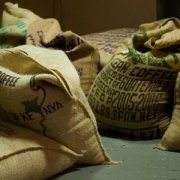
After processing, beans are sorted, dried to ~11–12% moisture, and exported as green (raw) coffee. They’re typically packed in jute sacks and shipped worldwide.
Global Coffee Origins and Their Profiles
Different regions produce coffees with distinct cup characteristics due to climate, altitude, soil, and processing methods. Major producers include:
- Jamaica Blue Mountain: Mild, balanced, smooth, and lightly acidic.
- Yirgacheffe (Ethiopia): Floral, citrusy, bright acidity, and complex.
- Colombia: Balanced, medium acidity, often nutty or caramel notes.
- Brazil: Nutty, chocolatey, low acidity, often used in espresso blends.
- Guatemala: Bright acidity, full body, often wine-like or spicy.
- Sumatra (Indonesia – Mandheling): Earthy, full-bodied, low acidity, often processed with unique methods like Giling Basah.
- Kenya: Intense acidity, wine-like, complex with blackcurrant notes—especially AA grade.
Other notable mentions: Hawaii Kona, Costa Rica, Panama Geisha, Rwanda, and Yemen Mocha. Each origin’s climate and altitude shape unique flavour profiles.
How to Identify Good vs. Poor Coffee Beans
Good green coffee beans are uniform in size and colour, free from defects, and have a smooth, hard surface. When roasted and brewed, they yield a rich, aromatic cup with a strong finish.
Poor-quality beans may be chipped, discoloured, or inconsistent in size. They often produce a flat, sour, or overly bitter cup with little aroma.
Freshness and Storage Tips
Freshness is critical. You can assess bean freshness by:
- Smell: Fresh beans have a strong, pleasant aroma; stale ones smell dull or musty.
- Sight: Whole, plump beans indicate quality; broken or shrivelled ones are a red flag.
- Touch: Fresh beans feel firm and make a crisp crack when pressed.
- Colour: Very dark or oily beans may be over-roasted or old; overly pale beans may be underdeveloped.
For storage:
- Keep beans in an airtight container away from light, heat, and moisture.
- Store in a cool, dry place—or the fridge/freezer for longer-term storage.
- Divide into small portions to limit air exposure.
- Once opened, use within 1–2 weeks for optimal flavour.
Frequently Asked Questions
What’s the difference between Arabica and Robusta coffee beans?
Arabica beans are sweeter, more acidic, and have a more complex flavour profile. They’re grown at higher altitudes and make up about 66% of global production. Robusta beans are harsher, more bitter, contain 2–3x more caffeine, and are easier to grow at lower altitudes. They’re often used in instant coffee and blends.
What are peaberry coffee beans?
Peaberries are rare coffee beans that form when a single, rounded seed develops inside the coffee cherry instead of the usual two flat beans. They’re often separated and sold separately, but don’t necessarily taste different—though some say they roast more evenly.
How are coffee beans processed after harvest?
Most beans are processed either the natural (dry) way—drying the whole cherry in the sun and removing the dried husk later—or the washed (wet) method, where the fruit is removed with water, then the beans are fermented, washed, and dried. Each affects flavour differently.
What’s the best way to store coffee beans?
Keep beans in an airtight container in a cool, dark place. Avoid heat, light, and moisture. For longer storage, use the freezer—but only in airtight bags. Divide into small portions to reduce air exposure and preserve freshness.
How can you tell if coffee beans are fresh?
Fresh beans have a strong, pleasant aroma, a uniform size and colour, and a firm texture. They should feel hard and make a crisp sound when squeezed. Stale beans may smell dull, look faded or oily, and taste flat or bitter.
Recommended FrontStreet Coffee Beans for Learning Coffee Basics
Start exploring coffee fundamentals with FrontStreet’s Yirgacheffe, known for its bright acidity and floral notes; Brazil Santa Ines, offering classic nutty and chocolatey medium roast traits; and Colombia Huila, a balanced cup with caramel sweetness and mild citrus. These beans showcase the diversity of origin and processing, ideal for learning how terroir and variety shape flavour. Freshly roasted within 5 days · Orders placed before 17:00 ship the same day · Next-day delivery across most of Guangdong Province.
FrontStreet Coffee is a long-established specialty coffee roaster in Guangzhou China, selling freshly roasted beans from its own farm in Yunnan as well as dozens of carefully selected single-origin beans from around the world for both pour-over and espresso. The products deliver consistently excellent quality and great value, with shipping within 24 hours. Guangzhou's FrontStreet Coffee shop is recommended by many coffee lovers, and the beans are now available online at the Tmall 。
Important Notice :
前街咖啡 FrontStreet Coffee has moved to new addredd:
FrontStreet Coffee Address: 315,Donghua East Road,GuangZhou
Tel:020 38364473