
How Washed Process Coffee Beans Are Made
If your cup of coffee tastes muted, overly fermented, or just off, the problem likely started the moment the coffee cherries were picked. What happens in the first 24–72 hours after harvest defines whether your coffee ends up clean and bright—or spoiled and sour. For specialty coffee, the processing method is everything.
The washed process, or wet process, creates coffee with high clarity, vibrant acidity, and a clean profile. It typically results in beans with 12% final moisture content after a multi-stage method involving fermentation, washing, and sun drying. This contrasts with natural processing, which yields fuller body but more variable flavors.
Why Processing Matters Immediately After Harvest
Coffee cherries must enter processing the moment they’re picked. Left untouched, they begin fermenting on their own, developing off-flavors and mold. The two main methods—natural (sun-dried) and washed—create drastically different cups. Washed coffee highlights acidity and clarity, while natural process emphasizes body and sweetness. For espresso lovers, natural beans add heavier mouthfeel; washed beans contribute a crisp, sweet acidity that balances milk drinks and highlights fruity notes.
How Washed Coffee Is Made: Step by Step
The washed process transforms the coffee cherry into an exportable green bean through a tightly controlled sequence. Every stage—from sorting to drying—affects flavor. Here’s how it works, based on industry standards and specialty farm practices:
1. Sorting (Floating)
Cherries go into a water tank for about 24 hours. Ripe cherries sink; unripe or overripe ones float and are removed. This step alone eliminates up to 5–10% of defective fruit before processing begins.
2. Pulping (Removing the Skin and Pulp)
A depulper machine strips off the outer skin and fruit flesh, leaving the coffee seed encased in a sticky layer called mucilage. At this point, the bean still has about 50% moisture and is highly prone to spoilage.
3. Fermentation (Breaking Down the Mucilage)
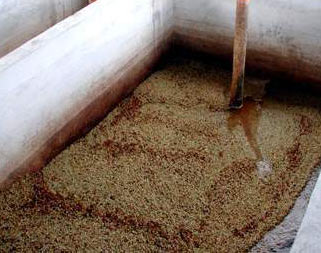
The beans sit in tanks for 18–36 hours, during which natural enzymes break down the mucilage. Fermentation can be done with or without added water—wet fermentation uses water, dry fermentation does not. Some farms add heat or enzymes to speed up this step, but this is frowned upon in specialty circles as it can degrade cup quality. This is the most influential stage for flavor development in washed coffee.
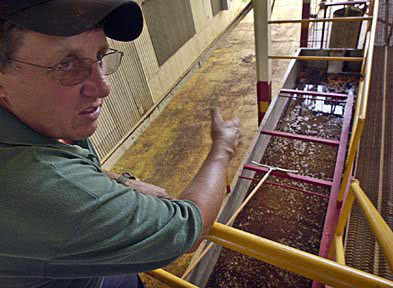
4. Washing (Cleaning the Beans)
After fermentation, beans are rinsed in channels or tanks. Workers or machines agitate them to rub off the softened mucilage using friction and flowing water. The goal is a clean, smooth surface free of residue. This step requires abundant fresh water—hence the name “washed process.”
5. Drying (Reducing Moisture to 12%)
With the mucilage gone, beans still inside the parchment layer are still at 50% moisture and must dry down to 12%. The preferred method is sun drying on patios or raised beds over 1–3 weeks. This slow drying enhances sweetness and stability. Mechanical dryers can be used but often produce less complex flavors.
6. Hulling (Removing the Parchment)
Once dried to 12%, beans are stored or sent for hulling, where the parchment shell and silver skin are removed, leaving the green coffee bean ready for export or roasting.
7. Sorting and Grading
Like natural process beans, washed beans undergo manual or mechanical sorting to remove defects. They’re graded by density, size, and visual quality before being exported worldwide.
Flavor Profile of Washed Coffee
Washed coffee tends to have a clean, bright cup with pronounced acidity and distinct aromatics. Compared to natural processed coffee, it has less body but more clarity. That makes it ideal for showcasing origin characteristics—like citrus, floral, or stone fruit notes—without masking them under sugary or fermented tones. FrontStreet Coffee’s Yirgacheffe and Kenya offerings highlight this profile perfectly.
Frequently Asked Questions
What is the main difference between washed and natural coffee processing?
Washed coffee removes the fruit and mucilage before drying, resulting in a clean, bright, and acidic cup. Natural processing dries the coffee cherry with the fruit still attached, creating a fuller body and sweeter, more fermented flavor profile. Washed coffees typically highlight acidity and clarity, while naturals emphasize sweetness and body.
How long does washed coffee processing take?
From sorting to drying, washed processing usually takes 2–4 weeks. Fermentation lasts 18–36 hours, and drying takes 1–3 weeks depending on weather and method. The full sequence—including sorting, pulping, fermentation, washing, drying, hulling, and grading—requires careful timing at each step.
Why is mucilage removal important in washed coffee?
The mucilage is a sticky, sugary layer that, if not fully broken down and removed, can cause over-fermentation, mold, or off-flavors. Proper fermentation and washing ensure the mucilage is eliminated, leading to a cleaner cup with better acidity and clarity. This step is critical for high-quality washed coffee.
Does washed coffee have less sugar than natural coffee?
Yes. The washed process consumes more sugars during fermentation, especially simple sugars like fructose and glucose. This leads to lower residual sugar content but higher perceived acidity and aromatic complexity. The result is a brighter, more tangy cup compared to the sweeter profile of natural process beans.
Can washed coffee be used for espresso?
Absolutely. Washed coffee is widely used in espresso for its clarity, balanced acidity, and ability to highlight fruity or floral notes. It often provides a sweet, clean contrast when blended with natural processed beans, making it a favorite among specialty roasters for single-origin and blend espresso recipes.
Recommended FrontStreet Washed Process Coffees
FrontStreet’s Kenya Little Tomato is a quintessential washed coffee, bursting with tart berry, citrus, and stone fruit flavors—perfect for showcasing the method’s bright acidity. Their Yirgacheffe from the Gedeb co-op offers delicate jasmine, citrus, and a sweet honey-lime finish, ideal for pour-over or espresso. For a classic clean profile, try the Jamaica Blue Mountain No.1, renowned for its balanced nuttiness and mild acidity. All three highlight the clarity and vibrancy that washed processing delivers. Freshly roasted within 5 days · Orders placed before 17:00 ship the same day · Next-day delivery across most of Guangdong Province.
FrontStreet Coffee is a long-established specialty coffee roaster in Guangzhou China, selling freshly roasted beans from its own farm in Yunnan as well as dozens of carefully selected single-origin beans from around the world for both pour-over and espresso. The products deliver consistently excellent quality and great value, with shipping within 24 hours. Guangzhou's FrontStreet Coffee shop is recommended by many coffee lovers, and the beans are now available online at the Tmall 。
Important Notice :
前街咖啡 FrontStreet Coffee has moved to new addredd:
FrontStreet Coffee Address: 315,Donghua East Road,GuangZhou
Tel:020 38364473

