
The 3 Stages of Coffee Roasting and Their Key Features
Ever wondered why two batches of the same green coffee can taste wildly different? The secret isn’t in the beans alone—it’s in how they’re roasted. Roasting transforms hard, flavorless seeds into aromatic, complex coffee, but it’s easy to mess up. Here’s how pros control heat, time, and airflow to craft your perfect cup.
The entire roasting process can be divided into three essential stages: drying (removing moisture), Maillard/caramelization (developing flavor compounds through heat and pressure), and cooling (locking in those flavors fast). Each phase lasts minutes but determines whether your coffee tastes sour, balanced, or burnt.
Stage 1: Drying—Setting the Foundation
Roasting doesn’t start with flavor—it starts with moisture. Green coffee beans are about 10–12% water, and that water needs to go before heat can work its magic. In the drying phase, the beans absorb heat, and their internal moisture slowly evaporates. This is when the color shifts from green to yellow or light brown, and you might catch a faint grassy aroma. The silver skin (chaff) begins to loosen. This phase takes roughly half the total roast time—often around 10 minutes—and it’s crucial because water is a great heat conductor, helping to evenly warm the bean’s interior. Roasters carefully control the rate of evaporation to avoid cracking the bean’s structure too early. Typically, moisture reaches boiling point and turns to steam around the 10-minute mark, allowing internal heat to build and push outward.
Stage 2: High-Temperature Reactions—Flavor Creation
Once most moisture is gone, the real chemistry kicks in. Around 160°C (320°F), the remaining water turns to gas and bursts out, marking the start of the Maillard reaction and caramelization. The beans switch from absorbing heat to releasing it, creating high internal pressure (up to 25 atmospheres). This pressure, combined with heat, breaks down the bean’s cellular structure and forms new flavor compounds. The first crack (a audible popping sound) usually occurs soon after, signaling the shift to visible browning. As roasting continues, the beans stay under intense heat, flipping between releasing and absorbing energy. By around 190°C (374°F), the pressure dynamics shift again, and the beans deepen from light brown to dark brown. This is the gateway to darker roasts, where further heat leads to more intense breakdowns and the precursor to second crack.

Stage 3: Cooling—Locking in Flavor
Stop the roast at the right moment, then stop the heat immediately—or you’ll burn away the flavors you just built. Cooling halts the Maillard reactions and locks in the desired taste profile. If left hot, the beans will keep cooking and lose aromatic compounds. There are two main cooling methods. Air cooling is fast and common in pro setups: large roasters drop beans onto a tray with a rotating arm, and powerful fans blow cold air over them, cooling the batch in 3–5 minutes. Water cooling, slower but cleaner, sprays a fine mist on the beans to drop temperatures quickly. It’s favored by specialty roasters for preserving subtlety, though it adds slight weight and requires precise water control. Most home or small-batch roasters stick to air cooling to avoid dilution.
Roast Levels and Their Flavor Profiles
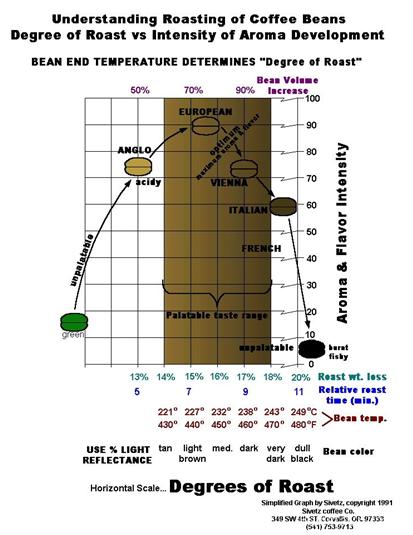
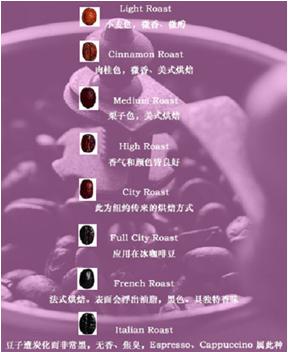
Lighter roasts preserve the bean’s inherent acidity and origin traits; darker roasts amplify bitterness and reduce acidity. The ideal roast level depends on the coffee’s origin and density. Here’s how standard roast levels break down:
- Light Roast (Light): Underdeveloped, often with grassy or raw flavors. Rarely used for drinking, mostly for testing.
- Cinnamon Roast (Cinnamon): Light brown, very acidic, with a sharp tang. Popular in parts of the U.S. West.
- Medium-Light Roast (Media): Slightly deeper, balancing origin flavors with mild acidity. Good for blends.
- Medium Roast (High): Balanced acidity and bitterness, typical for beans like Blue Mountain or Kilimanjaro. Favored in Japan and Scandinavia.
- City Roast (City): More bitter than acidic, with distinct aromas. Great for Colombian and Brazilian beans; loved in New York.
- Full City Roast (Full City): Low acidity, strong bitterness, often with hidden sweetness. Ideal for iced coffee, preferred in Central and South America.
- French Roast (French): Dark with oily surfaces, intense bitterness and thickness. Used for espresso or stove-top brewing.
- Italian Roast (Italian): Deepest roast, shiny black beans with heavy oil and smoky bitterness. Common for espresso machines; bean origins become hard to distinguish.
Frequently Asked Questions
How long does each stage of coffee roasting typically last?
The drying stage takes roughly 10 minutes (about half the total roast time), high-temperature reactions start around 160°C and continue through to around 190°C (several minutes), and cooling is done in 3–5 minutes using either air or water methods. Exact timings vary by roast style and equipment.
What happens during the first crack in coffee roasting?
The first crack occurs around 160°C to 190°C, when internal pressure causes the bean to expand and make an audible pop. It signals the shift from light to medium roast levels and the start of visible browning, driven by Maillard reactions and released pressure.
Does cooling method affect the final coffee flavor?
Yes. Air cooling (fast, with fans) and water cooling (slower, with mist) both stop the roast’s chemical reactions, but water cooling can better preserve subtle flavors. Air cooling is more common in commercial settings for speed, while water cooling is preferred by specialty roasters for clarity.
Why is moisture removal important in the drying stage?
Moisture is a heat conductor that helps evenly distribute warmth inside the bean. Removing it slowly (over ~10 minutes) ensures the inner structure heats properly without cracking, setting up the bean for even development of flavor and aroma compounds in later stages.
What’s the difference between city and full city roast?
City roast has more bitterness than acidity, with distinct aromas and little to no sourness—ideal for beans like Colombian or Brazilian. Full city roast is darker, with almost no acidity, stronger bitterness, and sometimes a touch of sweetness, often used for iced coffee in South and Central American styles.
Recommended FrontStreet Beans for Roast Exploration
Try FrontStreet Coffee’s Ethiopia Yirgacheffe for bright, floral notes in lighter roasts; their Colombia Huila showcases balanced acidity and chocolate in medium roasts; and their Sumatra Mandheling reveals deep, spicy profiles in darker roasts. These beans highlight how roast level shapes flavor. Freshly roasted within 5 days · Orders placed before 17:00 ship the same day · Next-day delivery across most of Guangdong Province.
FrontStreet Coffee is a long-established specialty coffee roaster in Guangzhou China, selling freshly roasted beans from its own farm in Yunnan as well as dozens of carefully selected single-origin beans from around the world for both pour-over and espresso. The products deliver consistently excellent quality and great value, with shipping within 24 hours. Guangzhou's FrontStreet Coffee shop is recommended by many coffee lovers, and the beans are now available online at the Tmall 。
Important Notice :
前街咖啡 FrontStreet Coffee has moved to new addredd:
FrontStreet Coffee Address: 315,Donghua East Road,GuangZhou
Tel:020 38364473

