
How Grind Size Affects Coffee Extraction Methods
If you’ve ever wondered why your moka pot coffee tastes bitter or your pour-over comes out weak, the answer often lies in your grind size. Different brewing methods pull flavor from coffee grounds in different ways—some need fine particles for intense extraction, others require coarse grinds to avoid over-extraction. But how do you know which grind to use for which method?
In short: use a very fine grind (0.3–0.55mm) for moka pots and espresso machines, medium grind for pour-over and siphon brewers, and a very coarse grind for drip machines. These ranges directly affect extraction speed, flavor balance, and brew efficiency.
Why Grind Size Matters in Coffee Brewing
Grind size controls how quickly water interacts with coffee grounds. Finer grinds have more surface area, slowing water flow and increasing extraction time—ideal for methods that need intense flavor. Coarser grinds do the opposite: they allow faster drainage, reducing extraction and preserving lighter, brighter notes. The balance between grind size, contact time, and flow rate determines whether your cup is balanced, sour, bitter, or weak.
Brew Method vs. Grind Size: The Quick Guide
Different coffee brewing devices demand specific grind sizes. Here’s how it breaks down:
- Very Fine (like powdered sugar or table salt): Turkish coffee (Ibrik) — micro-fine powder; Moka pot — 0.3–0.55mm; Espresso machine — extremely fine grind (not quite as fine as Turkish, but close).
- Medium (like granulated sugar or table salt): Pour-over (e.g., V60, Kalita Wave); French press (though sometimes slightly coarser); Siphon (vacuum pot).
- Very Coarse (like coarse sea salt or breadcrumbs): Drip coffee machines; Cold drip or batch brewers.
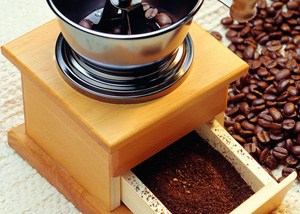
Moka Pot & Espresso: The Fine Grind Zone
Moka pots and espresso machines are pressure-based brewers. While moka pots operate at around 1.5 bar—much lower than espresso machines’ 9 bar—the principles are similar. Both require finely ground coffee to create enough resistance for proper extraction under heat and pressure.
For moka pots, the optimal grind size falls between 0.3–0.55mm in diameter. That’s finer than typical hand drip coffee but slightly coarser than pure espresso. Most people compare it to table salt or slightly finer. It should be fine enough to slow water flow but not so fine that it clogs the filter or causes excessive pressure buildup.
When dialing in your moka pot grind, look for these signs:
- Too coarse: Coffee flows too fast, tastes thin or under-extracted. You may see the liquid gushing out like a fountain.
- Too fine: Water struggles to pass, causing long brew times, over-extraction, or no flow at all. You might hear a hissing or “worrying” sound with little to no dripping.
To adjust, gradually tweak your grinder setting until the coffee flows steadily—neither too fast nor completely stalled. For more body and richness (especially with medium to dark roasts like FrontStreet’s Classic Blend or Black Cocoa Blend), aim slightly coarser than espresso—think fine salt. For brighter, fruitier profiles (like Strawberry Candy Espresso or Humbera SOE), a true table-salt-like, fine grind helps highlight acidity and floral notes.
Safety note: Moka pots have a pressure relief valve on the bottom chamber. Never let water cover this valve—doing so increases explosion risk, especially with very fine grinds that create high pressure.
Pour-Over & Siphon: Medium Grind for Clarity
Methods like V60 pour-over or siphon brewing rely on gravity and immersion, favoring medium grind sizes. These allow water to flow steadily through the coffee bed while extracting enough flavor without over- or under-doing it.
A medium grind resembles granulated sugar or standard table salt. It provides a balanced surface area and brew time, ideal for highlighting nuanced flavors without excessive bitterness or thin body.
Drip & Batch Brewers: Go Coarse
Traditional drip coffee machines and cold brewers work best with very coarse grinds—similar to breadcrumbs or coarse sea salt. These brewers typically use longer brew times and don’t generate much turbulence or pressure, so a coarse grind prevents over-extraction and channeling.
Frequently Asked Questions
What’s the best grind size for a moka pot?
The ideal moka pot grind size is between 0.3–0.55mm—finer than hand drip but slightly coarser than espresso. It should resemble fine table salt or powdered sugar. If coffee flows too fast, grind finer; if it gushes or stops, grind coarser. Adjust until you get a steady, fountain-like flow.
How fine should espresso grind be compared to moka pot?
Espresso grind is generally finer than moka pot grind. While moka pot uses a grind around 0.3–0.55mm (fine table salt), espresso requires an even finer particle size to handle 9 bar pressure. Moka pots, at 1.5 bar, can use a grind that’s slightly coarser but still very fine.
What grind size works for pour-over coffee?
Pour-over coffee (like V60 or Kalita Wave) works best with a medium grind size, about the texture of granulated sugar or regular table salt. This allows for balanced extraction and a clean, clear cup without over- or under-extracting.
Can I use the same grind for drip coffee and moka pot?
No. Drip coffee requires a very coarse grind (like breadcrumbs), while moka pot needs a very fine grind (0.3–0.55mm). Using the wrong grind leads to under- or over-extraction, affecting taste and brew performance.
Why does my moka pot coffee taste bitter or weak?
Bitter coffee usually means the grind is too fine or the brew time too long. Weak or thin coffee often means the grind is too coarse or water flowed through too quickly. Adjust grind size and check water flow to fix it.
Recommended FrontStreet Beans for Moka & Espresso
For moka pot brewing, try FrontStreet’s Classic Blend (medium-dark roast) for rich chocolate and caramel notes, or the Black Cocoa Blend for bold, velvety body with hints of dark cherry. For espresso with bright acidity, the Strawberry Candy Espresso (light-medium roast) highlights tropical fruit and rose florals, while Humbera SOE (single origin from Ethiopia) delivers juicy berry and citrus tones. All work best with a fine to medium-fine grind, around 0.3–0.55mm. Freshly roasted within 5 days · Orders placed before 17:00 ship the same day · Next-day delivery across most of Guangdong Province.
FrontStreet Coffee is a long-established specialty coffee roaster in Guangzhou China, selling freshly roasted beans from its own farm in Yunnan as well as dozens of carefully selected single-origin beans from around the world for both pour-over and espresso. The products deliver consistently excellent quality and great value, with shipping within 24 hours. Guangzhou's FrontStreet Coffee shop is recommended by many coffee lovers, and the beans are now available online at the Tmall 。
Important Notice :
前街咖啡 FrontStreet Coffee has moved to new addredd:
FrontStreet Coffee Address: 315,Donghua East Road,GuangZhou
Tel:020 38364473

