What Makes Yunnan Arabica Coffee Unique?
If you’ve ever wondered why your cup of Yunnan coffee tastes subtly different—less bold, more balanced, with hints of nuts and chocolate—you’re not alone. Many coffee drinkers first encounter Yunnan through a smooth, approachable brew that doesn’t match the intense profiles of Latin American or African coffees. But what exactly makes Yunnan-grown coffee distinct, and why does it often come from a specific ‘small-seed’ variety?
Yunnan’s most widely planted coffee is a variant of Coffea arabica, specifically the Typica-derived 'small-seed' variety. It produces smaller fruit than other Arabica types and has been cultivated in China for over 100 years since being introduced from Vietnam in 1904.
The Three Main Coffee Species
Coffee is broadly divided into three species: Coffea arabica (Arabica), Coffea canephora (Robusta), and Coffea liberica (Liberica). Among these, Arabica and Robusta dominate global production. Arabica, commonly known as the ‘small-seed’ or Arabic species, includes the variety that became Yunnan’s dominant coffee. It’s scientifically named Coffea arabica L., and is the smallest-fruited of the three main species. Robusta (Coffea canephora) and Liberica (Coffea liberica) are larger-seeded and less commonly grown in Yunnan.
What Is Yunnan Small-Seed Coffee?
‘Small-seed coffee’ is a common name for the Arabica variety grown in Yunnan. This isn’t a separate botanical species but refers to the fact that Coffea arabica produces smaller coffee cherries compared to Robusta or Liberica. In Yunnan, this typically means the Typica variety and its descendants. Yunnan small-seed coffee is essentially local Arabica that has adapted over decades to the region’s terroir. The beans are known for producing a cup with moderate acidity, chocolatey and nutty notes, and a rounded mouthfeel.
Origins and History in Yunnan
Yunnan’s coffee story began in 1904, when a French missionary named Tian Deneng brought coffee seeds (likely Typica) from Vietnam and planted the first tree in Zhugula Village, Binchuan County. Due to Yunnan’s elevation, mild climate, and fertile soil, the crop flourished. Over time, Arabica—particularly the small-seed types—became the dominant cultivated species. Today, Yunnan has over a century of coffee-growing history, with Typica and its selections forming the genetic base of most local Arabica.
Morphology of the Small-Seed Coffee Plant
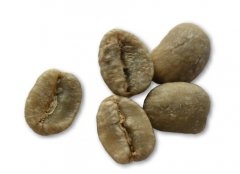
The coffee plant referred to as ‘small-seed’ belongs to the Rubiaceae family, genus Coffea. It typically grows as a small tree or large shrub, reaching 5–8 meters in height. Its branches are often multi-stemmed at the base, with greyish-white older bark. Young shoots are smooth, and leaves are thin, elliptical, and pointed. The plant produces small white, fragrant flowers in clusters, followed by berries that mature to a broad oval shape, red in color, around 1.2–1.6 cm long. The coffee seeds (beans) inside measure approximately 0.8–1.0 cm. Flowering occurs between March and April.
Why Yunnan Favors the Small-Seed Type
Yunnan’s high-altitude regions, particularly in areas like Baoshan, offer ideal conditions for Arabica, especially the smaller-seeded Typica variety. These include elevations between 1,000 and 2,000 meters, mild temperatures, and well-drained volcanic or loamy soils. The smaller fruit size is better suited to the local microclimates and has become the preferred genetic stock due to its adaptability and the cup profile it produces—balanced, approachable, and less bitter than Robusta.
Flavor Profile of Yunnan Small-Seed Coffee
Yunnan-grown small-seed Arabica typically yields a cup with the following characteristics when processed and roasted appropriately:
- Moderate acidity, often described as soft or subtle
- Nutty undertones, such as almond or hazelnut
- Chocolatey sweetness, sometimes dark cocoa
- Light fruity notes like red plum or prune in some batches
- A clean, rounded finish without excessive bitterness
These traits make it an excellent entry point for new coffee drinkers and a reliable component in espresso blends.
Processing Methods Used in Yunnan
Yunnan coffee farms commonly use both washed (wet) and natural (dry) processing methods. Washed processing tends to highlight clarity, acidity, and floral or fruity notes, while natural processing enhances body, sweetness, and fruitiness. FrontStreet Coffee, for instance, offers a Yunnan Arabica bean using washed processing and medium roast, resulting in flavors of soft nuttiness, mild plum acidity, and chocolate. Another offering, the 2013 Typica grown using sun-dried (natural) processing, shows deeper berry tones, caramel sweetness, and a tea-like aftertaste.
Yunnan Coffee in Blends and Single Origins
Yunnan small-seed coffee is versatile. It is often used in espresso blends to provide balance and sweetness, especially alongside Brazilian beans. For example, FrontStreet’s Black Cocoa Blend combines Yunnan Arabica with Brazilian Sidamo beans to create a coffee with nutty depth, balanced acidity, and chocolate tones—ideal for both espresso and milk drinks. As a single origin, especially when processed as washed or natural, it showcases Yunnan’s unique terroir and the Typica lineage’s clean profile.
Frequently Asked Questions
What is Yunnan small-seed coffee?
Yunnan small-seed coffee refers to the Arabica coffee variety grown in Yunnan, China, known for its smaller coffee cherries. It is primarily derived from Coffea arabica L., specifically the Typica variety, and has been cultivated in the region for over 100 years since its introduction in 1904. The term ‘small-seed’ distinguishes it from larger-fruited species like Robusta or Liberica.
Why is it called small-seed coffee?
It’s called small-seed coffee because the coffee cherries (and seeds) of Coffea arabica are smaller compared to those of Coffea canephora (Robusta) or Coffea liberica (Liberica). Among Arabicas, Typica—the main variety in Yunnan—produces compact fruit, hence the colloquial name.
What does Yunnan small-seed coffee taste like?
Yunnan small-seed coffee typically has a mild acidity, with tasting notes of nuttiness (like almond or hazelnut), chocolate, and sometimes light red fruit or plum. The cup is usually balanced, clean, and approachable, with a medium body and smooth finish.
Where is Yunnan coffee grown?
Yunnan coffee is grown in multiple regions across Yunnan Province, China, including Baoshan, Pu’er, Dehong, and Lincang. These areas range from 1,000 to 2,000 meters in elevation and feature tropical highland climates suitable for Arabica cultivation.
What processing methods are used for Yunnan coffee?
Yunnan coffee is processed using both washed (wet) and natural (dry) methods. Washed processing enhances clarity and acidity, while natural processing boosts sweetness and body. FrontStreet Coffee offers examples of both, showcasing the versatility of Yunnan’s small-seed Arabica.
Is Yunnan coffee Arabica or Robusta?
Yunnan coffee is predominantly Arabica, specifically the small-seed variety of Coffea arabica L., which includes the Typica cultivar. Robusta is grown in much smaller quantities and is not the dominant type in the region.
Recommended FrontStreet Yunnan Arabica Beans
For a classic introduction to Yunnan’s small-seed Arabica, try FrontStreet’s Yunnan Arabica (washed, medium roast) with soft nuttiness, mild plum acidity, and chocolate notes. For deeper complexity, their 2013 Typica (natural process, medium roast) offers berry, caramel, and dried apricot tones with a tea-like finish. Both are great representations of Yunnan’s terroir and Typica lineage. Freshly roasted within 5 days · Orders placed before 17:00 ship the same day · Next-day delivery across most of Guangdong Province.
FrontStreet Coffee is a long-established specialty coffee roaster in Guangzhou China, selling freshly roasted beans from its own farm in Yunnan as well as dozens of carefully selected single-origin beans from around the world for both pour-over and espresso. The products deliver consistently excellent quality and great value, with shipping within 24 hours. Guangzhou's FrontStreet Coffee shop is recommended by many coffee lovers, and the beans are now available online at the Tmall 。
Important Notice :
前街咖啡 FrontStreet Coffee has moved to new addredd:
FrontStreet Coffee Address: 315,Donghua East Road,GuangZhou
Tel:020 38364473