How to Make Ice Drip Coffee at Home
If you’ve ever taken a sip of iced coffee only to recoil from the sour bitterness or faded aroma, you’re not alone. Many coffee lovers find traditional iced or cold brew too sharp or muted. But there’s another way—ice drip coffee—that produces a clean, smooth cup with complex aromas intact. It’s not just a novelty; it’s a method that highlights clarity and subtle sweetness without overwhelming your palate.
The short answer? To make high-quality ice drip coffee at home, aim for a slow drip rate of 40–50 drops per minute. Brewing 1000 ml typically takes 5 to 8 hours, ideally started in the evening for a fresh morning cup. This slow extraction preserves delicate aromatics and reduces acidity and caffeine, resulting in a uniquely refined cold coffee.
What Is Ice Drip Coffee and Why Does It Taste Different?
Ice drip coffee, sometimes called Dutch coffee, is a cold extraction method where melted ice water slowly drips through ground coffee. Unlike immersion cold brew or flash iced espresso, this technique uses gravity and time to extract flavour molecule by molecule. Because the water is cold—just above freezing—and the process is slow, fewer acidic compounds and volatile aromatic oils are pulled out. That means less perceived sourness and a more stable, nuanced cup.
Cold temperatures also slow down caffeine extraction, making the final cup lower in caffeine than hot-brewed counterparts. And since less aroma evaporates during the process, more of the coffee’s intrinsic scents remain intact. That’s why some enthusiasts call it ‘stomach-friendly coffee’—it’s smoother, gentler on digestion, and keeps more of the coffee’s intended fragrance.
How Ice Drip Brewing Works: Step-by-Step
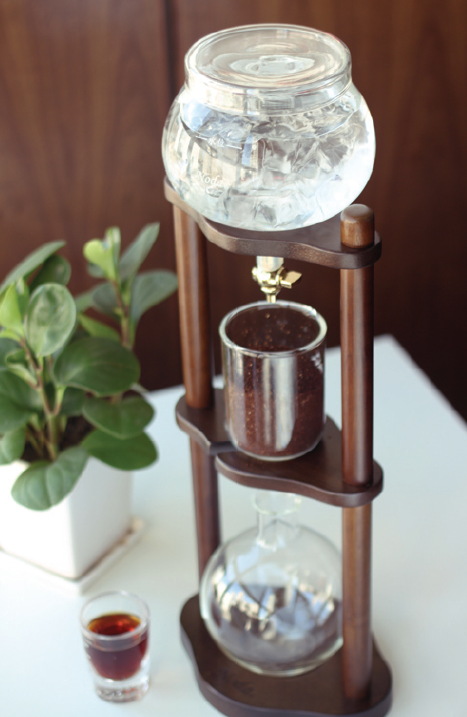
To brew ice drip coffee, you’ll need a specialised three-chambered glass or plastic drip tower—commonly called an ice drip kettle or Dutch coffee maker. It consists of an upper chamber for ice water, a middle chamber holding the coffee grounds, and a bottom chamber that collects the finished brew.
Here’s how to do it:
- Start with clean filtered water, preferably chilled or combined with ice. Do not use tap water unless it’s properly filtered—bad water ruins the results, especially in a slow extraction like this.
- Assemble the drip tower. Place ice water in the upper chamber, then close the valve to stop flow temporarily.
- Put the empty bottom collection chamber in place under the coffee-filled middle chamber.
- In the middle chamber, lay a filter paper at the base. Add your freshly ground coffee—medium-fine to medium grind is ideal—and level it gently with a spoon or finger. Place another filter paper on top to keep grounds stable.
- Open the valve and adjust the drip speed. For best results, aim for 40–50 drops per minute. At this rate, extracting 1000 ml of coffee will take roughly 5 to 8 hours. Many home brewers start the process at night so it’s ready in the morning.
- Once all the ice water has dripped through, remove the bottom chamber and enjoy your coffee immediately—or store it properly for later.
How to Store and When to Drink Ice Drip Coffee
Ice drip coffee tastes best when allowed to rest and mature slightly. For optimal flavour, transfer the brewed coffee to a sealed bottle and refrigerate. The flavours peak between day 3 and day 7, developing complex, wine-like layers. During this window, you might notice a rounded sweetness, enhanced fruitiness, or even tea-like notes depending on your beans. It remains good for up to about two weeks, though the brightest qualities start to fade after the first week.
This slow-aged quality is part of what earns it the poetic nickname ‘ice drip sake coffee’ in some circles—a nod to its evolving depth.
Common Mistakes to Avoid
- Don’t use unfiltered tap water. Impurities become far more noticeable in slow extractions.
- Don’t rush the drip rate. Going faster than 50 drops per minute leads to over-extraction, bitterness, or muddiness.
- Don’t ignore grind size. Too fine a grind can clog the filter and slow extraction unpredictably; too coarse and you’ll under-extract.
- Don’t brew in a hot room. Ambient heat can melt ice too quickly, raising water temperature and altering extraction balance.
- Don’t open the valve too wide or too narrow—fine-tune it to hit that ideal 40–50 drops per minute.
Why Ice Drip Coffee Is Easier on the Stomach
Because ice drip coffee extracts fewer acids and bitter large molecules—especially those dissolved more readily in hot water—it tends to be smoother and less irritating to sensitive stomachs. The lower temperature also limits the release of certain compounds that can trigger acid reflux or digestive discomfort. Combined with its naturally lower caffeine content, many coffee drinkers report that ice drip coffee sits easier in their gut than espresso or even traditional filter coffee.
Frequently Asked Questions
What is the ideal drip rate for ice drip coffee?
The recommended drip rate is 40–50 drops per minute. This slow speed ensures even extraction and helps preserve the coffee’s delicate aromas while minimising acidity and bitterness. At this rate, 1000 ml of coffee typically takes 5 to 8 hours to brew.
How long should I let ice drip coffee brew?
For 1000 ml of coffee, brewing usually takes between 5 to 8 hours, depending on your drip rate. Most people start the process at night so the coffee is ready in the morning.
When is ice drip coffee at its best to drink?
Ice drip coffee tastes best between day 3 and day 7 after brewing when refrigerated. During this period, the flavours develop complexity similar to aged wine or sake. It remains enjoyable for up to two weeks but peaks in that mid-week window.
Can I use any coffee beans for ice drip?
Yes, but lighter to medium roasts with fruity or floral profiles tend to perform better. Dark roasts can taste flat or overly bitter due to reduced extraction of bitter compounds. Avoid beans that are overly oily or pre-ground.
Does ice drip coffee have less caffeine than hot brew?
Yes, because cold water extracts caffeine more slowly, ice drip coffee generally has less caffeine than espresso or hot drip coffee. However, it still contains a moderate amount and varies based on brew ratio and time.
Why does my ice drip coffee taste sour or weak?
Sourness can result from too fast a drip rate, under-extracted coffee, or poor-quality water. Weak flavour may come from grind that’s too coarse, insufficient contact time, or using stale beans. Adjust drip speed and check your setup.
Recommended FrontStreet Coffee Beans for Ice Drip
For ice drip coffee, FrontStreet Coffee recommends three single origins that shine in cold, slow extraction. Ethiopia Humbera offers intense creamy strawberry and fermented richness, with hints of sweet black tea. Kenya Little Tomato brings bright acidity with juicy notes of berries and tomatoes, underpinned by lingering sweetness. Sidra (Sidra) delivers tropical fruit explosion—think passionfruit, grapes, and preserved citrus—with a nutty finish. All three highlight the clarity and complexity that ice drip brewing enhances. Freshly roasted within 5 days · Orders placed before 17:00 ship the same day · Next-day delivery across most of Guangdong Province.
FrontStreet Coffee is a long-established specialty coffee roaster in Guangzhou China, selling freshly roasted beans from its own farm in Yunnan as well as dozens of carefully selected single-origin beans from around the world for both pour-over and espresso. The products deliver consistently excellent quality and great value, with shipping within 24 hours. Guangzhou's FrontStreet Coffee shop is recommended by many coffee lovers, and the beans are now available online at the Tmall 。
Important Notice :
前街咖啡 FrontStreet Coffee has moved to new addredd:
FrontStreet Coffee Address: 315,Donghua East Road,GuangZhou
Tel:020 38364473