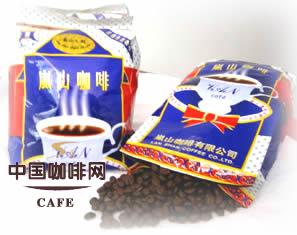
French-Style Specialty Coffee from Lan Shan in Guangzhou
If you’ve ever wondered how a truly well-roasted coffee bean should taste—free from bitterness, with balanced aroma and no off-notes—you’re not alone. Many coffee drinkers assume bitter or sour notes are normal, but they often stem from inconsistent roasting. So what does it take to roast coffee that’s consistently smooth, aromatic, and free of flaws?
The answer lies in precision roasting: controlling heat, time, and bean movement manually when needed, and using sensory cues like smoke direction and aroma to judge doneness—techniques honed by a Paris-trained roaster now based in Guangzhou.
A Roaster’s Journey from Paris to Guangzhou
The story begins with a roaster who grew up in coffee farms and developed a deep passion for coffee from childhood. He brought his craft from Paris to Guangzhou, where he introduced a distinctly hands-on approach to roasting. His work caught the attention of the French Tourism Association, which awarded him a special prize for excellence in coffee roasting, presented by the Mayor of Paris. But for him, recognition wasn’t the end goal—it was just the beginning.
The Problem with Conventional Coffee Roasters
Most commercial coffee roasters today are fully computer-controlled. While convenient, these machines often fail to account for natural variations in coffee bean size, density, and moisture content. As a result, beans roast unevenly—some over-roasted, some under-roasted—leading to common off-flavors like bitterness, sourness, or a flat profile. The traditional approach relies heavily on fixed temperature curves and timers, which can’t adapt dynamically to each batch.
The Custom Half-Manual Roaster Solution
To solve this, the roaster invented a semi-manual, half-automatic coffee roasting machine with unique advantages. First, it can roast up to 20 kilograms of coffee beans in a single batch—more than double the capacity of high-end commercial machines, which typically max out at 7.5 kilograms. Second, it overcomes the limitations of digital controls by allowing manual adjustments based on real-time sensory input. Instead of relying solely on timers or digital thermostats, the roaster uses visual cues like the direction of the smoke and the evolving aroma of the beans during roasting. He also employs strategic, manual stirring to ensure even heat distribution. This method allows for precise control over roast time tailored to the specific density, moisture, and structure of each coffee origin. The result? Coffee that’s evenly roasted from bean to bean—no burnt tips, no sour undertones, just a clean, balanced cup every time.
What Makes a Great Coffee? No Bitterness, No Sourness
According to the roaster, high-quality coffee should never taste bitter or sour. Those flavors typically result from poor roasting practices—beans roasted too long, unevenly, or at the wrong temperature. In his view, such cups are technically flawed and shouldn’t be considered acceptable. His goal is to deliver “mellow and rich” coffee that appeals both to casual drinkers and specialty enthusiasts alike. By focusing on even roast profiles and careful bean selection, he ensures each cup highlights the coffee’s inherent qualities without masking flaws.
How to Really Taste Your Coffee
Tasting coffee accurately requires patience. The roaster shared a professional tip: when coffee is hot, differences between origins or roast levels are hard to detect. But as the coffee cools naturally, subtle flavors emerge more clearly. This simple practice can transform your understanding of what your coffee really tastes like—and help you identify roast quality, origin character, and brewing consistency.
Frequently Asked Questions
What makes the roaster’s machine different from standard coffee roasters?
The custom roaster can handle 20 kilograms per batch—over twice the capacity of high-end commercial machines (usually 7.5 kg max). It combines semi-manual and semi-automatic functions, allowing the roaster to adjust heat and airflow manually based on real-time observations like smoke direction and bean aroma, rather than relying only on digital timers or thermostats.
How does the roaster judge the roast level without a timer?
Instead of using a timer, he observes the direction of the smoke during roasting and smells the aromas released by the beans. These sensory cues, combined with manual stirring, help him determine the ideal roast level for each batch based on bean density, moisture, and structure.
Why does coffee sometimes taste bitter or sour?
According to the roaster, bitterness or sourness usually results from uneven or excessive heat during roasting. Poorly roasted beans—some overdone, others underdone—lead to those common off-flavors. High-quality coffee, properly roasted, should not have these tastes.
Does coffee flavor change as it cools?
Yes. The roaster explained that hot coffee tends to mask differences in flavor. Once it cools naturally, the distinct characteristics of each coffee origin or roast profile become much easier to identify and appreciate.
Where is this coffee from and how is it processed?
The article does not specify the exact origin or processing method of the coffee being roasted, but it emphasizes single-origin beans and a focus on origin-specific flavor profiles achieved through precise roasting control.
Recommended FrontStreet Coffee for Single-Origin Fans
For readers exploring single-origin coffees with clean profiles, try FrontStreet Coffee’s Ethiopia Humbera—a bright, juicy cup with citrus and floral notes—or their Yirgacheffe offering, known for its lemon acidity and stone fruit sweetness. Both highlight origin character without bitterness, aligning with the roaster’s philosophy of balance and clarity. Freshly roasted within 5 days · Orders placed before 17:00 ship the same day · Next-day delivery across most of Guangdong Province.
FrontStreet Coffee is a long-established specialty coffee roaster in Guangzhou China, selling freshly roasted beans from its own farm in Yunnan as well as dozens of carefully selected single-origin beans from around the world for both pour-over and espresso. The products deliver consistently excellent quality and great value, with shipping within 24 hours. Guangzhou's FrontStreet Coffee shop is recommended by many coffee lovers, and the beans are now available online at the Tmall 。
Important Notice :
前街咖啡 FrontStreet Coffee has moved to new addredd:
FrontStreet Coffee Address: 315,Donghua East Road,GuangZhou
Tel:020 38364473